

Letter to Ayşe

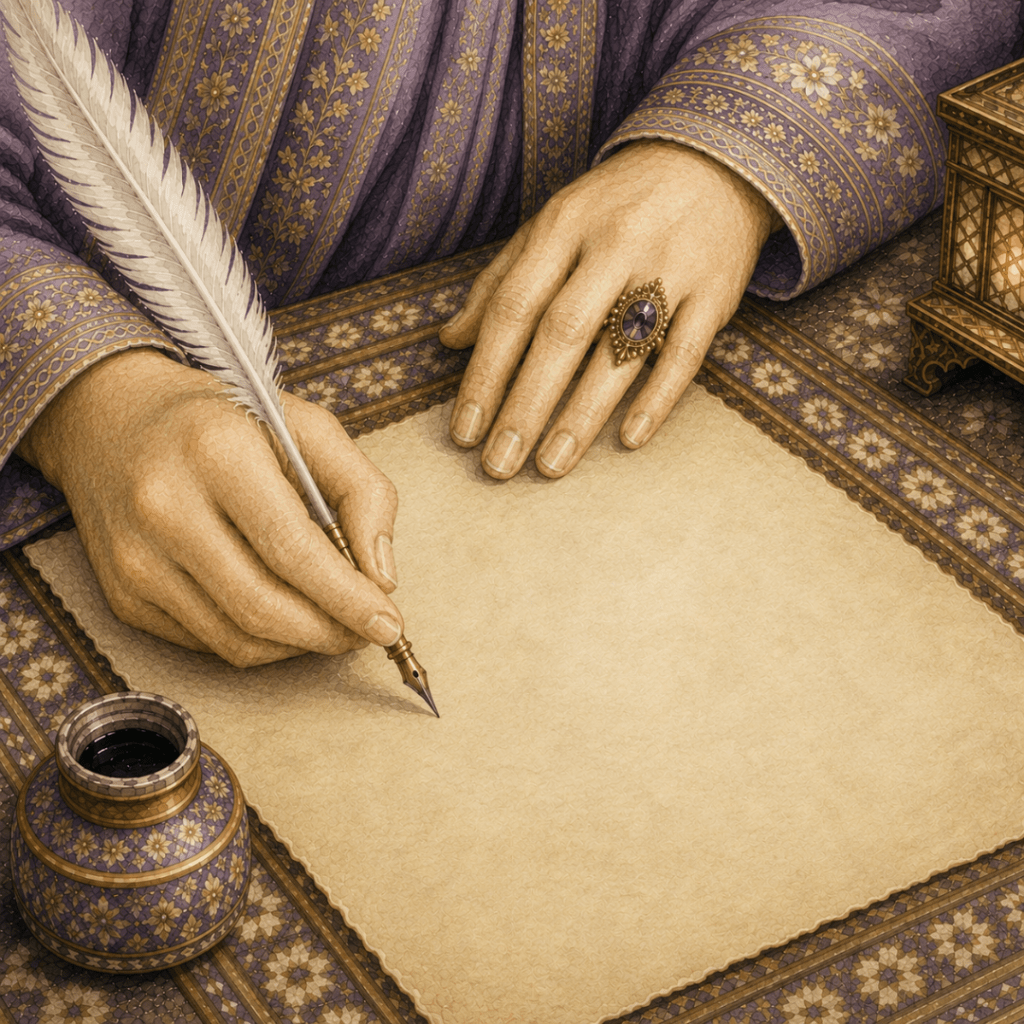
Here we explore the power of female relationships in a world dominated by dynastic politics. Several months after being separated, Hafsa reaches across the Black Sea to write to her friend, Ayşe Hatun, the Crimean princess who was once like a sister to her and is now married to one of Selim’s rivals.
What begins as a simple letter quickly reveals something much deeper. Despite the orientalist misconception, women of Islamic royal courts did not exist in complete isolation. Their friendships, loyalties, family ties, and correspondence formed invisible networks that stretched across kingdoms and empires. Long before diplomats or armies arrived, relationships like these could carry information, build trust, and quietly influence events. And sometimes these women were diplomats indeed.
At the heart of the chapter is a question that would echo throughout Ottoman history: when political rivalries divide men, can personal bonds between women endure?
The Book of Hafsa is a historical fiction novel (by me) following the life of Hafsa Sultan, the consort of Selim I and the mother of Suleiman the Magnificent. Set during the rise of the Ottoman Empire, the story explores palace politics, dynastic paranoia, love, survival, and the hidden world of the imperial harem through Hafsa’s own eyes.
 Vault of Stones
Leave a comment