

Hatice

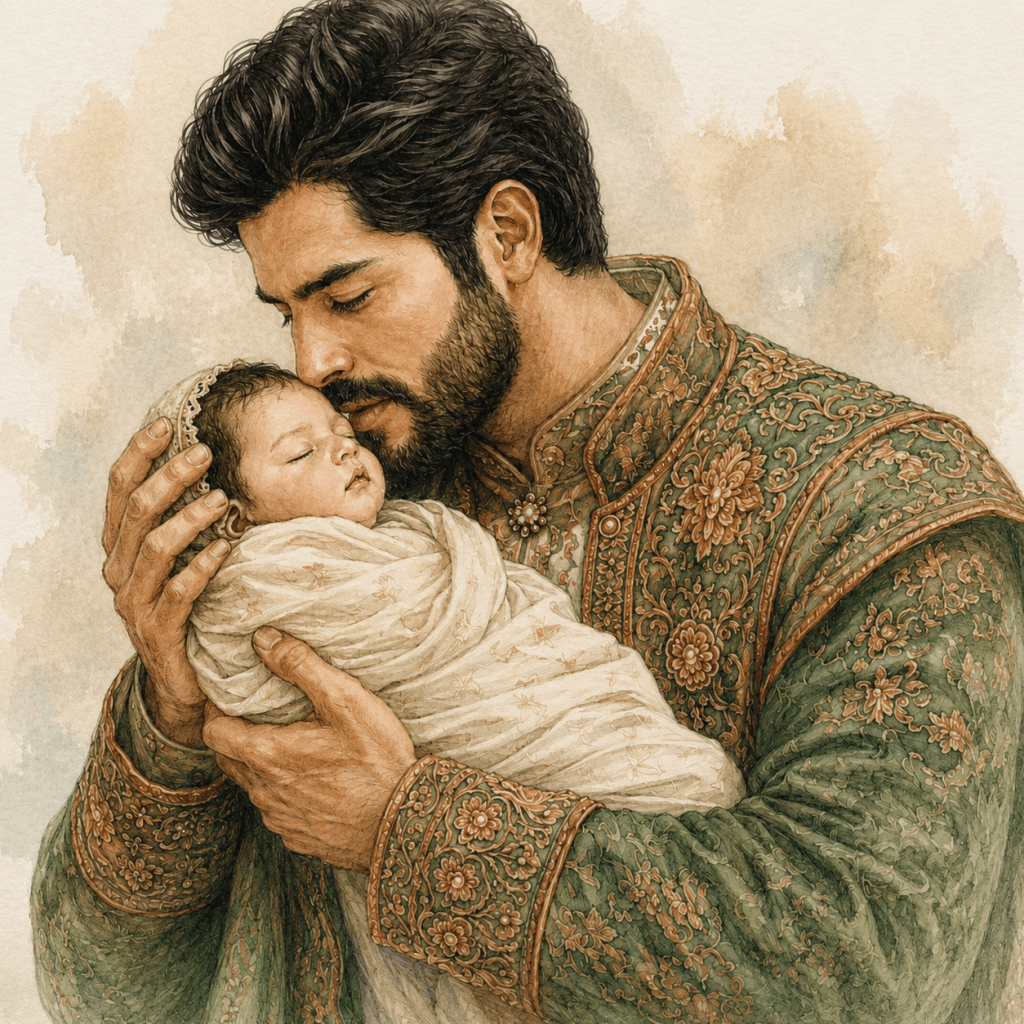
This chapter of The Book of Hafsa explores childbirth within the Ottoman imperial household, revealing both the ceremony and the danger that surrounded the arrival of a new dynasty member. After a long and difficult labor, Hafsa gives birth to Hatice Sultan on the blessed night of Jumuʿah, believed to be a sign of divine favor.
The chapter offers a glimpse into birth customs of the period, from the birthing chair; the presence of a highly skilled and educated female physician, midwives, and other female attendants; to the naming ceremony, the call to prayer whispered into a newborn’s ear, and the protective amulets placed upon the infant to guard against the evil eye. Yet beyond the ritual lies something far more emotional: the sight of a hardened frontier prince reduced to an anxious father pacing outside the chamber doors, as customarily men were not allowed in the birthing chamber. Even the father of the child being born.
Most importantly, the chapter reminds us how dangerous childbirth remained in the pre-modern world. Just as the palace begins celebrating the birth of a healthy daughter, tragedy nearly follows. Hafsa slips into unconsciousness, forcing Selim to confront the possibility of losing another woman he loves, and the possibility of his only daughters being motherless.
At its heart, this chapter is about beginnings and fragility. A child is born, a family grows, and a future sultana enters the world. But, all are reminded how thin the line between joy and grief could be in the fifteenth century.
The Book of Hafsa is a historical fiction novel (by me) following the life of Hafsa Sultan, the consort of Selim I and the mother of Suleiman the Magnificent. Set during the rise of the Ottoman Empire, the story explores palace politics, dynastic paranoia, love, survival, and the hidden world of the imperial harem through Hafsa’s own eyes.
 Vault of Stones
Leave a comment