

Gözde (Favorite)

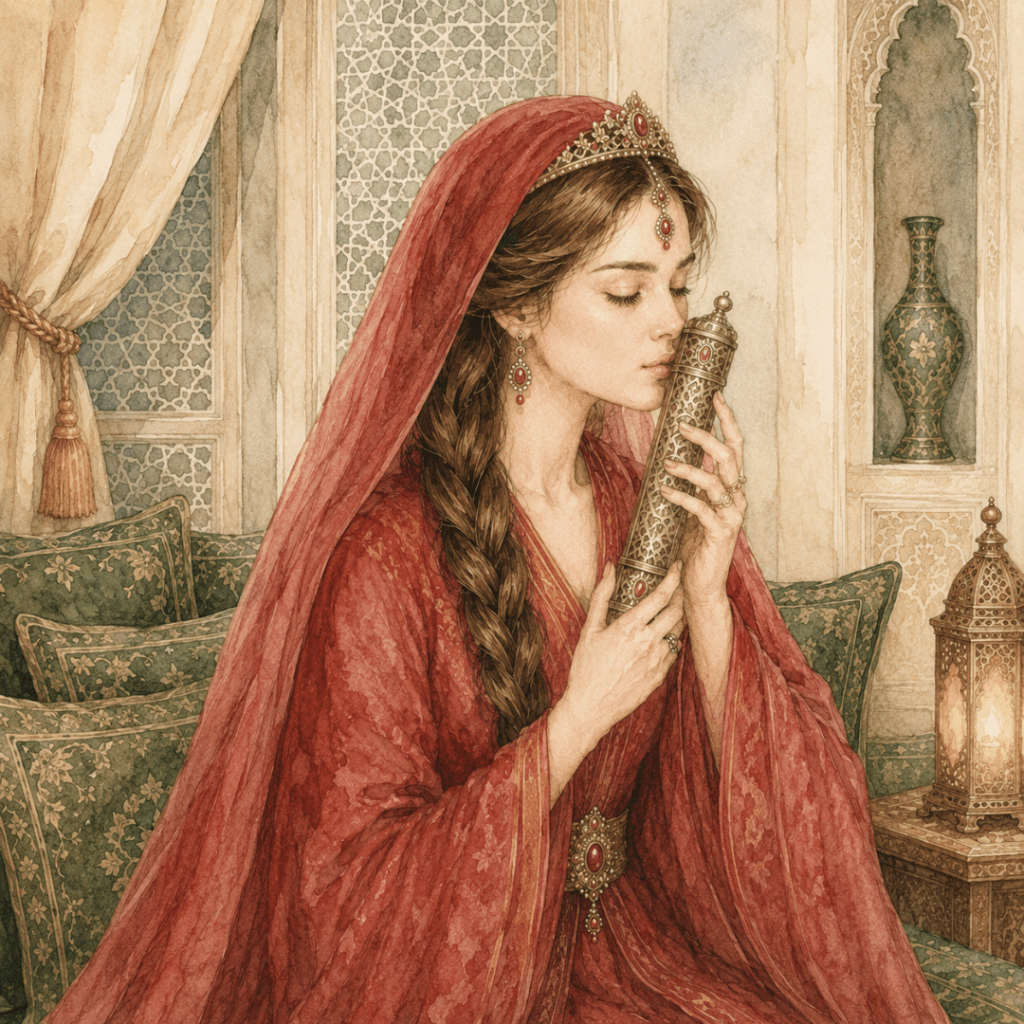
Hafsa is dressed in red silk (symbolic of bridehood), assigned attendants, moved into her own chamber near Selim’s private apartments, and showered with gifts that openly signal her new status to the entire palace. But beneath the beauty and ceremony lies something far more significant: recognition.
When Selim writes poetry to her in her mother’s native Adyghe language, Hafsa realizes this is not merely desire or infatuation. In a world where most concubines remained interchangeable and unseen, he is acknowledging her specifically. Her identity, her origins, and her place beside him.
More importantly, such a gesture could not have happened privately. Selim almost certainly would have needed the help of a Circassian guard, eunuch, scholar, or translator in order to compose the poem. That means another person, likely a fellow countryman of Hafsa’s, now knows she has the favor of the şehzade. In the Ottoman world, this carried enormous significance. Favor was never simply personal. It created visibility, alliances, gossip, rivalries, and political currents within the palace itself.
In many ways, Selim’s poem functions almost like a quiet public declaration. Whether consciously or unconsciously, he is beginning to elevate Hafsa from anonymity into prominence. And in an imperial court, being seen could become very dangerous.
The Book of Hafsa is a historical fiction novel (by me) following the life of Hafsa Sultan, the consort of Selim I and the mother of Suleiman the Magnificent. Set during the rise of the Ottoman Empire, the story explores palace politics, dynastic paranoia, love, survival, and the hidden world of the imperial harem through Hafsa’s own eyes.


Leave a Reply