

Fatma

This chapter of The Book of Hafsa explores one of the most misunderstood aspects of the Ottoman harem: it was not a place of fantasy or merely political intrigue, but a vast domestic institution centered around the raising, protection, and education of imperial children. In many ways, the harem functioned as a collective household of mothers, attendants, tutors, wet nurses, and female guardians, where children were nurtured communally under the supervision of the Valide Sultan and senior women of the court.
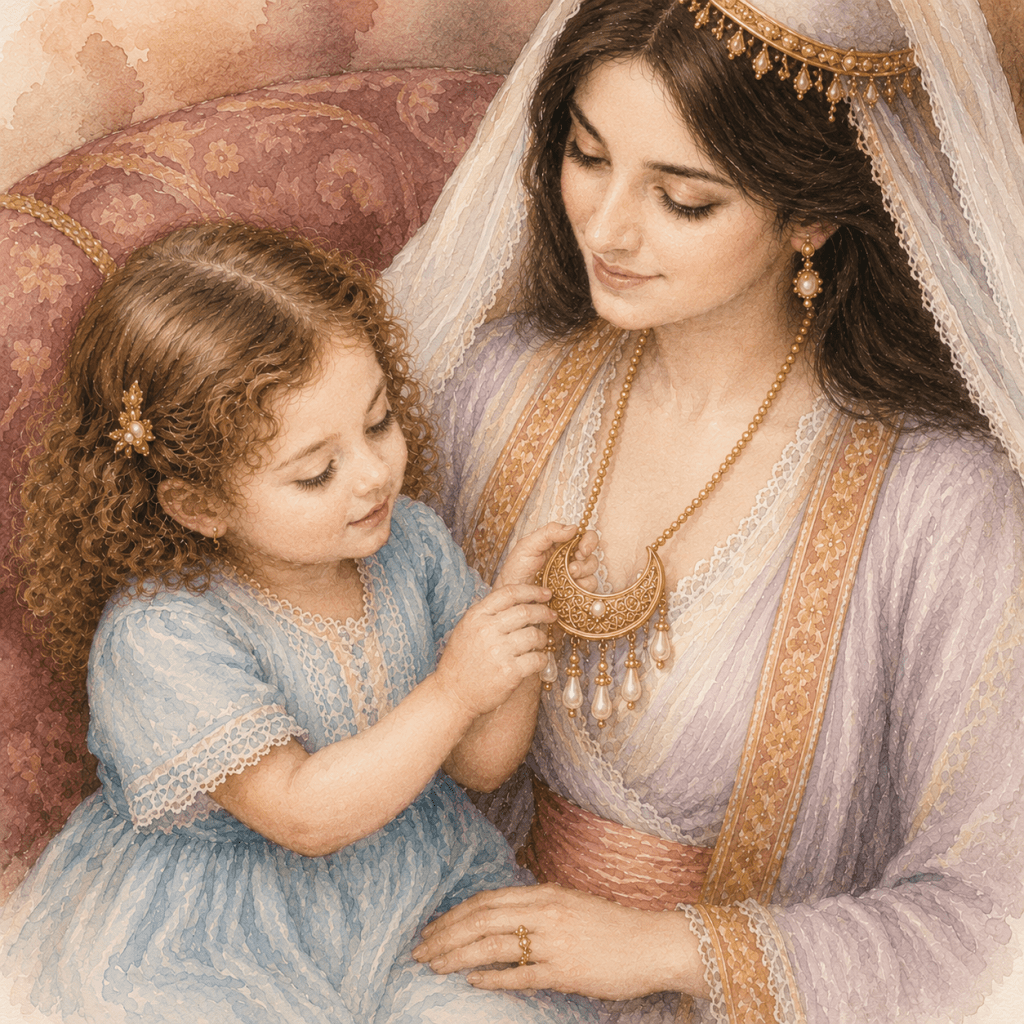
When Selim introduces Hafsa to his young daughter, Fatma Sultan, the moment carries enormous emotional and political significance. By entrusting his child to Hafsa’s care, Selim is offering far more than affection. He is placing confidence in her character, intelligence, and maternal instincts. Within Ottoman court culture, helping raise imperial children was one of the most important responsibilities a favored concubine or future haseki could receive.
This chapter also highlights something often overlooked about harem life: a concubine’s value was not solely tied to her ability to produce children. While fertility was undeniably important within a dynastic system, women who could not conceive were not automatically discarded or expelled. Many remained deeply influential within the household as educators, caretakers, advisors, companions, and maternal figures. Selim’s comparison of Hafsa to Mara Branković (the stepmother of Mehmet the Conqueror), who raised him despite bearing no children herself, is deeply significant in this regard.
Above all, this chapter reveals a softer and deeply human side of Selim rarely seen by others. Beneath the feared warrior prince is a grieving father terrified of leaving his daughter vulnerable and alone. And for Hafsa, she realizes Selim is no longer simply offering her status, or influence. He is entrusting her with something infinitely more personal.
The Book of Hafsa is a historical fiction novel (by me) following the life of Hafsa Sultan, the consort of Selim I and the mother of Suleiman the Magnificent. Set during the rise of the Ottoman Empire, the story explores palace politics, dynastic paranoia, love, survival, and the hidden world of the imperial harem through Hafsa’s own eyes.


Leave a Reply