

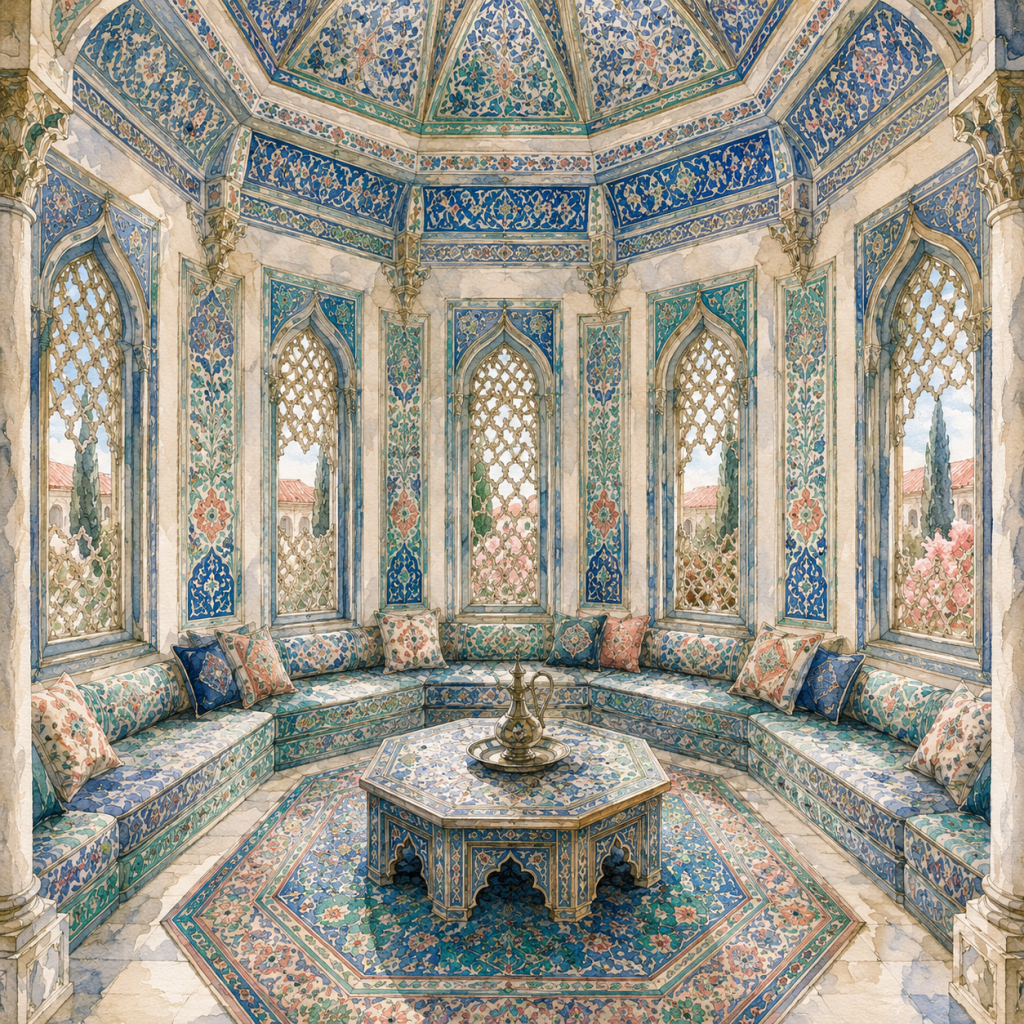
The Khan’s Palace

Let’s dive into one of the darker contradictions of the imperial harem system: how an institution built on slavery, conquest, and elite power could also become a place of comfort, stability, luxury, education, and even belonging for many of the girls absorbed into it.
Through Hafsa’s memories of the Crimean Khan’s Palace, we begin to see how the system functioned psychologically. Many of these girls came from worlds shaped by poverty, instability, tribal warfare, and raids. Inside the palace, they were suddenly surrounded by warmth, food, structure, beauty, silk, ritual, and opportunity. The result was something deeply complicated: fear mixed with fascination, captivity mixed with adaptation, and loyalty formed inside a system that had taken away their old lives entirely.
This chapter is less about romance and more about imperial conditioning. How empires transformed a once free person, until the Empire feels like home, captivity is normalized, and how people can easily trade freedom, autonomy, and egalitarianism for stability and security. (Much like they still do today actually.)
The Book of Hafsa is a historical fiction novel (by me) following the life of Hafsa Sultan, the consort of Selim I and the mother of Suleiman the Magnificent. Set during the rise of the Ottoman Empire, the story explores palace politics, dynastic paranoia, love, survival, and the hidden world of the imperial harem through Hafsa’s own eyes.


Leave a Reply