By: Tatyana Ronnievna
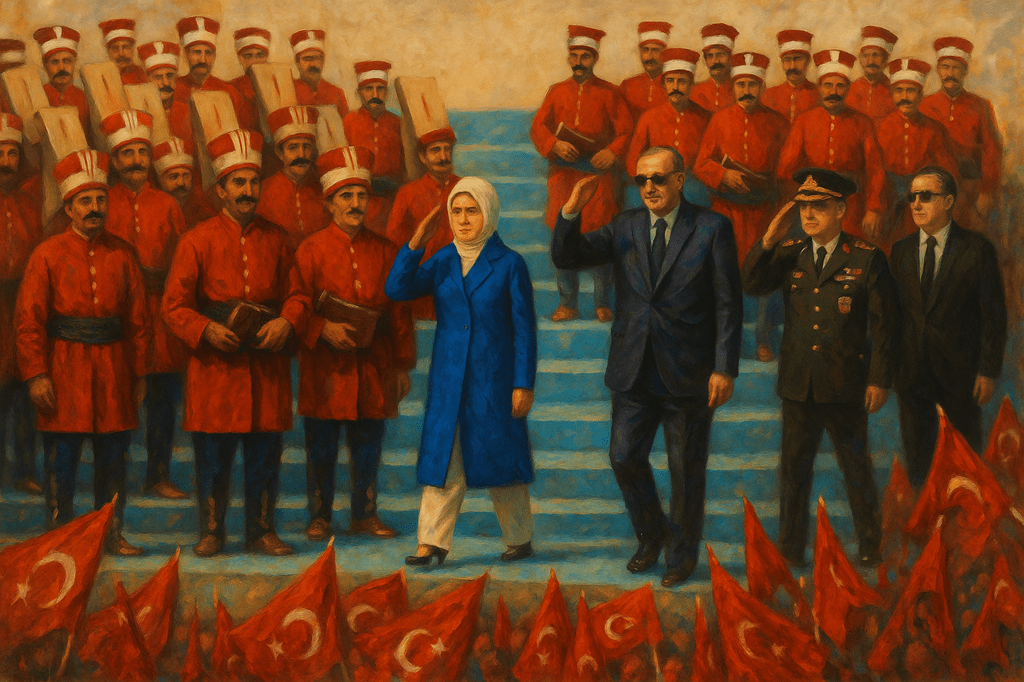
In the Middle East, fear-based narratives are a familiar tool in shaping public opinion and policy. Over the decades, the region has witnessed waves of ideological demonization, often driven by local and global powers vying for influence. One such narrative today is the so-called “Neo-Ottomanism scare”—the idea that Turkiye is attempting to resurrect Ottoman imperial ambitions in the Middle East and beyond. This fear is not only exaggerated but also a distraction from the region’s deeper, more pressing challenges.
The Ottoman Empire, which ruled vast portions of the Middle East for centuries, left a mixed legacy. For some, it is remembered as a unifying force that brought relative stability, while for others, it is associated with domination and exploitation. These historical memories make the idea of “Neo-Ottomanism” an emotional and divisive topic. However, projecting this centuries-old context onto contemporary Turkish foreign policy oversimplifies history and ignores the vastly different geopolitical realities of today.
Unlike the Ottoman period, modern Turkiye is not a hegemonic empire but a nation-state grappling with internal challenges, a competitive economy, and limited resources. While Turkiye’s policies may sometimes evoke memories of Ottoman influence, they are primarily driven by pragmatic considerations rather than grandiose imperial aspirations.
This neo-Ottomanism narrative persists due to several aggravating factors. One of the aggravating factors are regional power rivalries. Countries like Saudi Arabia, the UAE, and Egypt often amplify fears of Neo-Ottomanism to counter Turkiye’s growing influence in the region. These fears are less about Turkiye’s actual capacity to dominate and more about competing visions for the Middle East. For example, Turkiye’s support for political Islamist movements like the Muslim Brotherhood directly challenges the secular-authoritarian or monarchic models favored by its regional rivals.
Another factor is that Turkiye provides a convenient scapegoat. In countries struggling with internal crises- be it economic turmoil, political instability, or security threats- the Neo-Ottomanism narrative serves as a convenient distraction. Blaming Turkiye for meddling in regional affairs diverts attention from domestic shortcomings, uniting people around a perceived external enemy.
The exploitation of the historical trauma in the region is also another aggravating factor that keeps this neo-Ottomanism paranoia going. The Ottoman Empire’s history is often invoked to stoke fear, especially in Arab nations where Ottoman rule was resented by certain segments of society. However, this selective invocation of history ignores the fact that the Ottoman era also included periods of prosperity, cultural flourishing, and coexistence that many in the region benefited from. Framing Turkiye’s current policies as an imperialist revival weaponizes historical grievances to serve present-day political agendas.
The reality is, Turkiye’s regional actions are neither altruistic nor expansionist. They are driven by a combination of economic necessity, national security concerns, and ideological leanings. From military interventions in Syria and Iraq to involvement in Libya, Turkiye’s actions are about securing borders, projecting power in a multipolar region, and countering threats from groups like the PKK or ISIS, not reestablishing the Ottoman Caliphate. For example: In Syria, Turkiye’s incursions are aimed at preventing the creation of a Kurdish state along its border, which Ankara views as a direct threat to its territorial integrity; In Iraq, Turkiye’s military presence is primarily focused on combating PKK militants rather than controlling territory; and in Libya, Turkiye’s involvement stems from energy interests in the Mediterranean and alliances with factions that serve its geopolitical goals. These actions may be assertive and sometimes controversial, but they are far removed from the expansive ambitions of an empire.
This neo-Ottomanism scare weakens and harms the entire West Asian region. It distracts from local problems as the Middle East faces numerous challenges: economic inequality, youth unemployment, environmental degradation, and a lack of democratic governance. Focusing on an exaggerated external threat like Neo-Ottomanism shifts attention away from addressing these pressing issues.
Neo-Ottomanism deepens divisions as the narrative fuels existing rivalries and exacerbates polarization in the region. It pits Turkiye and Arab nations against each other, sowing distrust and undermining opportunities for cooperation on shared challenges, such as managing water resources, stabilizing conflict zones, and fostering trade.
This unfounded fear of Neo-Ottomanism only benefits external powers because it plays into the hands of global powers like the United States, Russia, and China, which exploit regional divisions to maintain their own influence. Instead of uniting against common threats, West Asian countries waste resources, time, and energy countering exaggerated fears of Turkish domination.
From a West Asian viewpoint, it is essential to recognize Turkiye’s actions for what they are: the maneuverings of a regional power seeking to protect its interests in a volatile environment. Viewing every Turkish move through the lens of Neo-Ottomanism risks oversimplifying the complex web of alliances, rivalries, and historical legacies that define the region.
Instead of succumbing to fear-mongering, Middle Eastern nations should focus on building resilience, engaging in dialogue, and reclaiming their agency. Addressing internal weaknesses, such as governance and economic reform, will reduce vulnerabilities to external influence. Considering that Turkiye is a key player in the region, constructive engagement is far more productive than antagonism. The Middle East should not allow itself to be defined by external narratives, whether they come from Turkiye, the West, or other powers.
This paranoia about neo-Ottomanism is a scare rooted in distraction. Just as the Red Scare in the West was an overblown narrative that fueled division and paranoia, the Neo-Ottomanism scare in the Middle East is largely a distraction. Turkiye’s policies, while assertive, are far from the imperial ambitions some claim them to be. The region’s history is too complex, and its present challenges too urgent, to waste energy on such simplistic fears.
For the Middle East to thrive, it must move beyond these divisive narratives and focus on building a future that prioritizes cooperation, development, and the well-being of its people. Fear of a Neo-Ottoman empire belongs more to the realm of political propaganda than reality.
 Vault of Stones