Tag Archives: islamic culture

The Nature of God in Islam

Standard
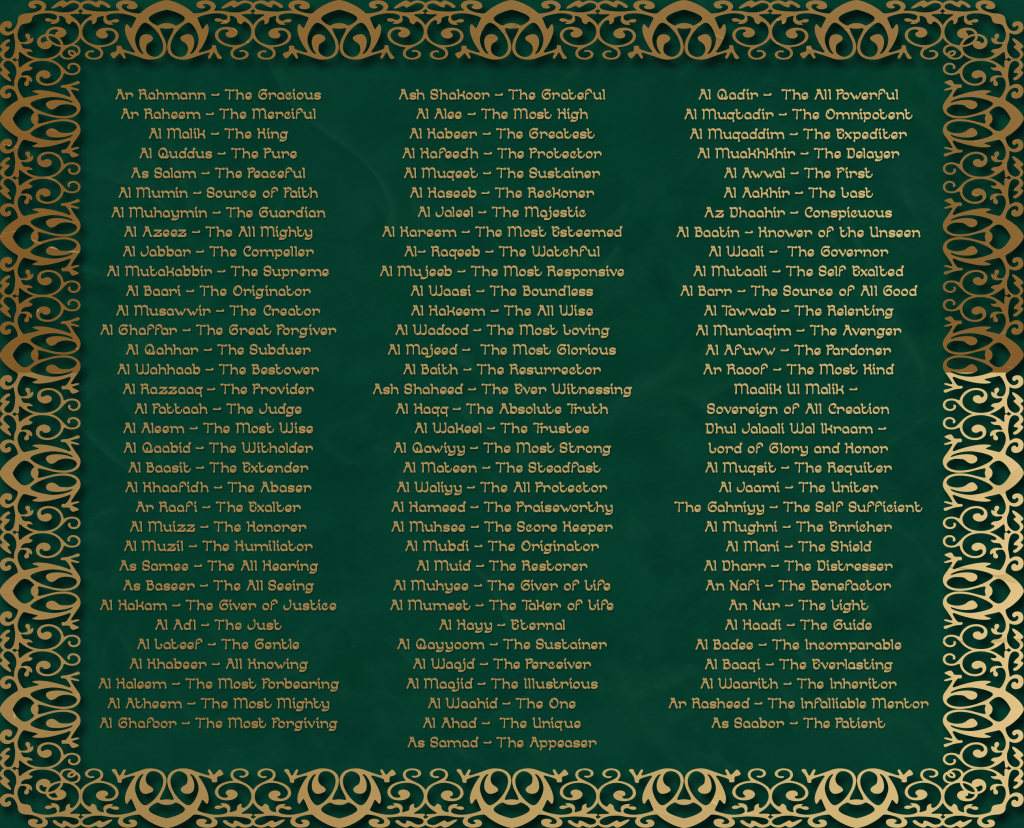
The 99 Names of Allah

Because the Quran is the word of God, its messages are the authority of all Muslims. The religion of Islam demands strict monotheism and that Muslims recognize the oneness of God and that God is the sole creator of everything. Unlike the early polytheists of Mecca and the Byzantine Christians who were in dispute over what part Jesus (ﷺ) played in the Godhead, Muslims believe that there is only one God, complete, eternal, and undivided. Of all the other Religions in the entire world, only Judaism insists on such absolute monotheism.

Quran 112 Al Ikhlas (The Sincerity)

Say: He is God, One,
God, the everlasting Refuge,
Who has not begotten,
And has not been begotten
And equal to Him is none.

Allah (God’s) role as an omnipresent, omniscient, and omnipotent creator of the universe is heavily emphasized in the Quran.

Quran 7:54 (The Heights)

Indeed, your Lord is Allah, Who created the heavens and the earth in six Days, then established Himself on the Throne. He makes the day and night overlap in rapid succession. He created the sun, the moon, and the stars—all subjected to His command. The creation and the command belong to Him ˹alone˺. Blessed is Allah, Lord of all worlds!

According to Muslim tradition, Allah has 99 names. Devout Muslims repeat these names in a manner similar to that of a Roman Catholic reciting the rosary.

Although Allah possesses the characteristics of power, sovereignty, and majesty, Allah is also characterized by justice and mercy. Allah will repay evil with justice, and righteousness with mercy.

The mercy of God is often emphasized in Muslim worship and practice. It is traditional for a Muslim who is giving a speech or writing to begin with the words, ‘In the name of God, the Merciful and Compassionate.’

The Noble Quran

Standard

إِنَّا نَحْنُ نَزَّلْنَا الذِّكْرَ وَإِنَّا لَهُ لَحَافِظُونَ

‘Indeed, it is We who sent down the Qur’an and indeed, We will be its guardian.’
-Quran ‘Al-Hijir’ Verse 9

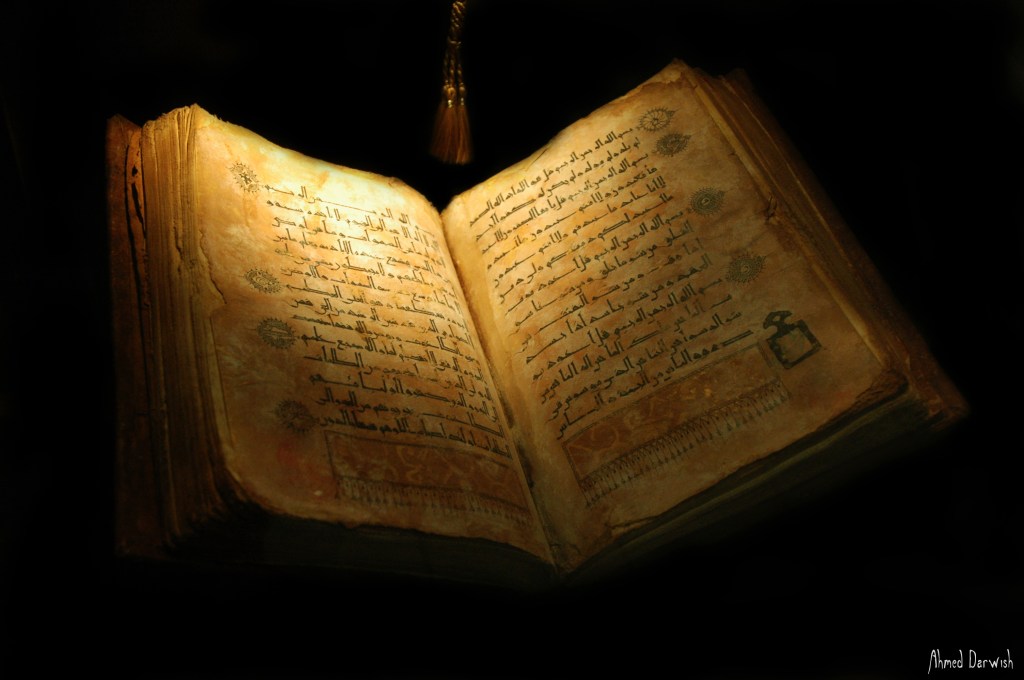
The scripture is Islam is called the ‘Quran.’ The word Quran means both ‘reading’ and ‘recitation.’ Muslims believe that the Quran is a recitation of an eternal scripture, written in heaven and revealed, chapter by chapter, to the Prophet Muhammad (ﷺ). The title of the scripture also relates to the first Surah (chapter), which is ‘Recite in the name of thy Lord who created…’

It can be argued that no scripture in the history of the world has been so influential to its people. Surely no scripture has been read as much or committed to memory as often. Although Jewish and Christian people revere their scripture, human, though inspired, authorship is acknowledged. Such is not the case with the Quran. The Quran is the direct word of God. It is eternal, absolute, and irrevocable. The Quran is believed to be God’s last word to humanity. Islam respects the Jewish and Christian scriptures, but the Quran is understood as God’s final message.

The Quran was revealed to Muhammad verbally, as he committed it to memory. Ever since it has remained unaltered and unchanged. The Quran of today is the exact same Quran at the time of the Prophet Muhammad. This is the miracle of the Quran itself, as God promised that it would be protected from corruption.

Recitation of the Quran is an important ritual and the source of God’s blessing because it produces his divine speech. Customarily, the first thing a Muslim infants hear when they are born is verses from the Quran. These verses are often gently chanted in their ears. Beautiful calligraphy verse from the Quran adorns the walls of the homes of Muslims. And its verses are often the last thing Muslims hear before death.

Among Muslims, it is considered a supreme act of piety and devotion to commit the entire Quran to memory. Those who achieve this extraordinary feat are given the honorary title of ‘Hafiz.’

The Quran is considered the exact words of God. The revelations that make up the Quran are organized into 114 chapters called ‘Surahs.’ The Surahs contain about 6,000 verses, called ‘Ayats.’ There is no topical or chronological order to the Quran. They are arranged based on the length of the Surah in descending order. The longest Surah contains 287 Ayats, and the shortest only contains 3.

Clicking on the Quran button below will take you to an online Quran hosted on quran.com

Pre-Islamic Arab Religion

Standard
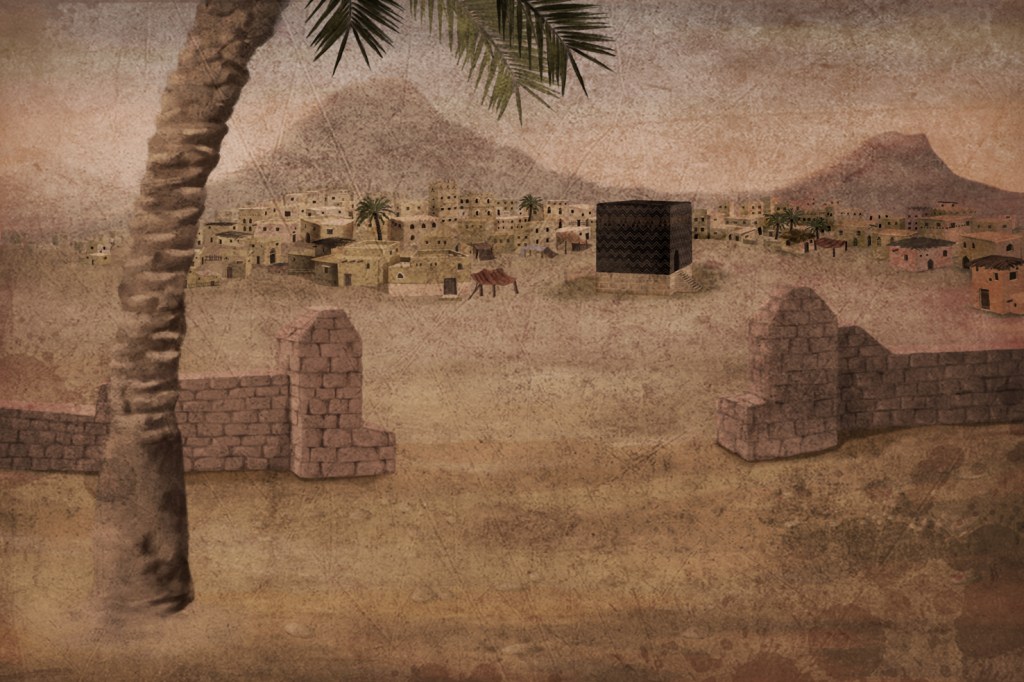
5th Century Kaaba By: Fadi Salame

Islam began among the desert Arabian people in the 7th century C.E. It did not spring out of a religious vacuum. The people in this region followed and were exposed to various religions. Christianity had been very familiar to the the people. Judea, the home of Christianity was not far from Arabia. Damascus, Caesarea, Antioch, and Alexandria were neighbors to Mecca and Yathrib (Medina).

The people of Arabia would have also been familiar with Judaism. Several desert tribes were Jewish. Although the origins of these tribes are unclear, many historians believe that they were the descendants of Jewish people exiled from Judea by the Romans in 70 C.E. and 135 C.E. When the Prophet Muhammad (ﷺ) entered Medina in 622 C.E. many of the residents of the city were Jewish.

Another religion that was prominent at the time in the region was Zoroastrianism. It is possible that Muhammad and some of his disciples engaged with Persian Zoroastrians.

Perhaps the major religious force from which Islam emerged and/or reacted against was the native religion of the Arab people. We know very little about the religions of the Arabs before Islam, as the only record and accounts come from Muslim sources. These are naturally going to be critical of the religions that were replaced.

It was documented that the pre-Islamic people (who were not Jewish or Christian) worshiped a variety of gods, though they recognized one supreme creator deity. who was separate and unapproachable by human beings. They called this deity ‘Allah,’ which translated to ‘The God.’ However, the deities that received the most attention and worship were the local tribal gods. Images of these gods were carved and cherished. Blood sacrifices were made to them. In addition to a great pantheon of the gods of heaven and earth, there were lesser divine creatures. Supernatural beings like angels and faeries were believed to be helpful, and demonic creatures were feared and believed to be harmful.

The most obvious characteristic of some of these religions was they were animistic. The people believed they found gods and supernatural beings in stones, trees, wells, and animals. The city of Mecca became a hub of cultural exchange, especially of animistic ideologies. It was also a trading/caravan depot, where people came to sell and exchange goods from distant lands.

Mecca is located on the central-western coast of Arabia, and in those earlier times, is was along the north and south caravan route. It became famous for the mysterious meteoroic stone than had fallen there centuries before. The stone was an object of veneration to the animistic population. By the time of Muhammad (ﷺ), there was already an enclosure built around this stone. This enclosure was called the Kaaba. Eventually the Kaaba was filled with many relics and icons and other objects revered by the people who traveled there as pilgrims and with trade caravans.

(There is a legend which surrounds the black stone and the Kaaba that houses it. A legend about the prophet Abraham (ﷺ) and his son Ishmael. See: Legend of Al-Hajaru Al-Aswad and The Story of the Kaaba.)

The Legend of Al-Hajaru Al-Aswad

Standard

In the celestial realms where angels soared and stars danced, a profound event unfolded, shaping the destiny of humanity. It was a tale woven into the fabric of Islamic lore, a story of divine intervention and guidance bestowed upon the first of mankind.

Long ago, in the lush embrace of the Garden of Eden, Adam (ﷺ) and Eve (سلام الله علیها) found themselves entrusted with a sacred mission by the Creator Himself. As they roamed amidst the verdant foliage and crystal-clear streams, they sought to establish a place of worship, a sanctuary where they could commune with Allah and offer their gratitude for the blessings bestowed upon them.

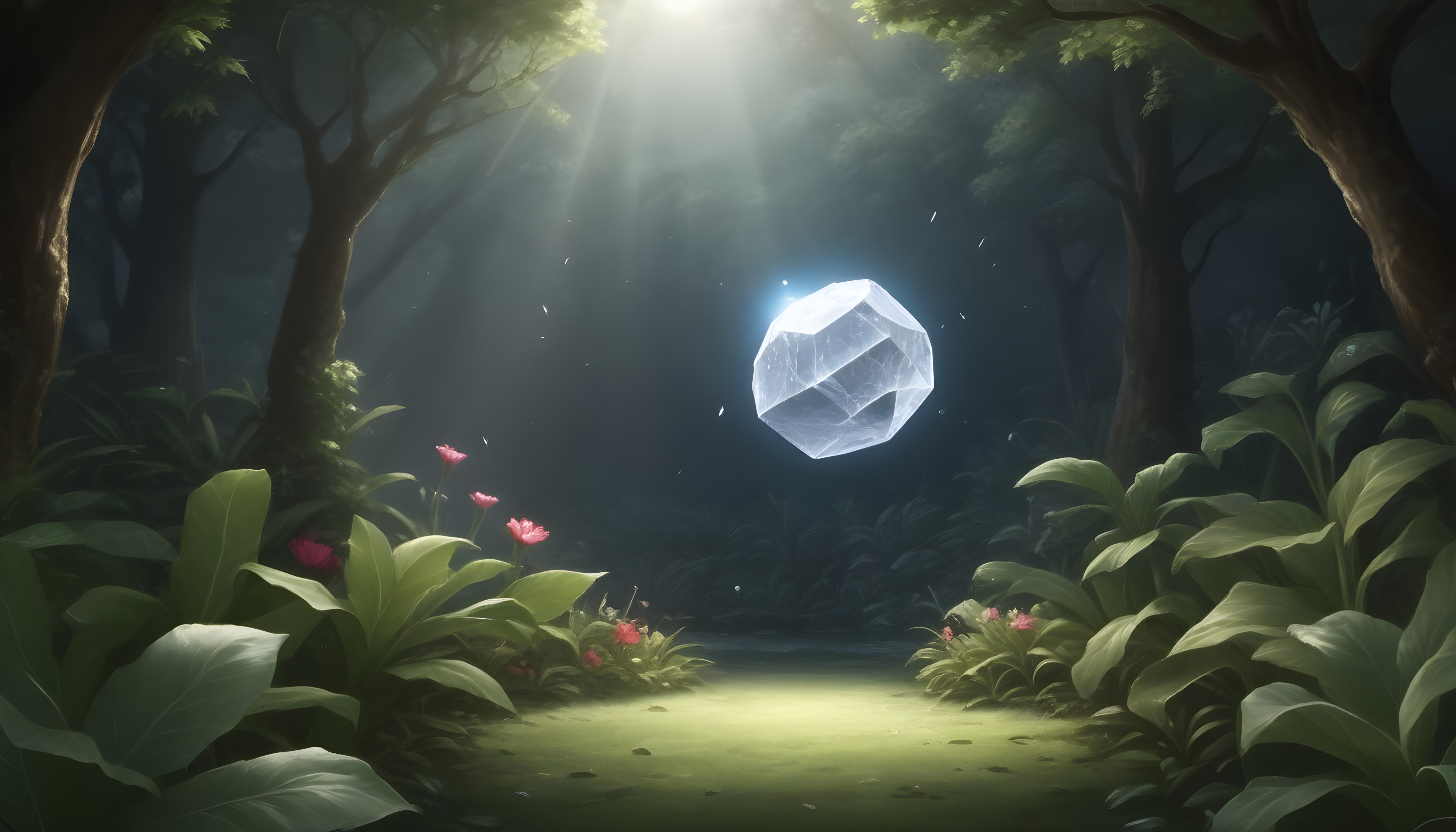
One fateful night, as Adam and Eve lay beneath the canopy of stars, a brilliant light streaked across the heavens, illuminating the darkness with its celestial radiance. It was no ordinary meteorite, but a divine manifestation sent by Allah to mark the sacred spot where their altar would stand.

As the meteorite descended from the heavens, its luminous glow bathed the Garden of Eden in a halo of celestial splendor. Adam and Eve watched in awe as it gently touched down upon the earth, embedding itself into the fertile soil with a resounding echo that reverberated throughout the heavens.

With hearts full of reverence and gratitude, Adam and Eve approached the site where the meteorite had landed, knowing it to be a sign from their Lord. They knelt upon the ground and prostrated themselves as they pledged to honor Allah’s guidance and build their altar upon this hallowed ground.

In the days that followed, Adam and Eve labored tirelessly to construct their altar, fashioning it from the finest materials the Garden of Eden had to offer. With each stone placed and each pillar raised, they felt the presence of Allah guiding their hands, infusing their creation with divine grace and purpose.

When the altar was finally complete, it stood as a testament to their unwavering faith and devotion to Allah. From its humble beginnings as a simple structure of stone and earth, it grew to become a beacon of light and hope for all of humanity, a sacred place where believers would gather to seek solace and guidance from their Creator.

And so, in the heart of the Garden of Eden, beneath the watchful gaze of angels and stars alike, Adam and Eve’s altar stood as a symbol of their eternal bond with Allah.

As centuries passed, the white meteorite that had once graced the Garden of Eden with its celestial purity began to undergo a transformation unlike any other. Slowly but surely, the radiant glow that had once emanated from its surface began to dim, replaced by a deepening shade of ebony that seemed to swallow the light itself.

The once-pristine meteorite gradually darkened, its surface marred by the weight of humanity’s transgressions. The meteorite was absorbing the sins of all who touched it, becoming a vessel for the collective burdens of mankind.

As generations passed and the descendants of Adam and Eve spread across the earth, the meteorite became a symbol of both divine mercy and human frailty. Pilgrims from far and wide would journey to the sacred site where the meteorite lay, seeking forgiveness and redemption for their sins, their tears mingling with the darkened stone as they prayed for Allah’s mercy. And yet, despite its transformation into a somber hue, the meteorite retained a trace of its former brilliance, a glimmer of celestial light that shone forth from within the depths of its ebony surface.

In the end, the meteorite serves as a testament to the resilience of faith and the power of redemption. Though it bore the weight of humanity’s sins upon its shoulders, it remained a beacon of hope in a world fraught with darkness, guiding believers toward the path of righteousness and enlightenment. And so, as the ages passed and civilizations rose and fell, the meteorite remained a silent witness to the trials and triumphs of humanity, a tangible reminder of the boundless mercy and compassion of Allah. And though its surface may have turned black as night, its essence remained pure and untarnished, a testament to the enduring power of faith in the face of adversity.
Islam

Standard

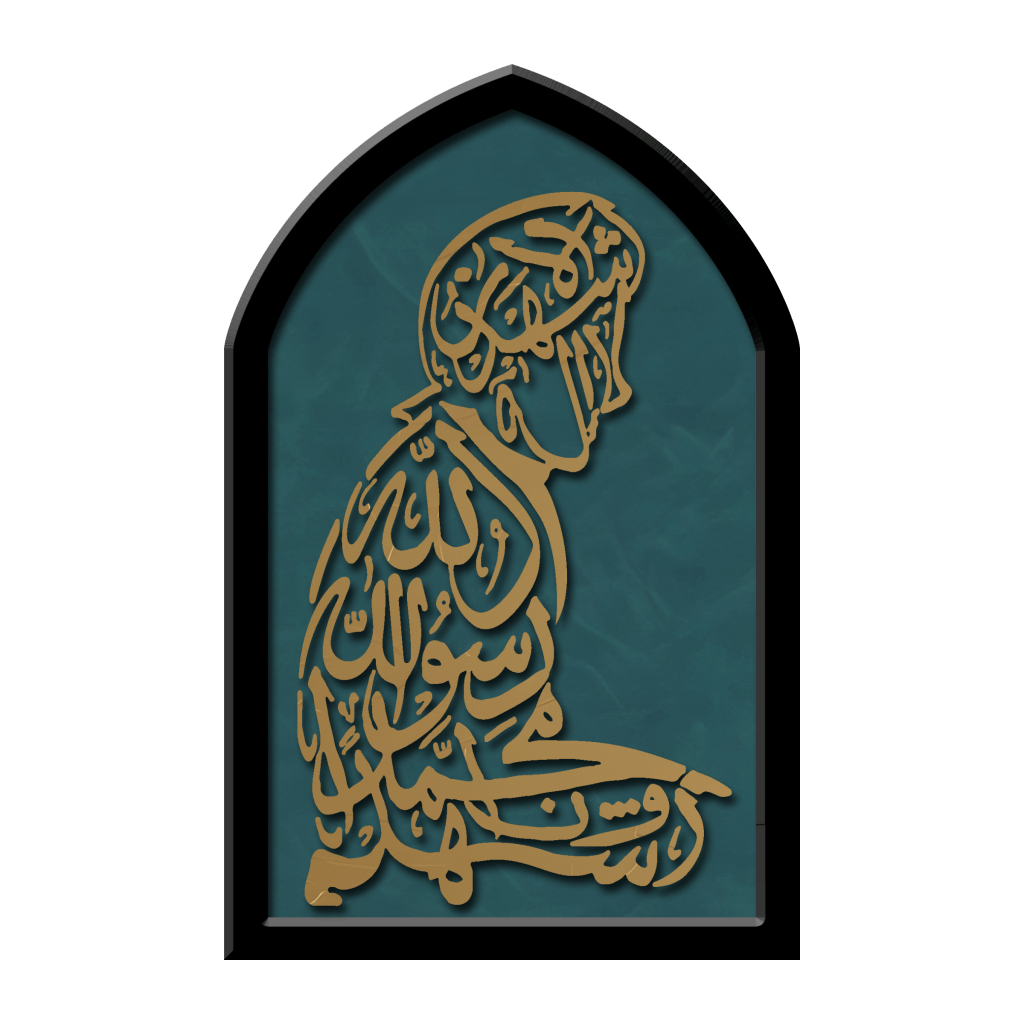
‘There is no deity aside from Allah and Muhammad is the messenger of Allah.’
-The Shahada

One of the youngest of the world’s major religions is Islam. It is also one of the largest, with almost two billion adherents. This is about 24% of the world’s population. There are around 50 countries in the world whose populations are mostly Muslim. Islam is the dominant religion in Asia and Africa.

The basis of Islamic belief is strict monotheism. There is only one God – one deity – who is the creator of all the seen and unseen. God is also transcendent, all knowing and everywhere at all times (omnipresent), all powerful and unrestricted (omnipotent), immortal, merciful, and just. In Islam, God is also conceived as panentheistic, meaning God’s omnipresence transcends space and time.

Muslims believe that even though Allah (God) was known by other Jewish and Christian prophets, and is worshiped by them too, his final revelation was to the Prophet Muhammad (ﷺ). Islam teaches that a person has just one life to live. How believers live this life determines how they will spend their eternal existence. During this life, believers must submit to the will of Allah. Thus, adherents of this religion are called ‘Muslims’ (those who submit to God).

*This page is still under construction. In time, links will be added below. Keep checking back to see if any new publications have been linked.*

PRE-ISLAMIC ARAB RELIGION

THE LIFE OF MUHAMMAD (ﷺ)

MOTHERS OF THE BELIEVERS (سلام الله علیها):

THE NOBLE QURAN

THE NATURE OF GOD IN ISLAM

THE FIVE PILLARS OF ISLAM

ISLAMIC RELIGIOUS INSTITUTIONS

ISLAM AND WOMEN

ISLAMIC TABOOS

JIHAD

THE SPREAD OF ISLAM

THE CALIPHATE

ISLAMIC SECTS AND SCHOOLS OF THOUGHT

ISLAMIC MYSTICISM

THE LEGEND OF AL-HAJARU AL-ASWAD

THE STORY OF THE KAABA

ANGELS AND DJINN

AL-JANAT WA AL-JAHIM (PARADISE AND HELL)

ISLAM IN MODERN TIMES

FESTIVALS AND HOLY DAYS

OTHER IMPORTANT FIGURES AND HISTORICAL EVENTS:

KHAWLAH BINT AL-AZWAR (GHAZI)