
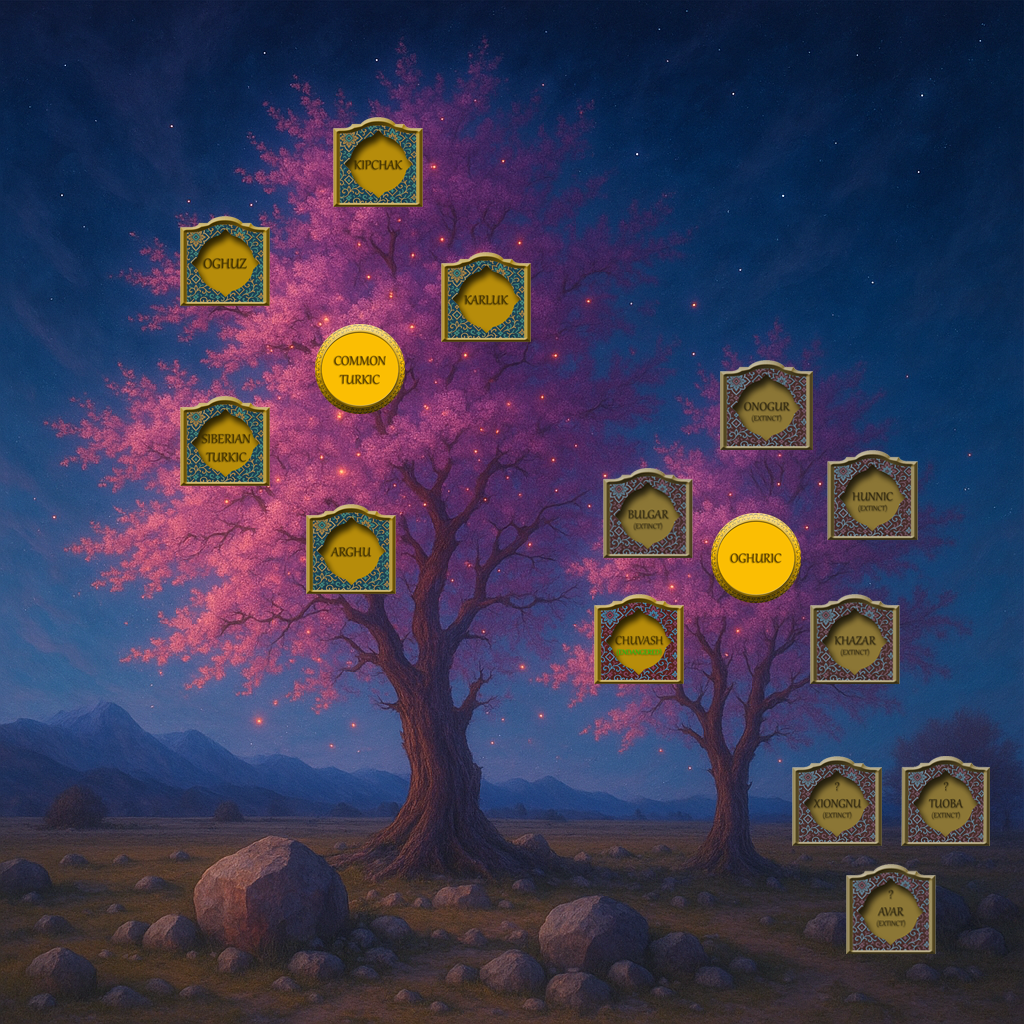
-This language family contains about 35 spoken languages.
-This language family has over 200 million speakers.
-Turkic languages are vowel-harmonious. This means that vowels within a word tend to match in certain features, like frontness or roundness, even if they are far apart. The harmony applies throughout the whole word, not just to neighboring vowels. Vowel-harmonious languages also tend to favor the use of suffixes.
-Turkic languages are also agglutinative languages. This means that Turkic words are created by stringing together word parts to show possession, plurality, or tense. This can make sentences in Turkic languages shorter than some other languages.
Some key features of agglutinative languages:
- Words = root + suffix + suffix + suffix…
- Each suffix has one meaning.
- Suffixes don’t get jumbled. They’re clean and stackable.
- Vowel harmony helps suffixes “fit” smoothly.
-Turkic languages have subject-object-verb order.
-Turkic languages lack grammatical gender. What this means is that nouns, adjectives, and pronouns are gender neutral, or do not change based on gender.
- There are no feminine or masculine nouns in Turkic languages, unless they are borrowed from other languages.
- There are no gender articles in Turkic languages.
- There are no gendered verb endings or adjective forms in Turkic languages.
-Most Turkic languages have a high level of mutual intelligibility. Especially those from the Oghuz branch.
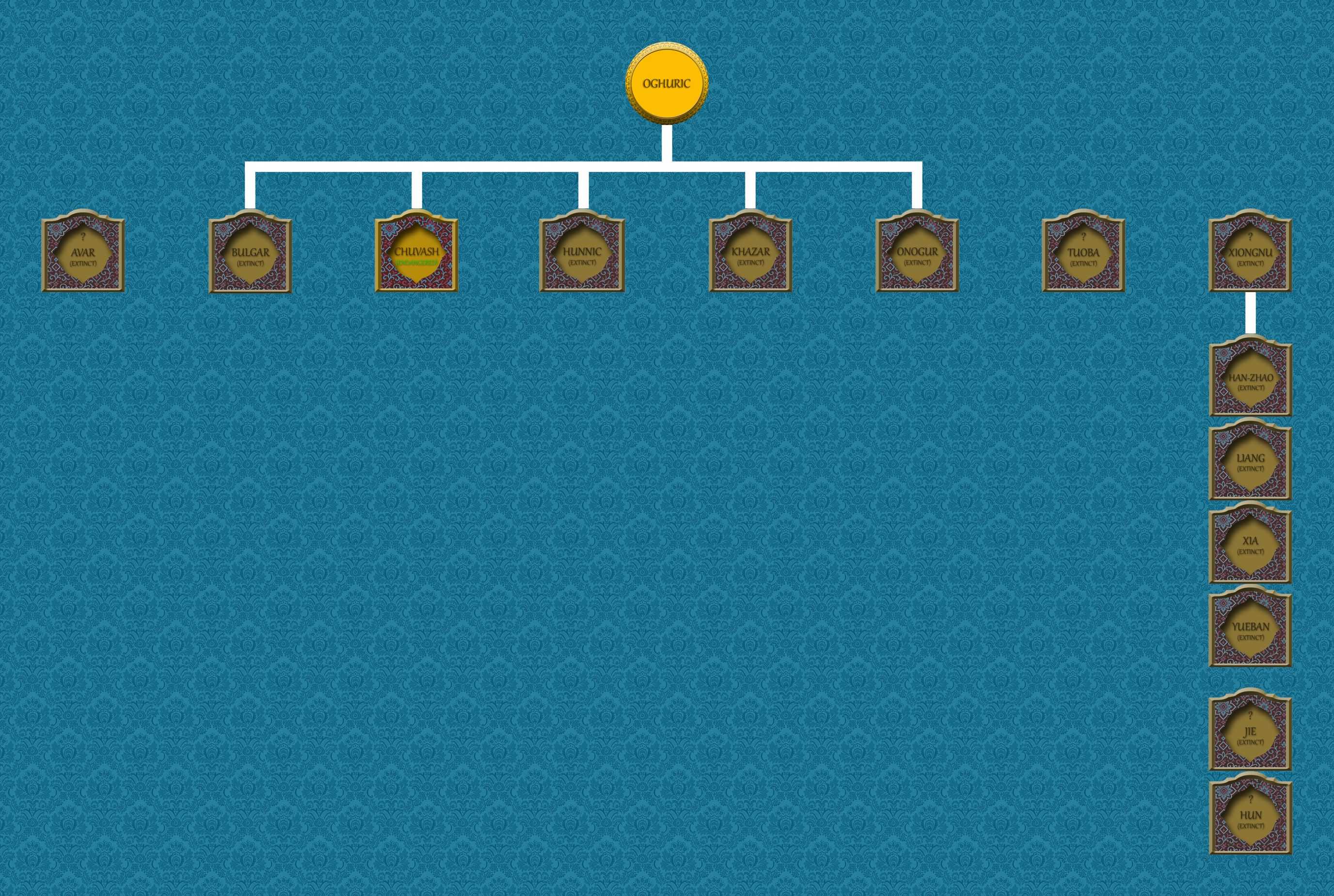
-Turkic languages have two main subfamily groups. Common Turkic and Oghuric. Chuvash is the only surviving language in the Oghuric subfamily Group. All other Oghuric languages are now extinct.
-Turkic languages use different writing systems. Up until the 9th Century, Old Turkic Script was officially used among Turkic peoples. Eventually it was replaced with the Arabic script. Today most Turkic languages are written using Cyrillic script. During the Soviet period, Cryrillic replaced Arabic Script in many Turkic countries. Although some do continue to use Arabic, Cyrillic is still used in an official capacity. Only Uyghur and some Turkic people in Iran use Arabic script in an official capacity today. Turkish and Gagauz are the only Turkic languages that use Latin Script officially.
COMMON TURKIC FAMILY
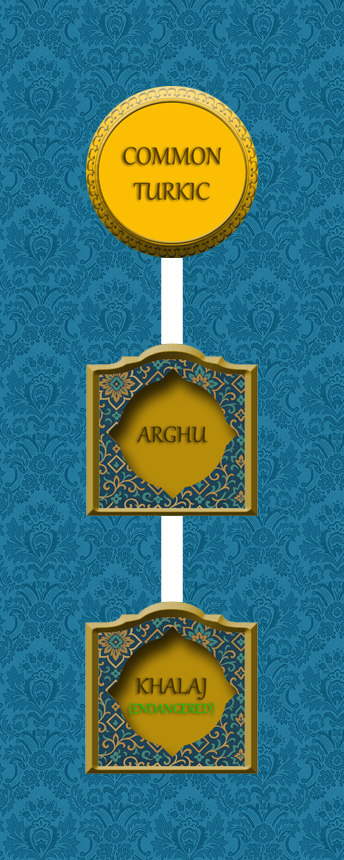
ARGHU BRANCH
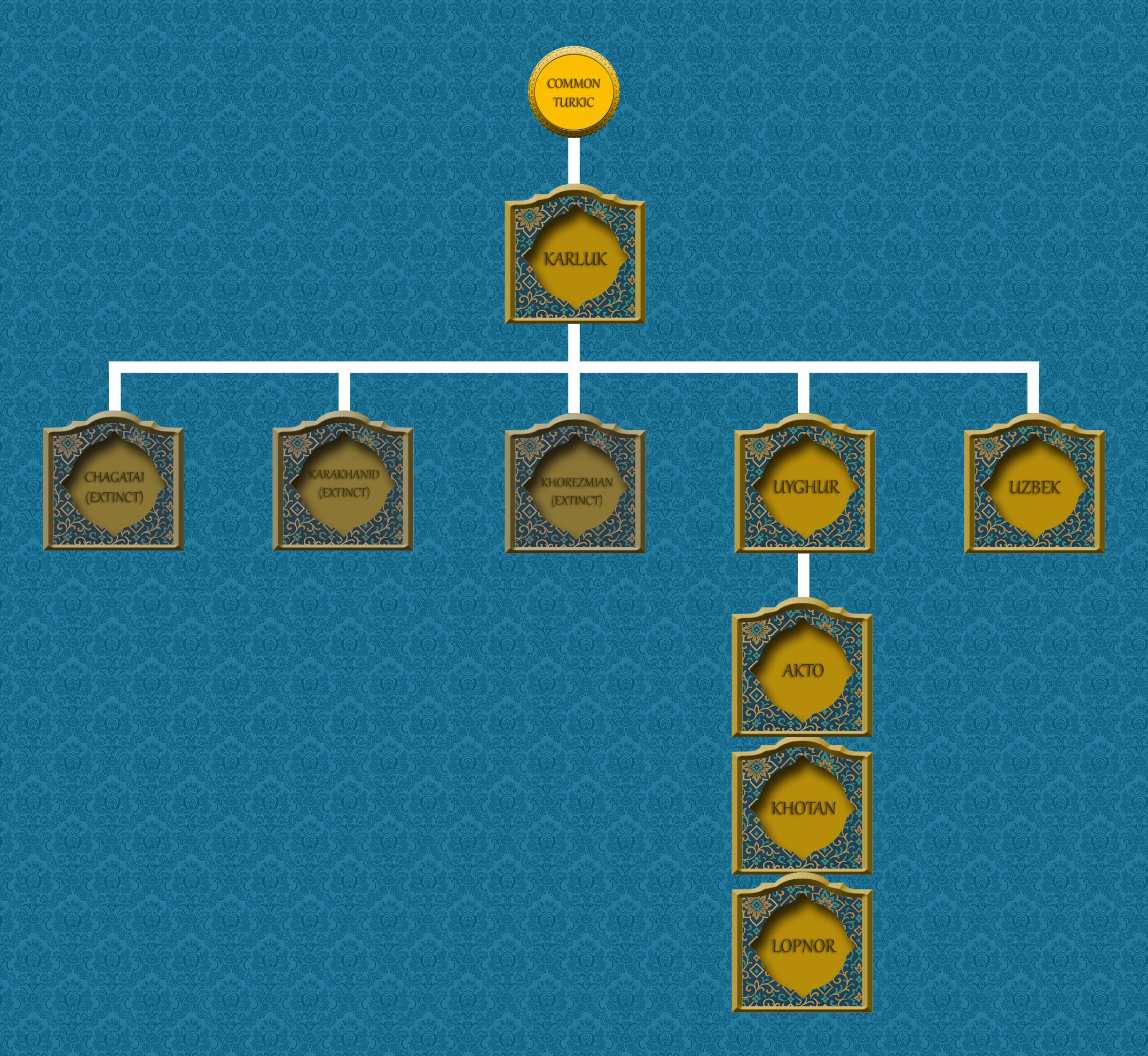
KARLUK BRANCH
KIPCHAK BRANCH
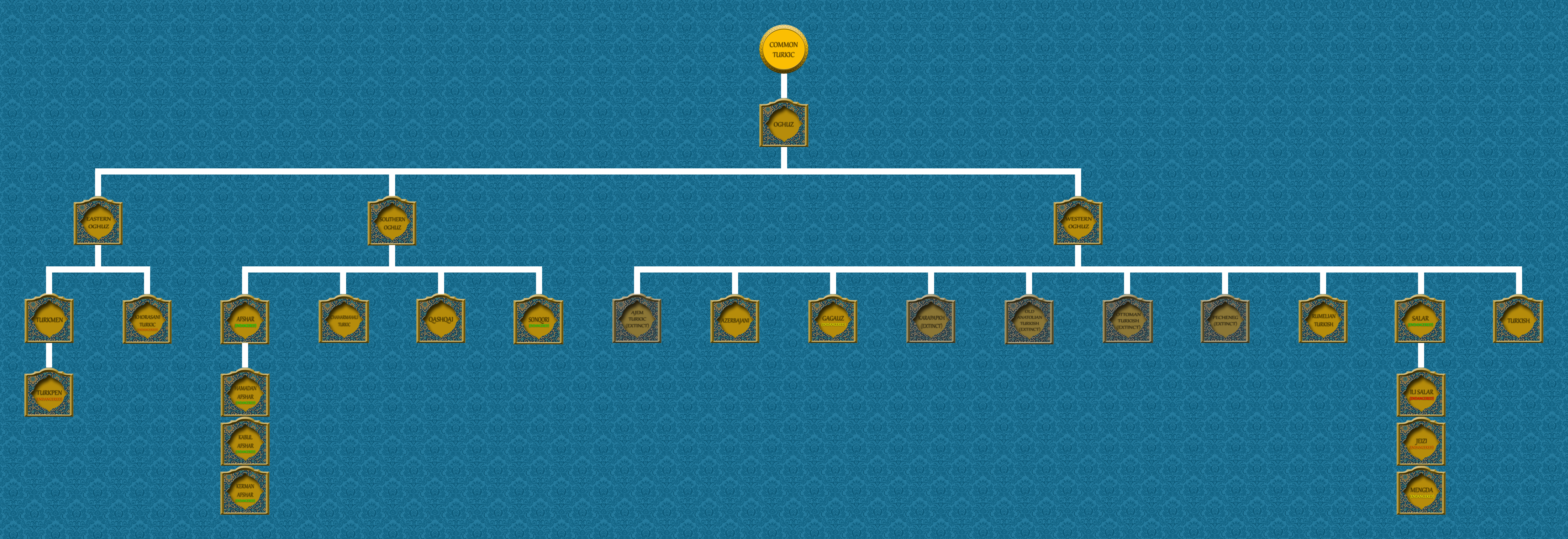
OGHUZ BRANCH
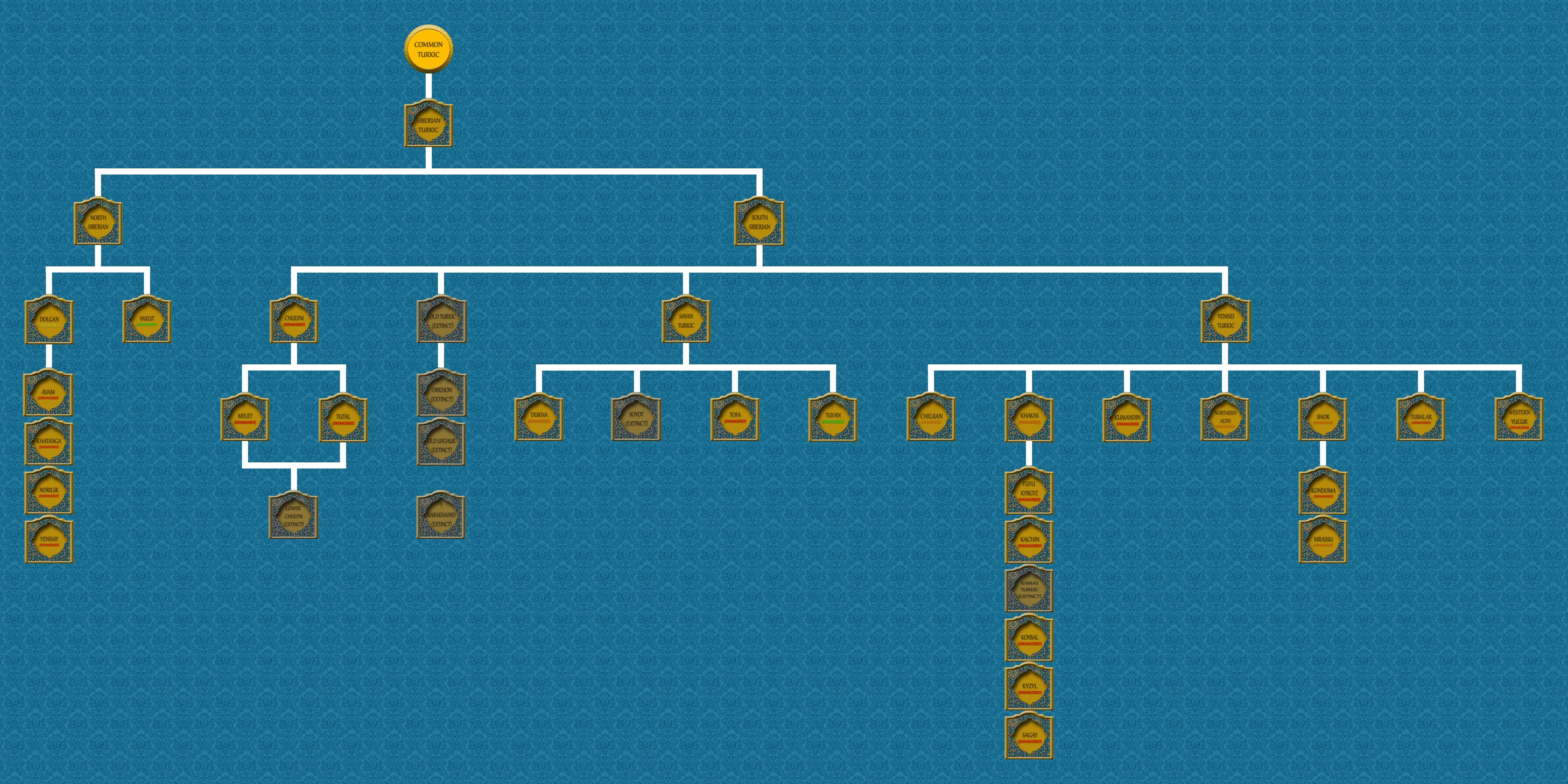
SIBERIAN BRANCH
OGHUR TURKIC FAMILY
 Vault of Stones