-This language family contains about 35 spoken languages.
-This language family has over 200 million speakers.
-Turkic languages are vowel-harmonious. This means that vowels within a word tend to match in certain features, like frontness or roundness, even if they are far apart. The harmony applies throughout the whole word, not just to neighboring vowels. Vowel-harmonious languages also tend to favor the use of suffixes.
-Turkic languages are also agglutinative languages. This means that Turkic words are created by stringing together word parts to show possession, plurality, or tense. This can make sentences in Turkic languages shorter than some other languages.
Some key features of agglutinative languages:
Words = root + suffix + suffix + suffix…
Each suffix has one meaning.
Suffixes don’t get jumbled. They’re clean and stackable.
Vowel harmony helps suffixes “fit” smoothly.
-Turkic languages have subject-object-verb order.
-Turkic languages lack grammatical gender. What this means is that nouns, adjectives, and pronouns are gender neutral, or do not change based on gender.
There are no feminine or masculine nouns in Turkic languages, unless they are borrowed from other languages.
There are no gender articles in Turkic languages.
There are no gendered verb endings or adjective forms in Turkic languages.
-Most Turkic languages have a high level of mutual intelligibility. Especially those from the Oghuz branch.
-Turkic languages have two main subfamily groups. Common Turkic and Oghuric. Chuvash is the only surviving language in the Oghuric subfamily Group. All other Oghuric languages are now extinct.
-Turkic languages use different writing systems. Up until the 9th Century, Old Turkic Script was officially used among Turkic peoples. Eventually it was replaced with the Arabic script. Today most Turkic languages are written using Cyrillic script. During the Soviet period, Cryrillic replaced Arabic Script in many Turkic countries. Although some do continue to use Arabic, Cyrillic is still used in an official capacity. Only Uyghur and some Turkic people in Iran use Arabic script in an official capacity today. Turkish and Gagauz are the only Turkic languages that use Latin Script officially.
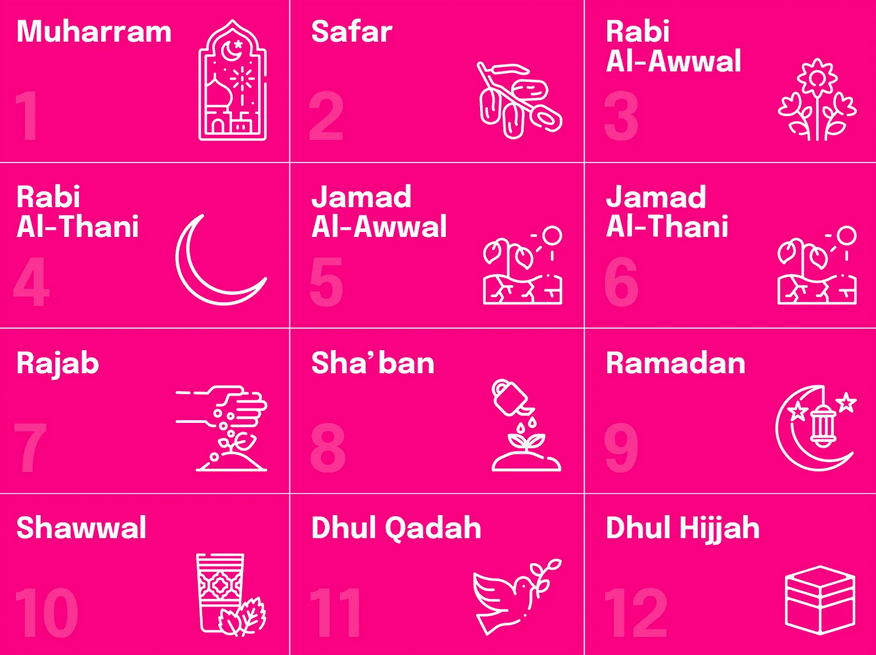
Islam employs its own unique lunar calendar, consisting of twelve months, with each month having either twenty-nine or thirty days, totaling 354 days in a lunar year. To account for the difference between the lunar and solar years, an extra day is added to the last month of the year eleven times within a cycle of thirty years. As a result, 103 Islamic years equate to approximately 100 solar years.
Muslims mark their calendar from the Hijrah, which is the migration of the Prophet Muhammad (ﷺ) from Mecca to Medina in 622 C.E. Therefore, significant dates in Islamic history, such as the year of the Prophet’s (ﷺ) passing, are noted as 10 A.H. (After Hijrah) rather than 632 C.E. This system of dating reflects the importance of the Hijrah in the Islamic tradition and serves as a reminder of the beginning of the Muslim community.
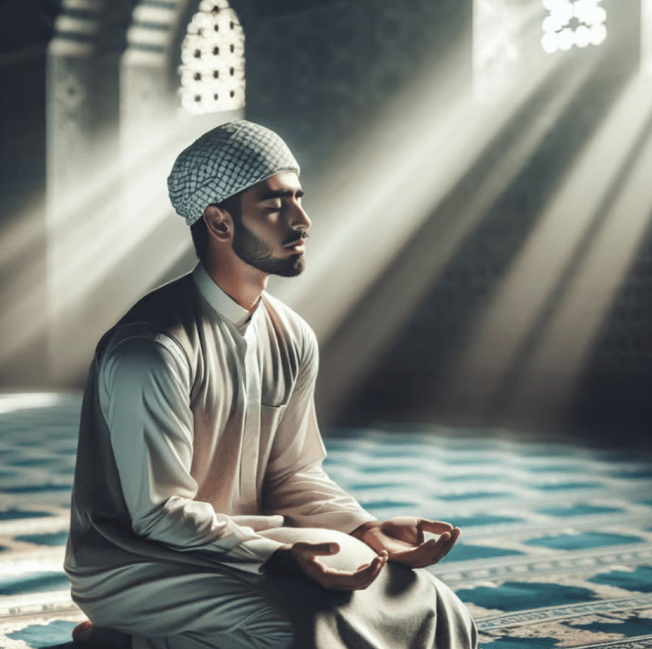
Among the five pillars of Islam, Muslims are commanded to engage in daily prayers (Salaht), fast during the holy month of Ramadan (Sawm), and make the pilgrimage to Mecca (Hajj) at least once in their lifetime, if able. These practices are fundamental to their faith and are integral to the Islamic way of life. In addition to these core obligations, Muslims are also required to observe two annual feasts.
Eid al Fitr (Feast of Breaking-Fast)
Eid al-Fitr is celebrated on the first day of Shawwal, the month following Ramadan, marking the end of fasting and the beginning of a return to normal life. This joyous festival symbolizes spiritual renewal and gratitude to Allah for the strength shown during Ramadan. It is a time of feasting, joy, and communal celebration, and traditionally lasts for up to three days.
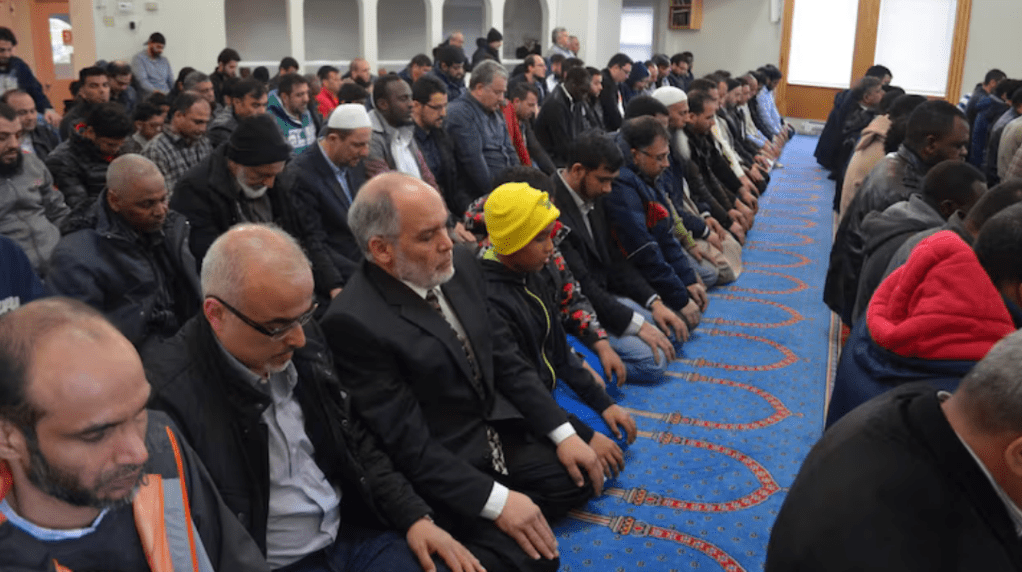
During Eid al-Fitr, Muslims engage in various customs and rituals. The day begins with a special prayer called the Salat al-Eid, performed in congregation at mosques or open fields. This prayer is often followed by a sermon (khutbah) that emphasizes charity and community. As part of the celebration, it is customary for Muslims to give Zakat al-Fitr, a form of almsgiving meant to purify those who fast and assist the less fortunate, ensuring that everyone has the means to participate in the festivities.
In many Muslim societies, Eid al-Fitr is a time for exchanging gifts, visiting friends and relatives, and honoring the memory of deceased loved ones. Families often hold gatherings that include elaborate meals featuring traditional dishes, reflecting the diverse culinary practices of different cultures.
Additionally, it has become common for Muslims to send Eid al-Fitr cards, similar to the way Christians send Christmas cards, to convey warm wishes and blessings to family and friends. This practice reinforces community bonds and fosters a spirit of goodwill during this significant time of celebration.
Some common gifts given during this holiday are:
-Money (Eidi): It is traditional for adults to give children and younger family members money, often referred to as “Eidi.” This is a way to share the joy of the festival and help children feel included.
-Clothing: New clothes are often purchased for family members to wear on Eid, symbolizing renewal and celebration. It is common for families to buy traditional attire or festive outfits.
-Sweets and Confectionery: Specialty sweets and desserts are prominent during Eid. Gifts of homemade or purchased sweets, such as baklava, dates, or cookies, are often shared among friends and family.
-Personal Items: Items such as jewelry, perfumes, or decorative goods can also be given as gifts. These are often thoughtful presents that reflect the recipient’s taste and preferences.
-Decorative Gifts: Some people give home decor items, such as candles, decorative plates, or artwork, to celebrate the festive spirit.
-Food Baskets: Gift baskets filled with an assortment of food items, including fruits, nuts, or specialty items, are also popular as a means of sharing prosperity and abundance.
Eid al Adha (Feast of Sacrifice)
Eid al-Adha, also known as the “Festival of Sacrifice,” is celebrated on the 10th of Dhul-Hijah, the final month of the Islamic lunar calendar, which coincides with the Hajj pilgrimage. Though it is closely linked with the pilgrimage and an integral part of the Hajj rituals, Eid al-Adha is observed by Muslims worldwide, even by those who are not performing Hajj.
This significant feast commemorates the moment when the Prophet Ibrahim (Abraham) demonstrated his unwavering faith by being willing to sacrifice his son Isma’il (Ishmael) in obedience to God’s command. At the moment of sacrifice, God recognized Ibrahim’s profound devotion and provided a ram as a substitute, allowing him to fulfill the command without harming his son. This event illustrates themes of faith, obedience, and divine mercy.
On Eid al-Adha, the head of each household is traditionally required to sacrifice a livestock animal, such as a sheep or goat, as an act of worship and gratitude. This act of Qurbani (sacrifice) serves not only as a remembrance of Ibrahim’s willingness to submit to God’s will but also as a way to share blessings with others.
After the sacrifice, the meat is divided into three portions: one third is for the family, one third is given to relatives and friends, and the final third is distributed to those in need within the community. This practice fosters a sense of unity and generosity, ensuring that even the less fortunate can partake in the celebrations and enjoy a festive meal.
Eid al-Adha also features special prayers, known as the Salat al-Eid, performed in congregation, and often includes communal celebrations, festive meals, and the exchange of greetings and well-wishes among family and friends. The holiday emphasizes the values of sacrifice, charity, and compassion, as communities come together to celebrate and reflect on their faith.
New Year
Muharram marks the beginning of the Islamic lunar calendar and holds significant importance in the Muslim faith. It is a month of reflection, remembrance, and various religious observances. Traditionally, it is believed to be the month in which the Hijrah, the migration of the Prophet Muhammad (ﷺ) from Mecca to Medina, occurred, symbolizing a pivotal moment in Islamic history and the establishment of the Muslim community.
In Sunni communities, the tenth day of Muharram, known as Ashura, is recognized as a day of fasting. Muslims are encouraged to fast on this day as a means of drawing closer to Allah, seeking forgiveness, and reflecting on the teachings of Islam. The Prophet Muhammad (ﷺ) is reported to have fasted on Ashura as it commemorates the day when Prophet Moses and the Israelites were saved from Pharaoh’s oppression. Sunnis may also observe the day by fasting on the ninth and tenth days of Muharram to distinguish their practices.
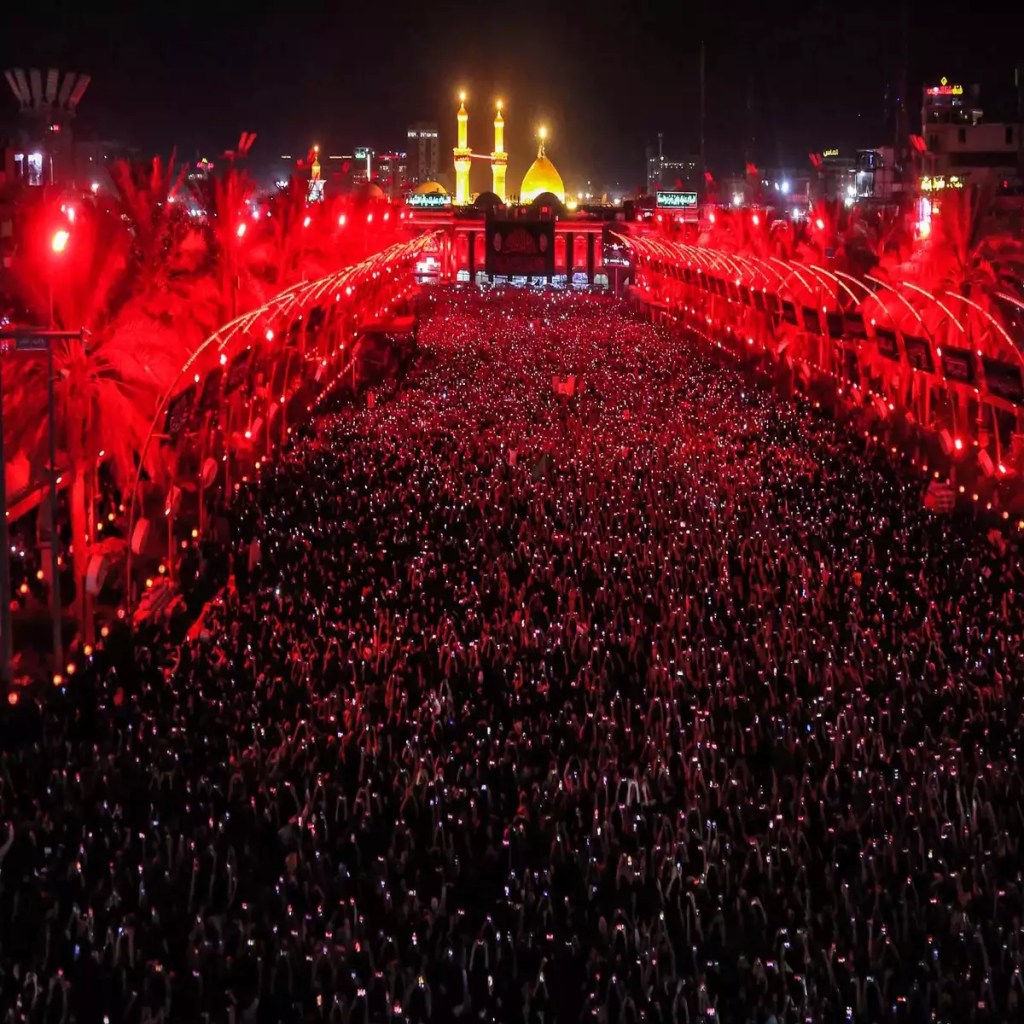
For Shia Muslims, however, the significance of Ashura takes on a different and deeply profound meaning. It commemorates the Battle of Karbala, which occurred in 680 CE. This battle was a pivotal moment in Islamic history, where Imam Hussein, the grandson of the Prophet Muhammad (ﷺ) and a symbol of justice and sacrifice, stood against the tyranny of Yazid ibn Muawiya. Imam Hussein and his companions were martyred, and their sacrifice is viewed as a powerful example of standing up for truth and justice against oppression. Shia Muslims observe Ashura with various rituals, including mourning ceremonies, processions, and recitations of the events of Karbala, reflecting on the lessons of sacrifice, resilience, and the importance of standing against injustice.
Throughout Muharram, Muslims from both Sunni and Shia traditions engage in acts of charity, prayer, and community gatherings, using this month as an opportunity for spiritual renewal and unity. The observance of Muharram serves to deepen one’s faith and connection to the foundational events of Islam, reinforcing values of compassion, justice, and the struggle against injustice.
Mawlid an Nabi (Prophet Muhammad’s (ﷺ)Birthday)
The traditional celebration of the birth of Prophet Muhammad (ﷺ), known as Mawlid al-Nabi, occurs on the twelfth day of Rabi al-Awwal, the third month of the Islamic lunar calendar. This special occasion is rich in spirituality and community engagement, commemorating the life and teachings of the Prophet, who is revered as the final messenger of God in Islam.
Central to the festivities is the recitation of the Prophet Muhammad’s (ﷺ) biography, highlighting his noble character, significant life events, and contributions to humanity. Many communities gather for special prayers, known as Salawat, which invoke blessings upon the Prophet. These prayers express love and reverence, thanking Allah for sending Muhammad (ﷺ) as a guide.
In various regions, Mawlid al-Nabi is marked by vibrant processions in which participants chant praises, recite poems (known as nazms), and engage in communal singing that celebrates the Prophet’s exemplary life. These processions may feature beautifully decorated banners and, in some cultures, traditional music and dance, reflecting the rich cultural heritage of the communities.
Feasting is also an integral part of the celebration, with families and friends coming together to share special meals. Sweets and traditional dishes are often prepared, symbolizing joy and gratitude for the blessings of the Prophet.
However, the observance of Mawlid al-Nabi is not universally accepted within the Muslim community. The ultra-conservative Wahhabi movement in Arabia, along with some other groups, refrains from celebrating the Prophet’s birthday, viewing it as a modern innovation (Bid’ah) that is not rooted in the practices of the early Muslim community. They emphasize a more austere interpretation of Islamic practice, focusing on the teachings of the Qur’an and the Sunnah.
In contrast, many Muslim communities, particularly those influenced by Sufism, use this occasion to honor not only the Prophet Muhammad (ﷺ) but also the birthdays of revered saints, particularly the founders of various Sufi orders. These celebrations often include special prayers, poetry readings, and gatherings that foster a sense of unity and spiritual reflection.
Overall, Mawlid al-Nabi serves as a rich occasion for Muslims around the world to celebrate their faith, gather in community, engage in acts of devotion, and reflect upon the profound impact of the Prophet Muhammad (ﷺ) in their lives.
After the glories of the Baghdad Caliphate, Islam experienced a period of relatively stable existence. This era witnessed significant events such as the battles with Christian Crusaders over the holy sites in Palestine during the 12th and 13th centuries, which saw the emergence of Saladin, one of Islam’s most illustrious leaders. Additionally, Islam expanded eastward into regions like India, China, and Southeast Asia. The 14th century also marked the rise of the Ottoman Empire. However, despite these developments, Islam never fully regained the wealth, power, and political unity it had during the golden age of the Abbasid caliphs.
As European countries transitioned from the medieval period to the industrial age, many Islamic nations remained in pre-industrial societies. Several reasons have been suggested for this period of relative quiet in the Islamic world. A key factor is the inherently conservative nature of the religion. While most religions tend to be conservative, Islam is considered particularly so. Muslims believe that Muhammad (ﷺ) was the last of God’s prophets and that the Qur’an contains God’s final message to humanity. For salvation, the focus is on understanding the Qur’an and applying its teachings to one’s life. Consequently, conservative Muslim scholars often concluded that there was little need to seek new knowledge or embrace change, especially when such influences came from outside the Muslim community. In response to growing pressures from the industrialized West, some conservative scholars and communities chose to retreat into self-imposed isolation.
Another significant reason for the lack of change among Muslims might have been their sense of self-satisfaction compared to European countries. Muslims had decisively defeated the Christian Crusaders who invaded their lands and later captured the formidable city of Constantinople from its Christian defenders. Consequently, the Islamic world harbored a sense of military and cultural superiority over Christian countries. However, in the 16th century, advancements in naval and military technology, alongside newfound wealth from the Americas, shifted the global balance of power in favor of Europeans. Particularly in the Middle East, Muslims were slow to recognize and understand the implications of these developments. Some scholars suggest that it was not until Napoleon’s conquest of Egypt in the early 19th century that Islamic nations became acutely aware that Europeans had made many advancements surpassing their own.
A third reason for the slow transition of Muslim nations into the modern era was the rise of highly conservative groups within Islam that actively opposed change. The most notable among these was the Wahhabi movement, founded in 1744 by Muhammad Ibn-Abd-Wahhab. Wahhabism is characterized by its strict traditionalism and rejection of all forms of innovation. When the House of Saud came to power in Arabia, this puritanical movement aligned itself with their rule, further entrenching its influence. In the 19th century, Wahhabis suppressed Sufi practices and other groups they viewed as deviations from what they understood to be the true Islam of the Prophet Muhammad (ﷺ) and his close companions. Today, the Wahhabi movement is most prominent in Saudi Arabia, where the vast wealth of the Saudis has enabled them to send missionaries across the Muslim world. Consequently, few Muslim societies remain untouched by Wahhabi-inspired puritanical movements.
The isolation of the Muslim world began to break down in the early 20th century, significantly altering its relationship with the modern world. By this time, advancements in transportation and communication brought the Muslim world closer to European powers. World War I saw the Ottoman Empire align itself with Germany and Austria in the conflict. Following the war, the victorious Allies- comprising Britain, France, and the United States- disassembled the Ottoman Empire, leading to the imposition of their control over much of the Middle East. In the years following World War I, the lands that were once under Ottoman rule began to evolve into independent nations. It is important to note that the boundaries of many of these newly formed nations were drawn arbitrarily by European powers in the aftermath of the war, often disregarding the cultural and historical context of the region. This created lasting complexities that continue to affect the Middle East today.
The Arab nations of the Middle East were discovered to hold the world’s largest reserves of crude oil, transforming their global significance. As demand for oil surged and domestic production in the United States and Europe could no longer satisfy this need, the wealth and political clout of Arab nations grew dramatically. This newfound prominence has sparked a resurgence of interest in Islam, both within the region and beyond. The importance of Muslim states in the Middle East can no longer be overlooked; they have become vital players in the industrialized world. Similarly, Indonesia, with its population exceeding 200 million and vast petroleum reserves, is poised to assume a larger role in both the Asian and Islamic landscapes in the 21st century, further underscoring the geopolitical significance of the Muslim world today.
The internal resurgence of Islam has manifested in various significant ways. One prominent aspect is the emergence of reform movements from within the faith. Some Muslims have engaged in textual criticism of the Qur’an, akin to approaches taken by Christians and Jews with their scriptures. Their aim is to uncover what the Pakistani scholar Fazlur Rahman termed the “major themes of the Qur’an” and apply these insights to address contemporary political and economic challenges.
Additionally, there has been a shift in traditional Islamic scholarship toward pressing questions such as developing a philosophy of science grounded in ethical principles, as well as exploring what Indonesian reformer Nurcholish Madjid identifies as the “Islamic roots of modern pluralism.” Furthermore, Islamic feminists have highlighted portions of the Qur’an and hadith that advocate for the just treatment of women, using these texts as a foundation to expand women’s religious, social, and economic roles in the modern Islamic world. This multifaceted revival illustrates the dynamic nature of contemporary Islamic thought and its capacity to engage with modernity while remaining rooted in tradition.
One of the most notable outcomes of the resurgence of Islam in the 20th century has been its vibrant and active missionary movement across Africa. The movement of Muslim missionaries south of the Sahara began in the late 19th century, coinciding with the end of the slave trade, which opened the door for the conversion of Africans to Islam. While Islam has been present in parts of Africa since the 7th century, with North Africa being among the earliest regions outside Arabia to embrace the faith, the influence of Islam has long permeated the continent’s interior, particularly in urban areas.
For centuries, Muslim merchants and traders engaged with various communities across Africa, fostering connections and sharing their faith. The colonial presence of European powers in the 18th and 19th centuries inadvertently facilitated Muslim missionary efforts, allowing the teachings of Islam to reach deeper into the interior regions.
This revival underscores the enduring relevance of Islam, as it continues to inspire individuals and communities throughout Africa, promoting a message of unity, faith, and social justice. The growth of Islam in Africa not only reflects the spiritual desires of its people but also symbolizes a broader embrace of cultural and religious identity in the face of modern challenges.
The abuses inflicted upon Africans by colonial powers also created an opportunity for the spread of Islam. As African nations fought for and ultimately achieved their independence, many found a profound avenue for expressing their resistance to European colonialism and its associated values through conversion to Islam. Unlike Christianity, which was often associated with colonial rule, Islam’s teachings transcend color and ethnic origin, presenting itself as a faith that embraces diversity and equality among all believers.
For many people across Africa, Asia, and the Middle East, Islam has come to symbolize not only spiritual fulfillment but also the struggle for social justice and self-determination. It serves as a rallying point for those seeking to reclaim their identities and assert their rights in the face of historical oppression. This alignment of Islam with movements for justice and freedom reinforces its relevance in modern society, as it inspires individuals to advocate for their own dignity and the welfare of their communities. Through its core principles of equality and justice, Islam continues to resonate deeply with those who aspire for a more just and equitable world.
Islam, like Judaism, has always been a religion that emphasizes obedience to the will of God in the here and now. Therefore, it has never encouraged the ascetic life so characteristic of Indian religions and some forms of Christianity. Nevertheless, in every religion, there is a hunger for mystical experience. Furthermore, Islam arose in a land dominated by Byzantine Christianity, which highly prized ascetic life; in later years, it developed in India, where there us also a strong concern for communion with God through asceticism.
In Islam, the pursuit of a mystical union with God is embodied by the Sufi tradition. The term “Sufi” is derived from the word “wool,” referencing the coarse woolen garments worn by early Muslim mystics as a symbol of poverty and a rejection of worldly pleasures. Sufis assert that their tradition has always been an integral part of Islam, tracing their origins back to the Prophet Muhammad (ﷺ) and the teachings of the Qur’an. They maintain that early Muslims were more devout and spiritually focused than those in later periods. Indeed, it’s likely that the expansion of Islam into a vast empire led to a shift towards materialism, which contrasted with the simplicity of life during the time of the Prophet Muhammad (ﷺ). As the Abbasid dynasty flourished in Baghdad, the grandeur of this era prompted some to advocate for a return to a simpler, more austere way of life. Thus, the Sufi movement likely gained momentum during the ninth century.
One of the most remarkable Sufis of the early period was Mansur Al-Hallaj, whose pursuit of mystical union with God led him to the bold proclamation, “I am the truth.” This declaration, along with his disregard for the ritualistic practices of orthodox Islam, resulted in his execution in 922. As he faced death, Al-Hallaj asked for forgiveness for his persecutors. The martyrdom of Al-Hallaj and subsequent persecutions forced the more radical elements of the Sufi movement to operate underground. As orthodox Muslim scholars increasingly focused on the formal and legalistic aspects of Islam, the Sufis turned their attention to its emotional and mystical dimensions, thereby resonating with the common people.
Abu-Hamid Al-Ghazali, a prominent theologian at the Nizamiyah School in Baghdad, sought to bridge the gap between the legalistic and mystical traditions within Islam. Renowned for his profound scholarship in theology and law, Al-Ghazali experienced a deepening dissatisfaction with the Orthodox Muslim doctrines and rituals as he aged. In a profound quest for spiritual fulfillment, he chose to forsake his academic position and family, embarking on a path reminiscent of Saint Francis of Assisi, aimed at finding God through poverty and mystical experiences.
Al-Ghazali ultimately discovered his spiritual home among the Sufis, where he found the meaning he sought. His influential works, including The Revivification of the Religious Sciences, The Folly of the Philosophers, and The Niche of the Lights, significantly shaped Islamic thought, enriching orthodox doctrine with mystical insights. He championed Sufism as a remedy for spiritual ailments, emphasizing, however, that even the most accomplished mystics are still obligated to uphold the ritual practices of orthodox Islam.
In the twelfth century, Sufis began to organize into spiritual fraternities, typically centered around a revered Sufi saint. New converts to these orders were referred to as fakirs or dervishes. Traditionally, novices committed to studying under a master until they evolved into masters themselves.
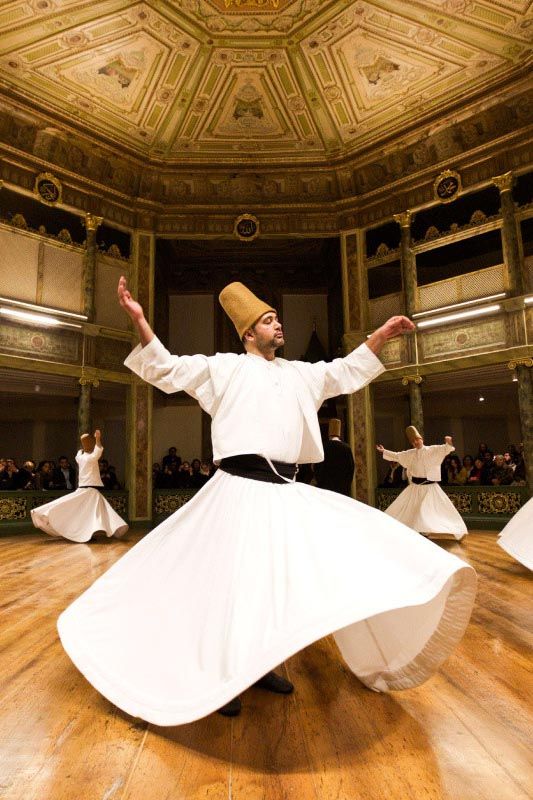
Sufi practices are diverse, but they generally emphasize principles of discipline, poverty, and abstinence from worldly pleasures. While some Sufis engaged in extreme asceticism and emotional expressions associated with the terms fakir and dervish, such practices are not representative of the Sufi movement as a whole. Reports of Sufis walking on hot coals or swallowing snakes, alongside Turkish dervishes spinning in place for hours to attain oneness with God, highlight the more dramatic aspects of Sufism.
Ultimately, the true essence of the Sufi contribution to Islamic thought lies in their profound insistence on the potential for experiencing knowledge of God through mystical encounters.
Islam, like most major religions, is not a monolithic body. While the majority of Muslims share common beliefs in the fundamental principles of Islam, there is considerable diversity in interpretations, beliefs, and practices across different cultures, sects, and communities.
SUNNI
Approximately 85% of Muslims worldwide identify as Sunni. Sunni Muslims view themselves as the custodians of Islamic orthodoxy and tradition, grounding their faith and practices in the Qur’an and the traditions (Hadith) of the early Muslim community. According to Sunni teachings, the Qur’an and Hadith serve as the primary sources of religious and legal authority.
The Hadith, which are accounts of the words and actions of the Prophet Muhammad (ﷺ) and his close companions, provide detailed guidance that complements the Qur’an. Thousands of Hadith have been meticulously recorded from witnessed accounts and are used by Muslim scholars to address legal questions and clarify the ritual practices of Islam.
The study of the Qur’an and Hadith remains a cornerstone of religious education in Sunni Muslim societies. In addition to these foundational texts, Sunni scholars employ methods such as analogy (qiyas) and consensus (ijma) to resolve issues not explicitly addressed in the Qur’an or Hadith. These tools are particularly vital for developing Islamic solutions to contemporary challenges in the modern world.
As Islam expanded and absorbed the cultural and social influences of the diverse regions where it spread, various schools of thought and interpretation emerged. These schools differed in the emphasis they placed on the Qur’an, the Hadith, and the role of human reasoning in deriving religious and legal rulings. Within Sunni Islam, four major schools of thought, known as madhabs, were established. Every Sunni Muslim typically aligns with one of these schools, which guides their understanding and practice of Islamic teachings.
HANAFI
The Hanafi school of thought, one of the four major Sunni madhabs, originated in Kufa, Iraq, and was founded by Imam Abu Hanifa (699–767 CE). It is known for its emphasis on reason, analogy (qiyas), and consensus (ijma) alongside the Qur’an and Hadith in deriving Islamic rulings.
The Hanafi school is the most widespread of the Sunni schools and is predominant in several regions, including:
South Asia: Countries like India, Pakistan, Bangladesh, and Afghanistan.
Central Asia: Including Uzbekistan, Turkmenistan, Tajikistan, and Kazakhstan.
Turkiye: As the Ottoman Empire adopted Hanafi jurisprudence as its official school.
The Balkans: Due to Ottoman influence in Southeastern Europe.
Parts of the Middle East, Such as Iraq and Syria.
Its broad geographical spread reflects the influence of the Abbasid and Ottoman Empires, which facilitated the dissemination of Hanafi thought
MALIKI
The Maliki school of thought, one of the four major Sunni madhabs, was founded by Imam Malik ibn Anas (711–795 CE) in Medina, Saudi Arabia. This school places significant emphasis on the practices (‘amal) of the people of Medina, viewing them as a reflection of the Prophet Muhammad’s (ﷺ) original teachings. Alongside the Qur’an and Hadith, the consensus of the Medinan community plays a critical role in Maliki jurisprudence.
The Maliki school is predominant in the following regions:
North Africa: Morocco, Algeria, Tunisia, Libya, and Mauritania.
West Africa: Countries such as Senegal, Mali, Chad, Niger, and parts of Nigeria.
Sudan: Particularly in its northern regions.
Parts of theArabian Peninsula: Historically, in regions like Bahrain and parts of Yemen.
The school’s prominence in these areas reflects the influence of early Islamic trade routes and the spread of Islamic teachings through North and West African scholars and traders.
SHAFI’I
The Shafi’i school of thought, one of the four major Sunni madhabs, was founded by Imam Al-Shafi’i (767–820 CE). It originated in Egypt and Iraq, where Imam Al-Shafi’i developed his legal principles, synthesizing aspects of the Hanafi and Maliki schools while introducing a systematic approach to jurisprudence. This school places strong emphasis on the Qur’an, Hadith, consensus (ijma), and analogy (qiyas).
The Shafi’i school is predominant in the following regions:
East Africa: Particularly in Somalia, Eritrea, Djibouti, and parts of Kenya and Tanzania.
Southeast Asia: Including Indonesia, Malaysia, Brunei, Thailand, and the southern Philippines.
Southern Arabia, Especially in Yemen.
The Levant: In parts of Palestine, Jordan, and Syria.
Egypt: Historically significant, though now the Hanafi school is more widespread there.
The spread of the Shafi’i school was significantly aided by trade and the efforts of Muslim scholars and missionaries, especially along maritime routes in Southeast Asia and East Africa.
HANBALI
The Hanbali school of thought, one of the four major Sunni madhabs, was founded by Imam Ahmad ibn Hanbal (780–855 CE) in Baghdad, Iraq. This school is known for its strict adherence to the Qur’an and Hadith as primary sources of Islamic law, with limited reliance on analogy (qiyas) or speculative reasoning. Hanbali jurisprudence emphasizes textual evidence and is considered the most conservative of the four Sunni schools.
The Hanbali school is predominantly followed in:
Saudi Arabia: It is the official school of thought in the Kingdom and forms the basis of the country’s legal system.
Parts of the Arabian Peninsula: Including Qatar and parts of the United Arab Emirates.
Other regions: Smaller Hanbali communities exist in Iraq, Syria, and Jordan.
The prominence of the Hanbali school in Saudi Arabia is closely tied to its association with the Wahhabi reform movement, which emerged in the 18th century and adopted Hanbali jurisprudence as its foundation.
SHIA (SHI’ITE)
The emergence of the Shia branch within Islam represents a significant division in the faith’s history. This split originated as a political dispute over the leadership of the Muslim community, but later developed profound theological dimensions.
Following the death of the Prophet Muhammad (ﷺ), no clear instructions were left regarding his succession. As a result, leadership passed to three of his close companions, known as the first three caliphs. However, a group of Muslims believed that the Prophet (ﷺ) had designated his cousin and son-in-law, Ali ibn Abi Talib, as his rightful successor.
Ali eventually became the fourth caliph in 656 CE, but his rule was marked by political strife and conflict. He struggled to maintain control and was assassinated in 661 CE, after which the Umayyad dynasty assumed the caliphate.
Ali’s youngest son, Husayn, later challenged the Umayyad rulers in 680 CE. This culminated in the Battle of Karbala in modern-day Iraq, where Husayn and most of his family were killed. This event holds deep significance for Shia Muslims, who regard Husayn and his family as martyrs and view their sacrifice as a symbol of resistance against tyranny and injustice. The tragedy of Karbala continues to be commemorated annually during Ashura, a central observance in Shia Islam.
Throughout Islamic history, there has always been a group of believers who held that the leadership of the faith should remain within the lineage of Ali ibn Abi Talib, the cousin and son-in-law of the Prophet Muhammad (ﷺ). In the early days, these individuals were referred to as Alids, reflecting their allegiance to Ali and his descendants. Over time, this group became known as Shia Ali (the Party of Ali), which eventually evolved into the term Shi’ites.
Here are some of the ways in which the Shia differ from the Sunni:
Shia Muslims believe that while divine revelation concluded with the Prophet Muhammad (ﷺ) and the Qur’an, subsequent generations were guided by divinely inspired leaders known as imams. In Sunni Islam, the term imam typically refers to someone who leads communal prayers, a role with primarily spiritual and organizational significance. However, in Shia Islam, the title of imam holds profound importance. Shia imams are viewed as spiritual and temporal leaders who possess divine authority and infallibility, serving as interpreters of God’s will and guides for the Muslim community.
Shia Muslims believe that following the tragic events of 680 CE, the next imam was Zayn al-Abidin, another son of Ali ibn Abi Talib. Diverging beliefs about the succession of imams led to the formation of distinct Shia sects. One group, known as the ‘Seveners’ (Ismailis), holds that after Zayn al-Abidin, there were six additional imams, culminating in a total of seven divinely appointed leaders. Another group, the ‘Twelvers’ (Ithna Ashari), believes that Zayn al-Abidin was succeeded by a further eleven imams, resulting in a lineage of twelve imams in total. Both sects share the belief that some of these imams did not die but instead went into hiding and are awaiting their return to earth and guide humanity.
A concept, especially prominent among Twelvers, centers on the belief that the Mahdi, the twelfth imam, will reappear as a messianic figure to establish justice and restore true faith on earth.
Due to the profound significance of Husayn’s martyrdom, Shia Muslims place a strong emphasis on the concept of martyrdom in their religious practice and identity. Each year, on the 10th day of Muharram, known as Ashura, the events of Husayn’s tragic death are commemorated through passion plays, processions, and rituals that reenact his sacrifice at the Battle of Karbala. The site of Husayn’s martyrdom in Karbala, Iraq, holds immense spiritual importance and has become a central destination for pilgrimage among Shia Muslims. Additionally, other locations associated with Husayn’s life and family are considered sacred and are frequently visited by Shia pilgrims as acts of devotion and remembrance.
Shia Muslims often view traditional Sunni interpretations of the Qur’an with skepticism. They argue that the absence of explicit references to Ali as the rightful successor to the Prophet Muhammad (ﷺ) in the current version of the Qur’an suggests that it may have been altered or selectively interpreted by those opposed to Ali’s leadership. As a result, Shia theology emphasizes that the Qur’an contains deeper, hidden meanings (batin) that can only be fully understood through allegorical interpretation (ta’wil), guided by the divinely inspired imams. These imams are believed to possess unique insight into the true and esoteric meanings of the Qur’an, beyond its apparent, literal message.
In 1502, Shia Islam was established as the state religion of Persia under the Safavid dynasty, a status it has maintained in present-day Iran. Neighboring Iraq also has a significant Shia population, comprising approximately 60% of its Muslim population. Additionally, Shia minorities can be found in countries such as Saudi Arabia, India, Pakistan, Yemen, and parts of East Africa.
In recent decades, substantial Shia communities have also emerged in the United States and Europe, driven in part by the migration of Muslims, many of them moderates, following the Iranian Revolution of 1979. Globally, Shia Muslims are estimated to make up between 10% and 15% of the total Muslim population.
Like Sunnis, Shias have different schools of Islamic thought. Shia have 4 primary schools of thought.
ITHNA ASHARIYAH (TWELVERS)
The Twelvers are the largest branch of Shia Islam. Twelvers believe in a line of twelve divinely appointed imams, starting with Ali ibn Abi Talib and ending with Muhammad al-Mahdi, the twelfth imam, who is believed to be in hiding and will reappear as the Mahdi to establish justice. Twelvers are found in many countries:
Iran: The largest concentration of Twelvers, where they constitute the majority, and Twelver Shia Islam is the state religion.
Iraq: Significant Twelver population, especially in cities like Najaf and Karbala, which are major religious centers for Twelvers.
Lebanon: The Shia population includes a large number of Twelvers, particularly represented by groups like Hezbollah.
Bahrain: A majority Shia population, with Twelvers being the largest sect.
Pakistan and India: Twelvers are a minority but have a strong presence, particularly in cities like Karachi, Lahore, and Lucknow.
Saudi Arabia: The Eastern Province has a notable Twelver Shia population.
Syria: A smaller but historically significant Twelver minority exists, alongside other Shia groups.
ISMAILIS (SEVENERS)
Ismailis recognize seven imams, diverging from the Twelvers after the sixth imam, Ja’far al-Sadiq. They believe Isma’il ibn Ja’far, his son, was the rightful successor. The Ismailis have two branches. The Nizariare the largest branch, led by the Aga Khan as the present imam. The Dawoodi Bohra and Sulaymani Bohra are subgroups of another branch that emphasize scholarly traditions.
The Ismailis have a rich history of intellectual contributions, particularly in the Fatimid period, and today they are known for their emphasis on education, community development, and global humanitarian efforts under the leadership of the Aga Khan. Seveners are found across the world:
India and Pakistan: Significant Ismaili populations, particularly among the Nizari Ismailis, who follow the Aga Khan as their Imam. Cities like Karachi and Mumbai have prominent Ismaili communities.
Iran: Historically significant, though now a minority group.
Syria: A smaller Ismaili community exists in areas like Masyaf and Salamiyah.
Yemen: The Tayyibi Musta’li Ismailis (Dawoodi Bohras) are centered in Yemen, with a diaspora in India and other parts of the world.
Kenya, Tanzania, and Uganda: Significant Ismaili populations due to migrations during colonial times.
Afghanistan, Tajikistan, and Northern Pakistan (Hunza, Gilgit): The Pamiri Ismailis are found in these regions, with distinct cultural practices.
North America and Europe: Ismaili diaspora communities are present due to modern migrations, particularly in the United States, Canada, and the United Kingdom.
Burma (Myanmar) and Malaysia: Small communities of Ismailis exist here due to historical trade routes and migrations.
ZAIDIS (FIVERS):
Zaidis accept Zaid ibn Ali, a grandson of Husayn, as the fifth imam. They emphasize political activism and believe the imam does not need to be divinely appointed but must be a direct descendant of Ali and fulfill certain qualifications. The Zaidis are closer to Sunni Islam in terms of jurisprudence and theology than other Shia sects. Zaidis are found in the Middle East.
Yemen: The primary and most enduring center of Zaidi Islam. Zaidis historically ruled Yemen through various Imamate dynasties until the overthrow of the Mutawakkilite Kingdom in 1962, which ended Zaidi political rule. The contemporary Houthi movement (Ansar Allah), active in Yemen’s ongoing conflict, is rooted in Zaidi ideology, though it has incorporated broader political and religious elements.
Saudi Arabia: Small Zaidi communities exist in the Najran region, near the Yemeni border.
Iran: While Zaidism historically had a presence, it largely faded with the rise of Twelver Shia Islam.
Iraq: Early Zaidi activity was significant in Kufa, but it has not remained a major Zaidi stronghold in modern times.
ALAWITES
Alawites have a highly esoteric interpretation of Islam, blending elements of Shia Islam with other mystical and philosophical traditions. They venerate Ali as an embodiment of the divine. Alawites are often considered distinct from mainstream Twelver Shia Islam due to their unique beliefs and practices. While Alawites are geographically concentrated in the Levant, particularly Syria, their unique theology and identity have set them apart from other Islamic sects, contributing to both their distinctiveness and historical marginalization:
Syria: The Alawites are predominantly based in western Syria, particularly in the Latakia and Tartus regions and parts of the Homs and Hama provinces. They constitute about 11–15% of Syria’s population and have been politically influential, especially since the mid-20th century. The Assad family, which has ruled Syria since 1970 until very recently, is Alawite.
Turkiye: Known locally as Nusayris, there is a small Alawite community in the southern Turkish provinces of Hatay, Adana, and Mersin.
Lebanon: A minority Alawite population exists in northern Lebanon, particularly in and around the city of Tripoli.
Israel (*disputed): Small Alawite communities are present in the occupied Golan Heights region.
IBADI
Ibadi Islam is one of the earliest Islamic sects, tracing its origins to the late 7th century during the early Islamic caliphate. It emerged as a distinct group during the political and theological turmoil following the First and Second Fitnas (civil wars). The Ibadis derive their name from Abdullah ibn Ibad, an early leader and theologian, although much of their doctrinal foundation was laid by Jabir ibn Zayd, a scholar from Basra, Iraq.
Ibadis reject association with both Sunni and Shia Islam, positioning themselves as a separate branch of Islam. While their beliefs share some similarities with the Kharijites, they distanced themselves from the more militant and extremist elements of the Kharijite movement.
Ibadi Islam is an early, distinct branch of Islam emphasizing moderation, justice, and community welfare. While originating from the Kharijite movement, Ibadis rejected its extremism and developed a theology that stresses independent reasoning and simple worship. Predominantly found in Oman and small communities across North Africa and East Africa, Ibadi Islam represents a unique and often-overlooked chapter in the history of Islam.
Ibadis reside in Oman and several parts of Africa: Algeria, Libya, Tunisia, Zanzibar, Tanzania, and Kenya.
OTHER SECTS
SALAFI
Salafism is a reformist movement within Sunni Islam that emerged in the Arabian Peninsula, particularly in Saudi Arabia, in the 18th century. It was popularized byMuhammad ibn Abd al-Wahhab, who sought to purify Islam by returning to what he viewed as its original practices, as followed by the salaf (the first three generations of Muslims). The movement gained significant influence in Saudi Arabia and spread globally through Saudi-funded religious education, missionary activities, and literature.
Today, Salafism has adherents worldwide, with significant communities in:
Saudi Arabia: Salafism is the dominant religious ideology and is closely associated with Wahhabism, which has state support.
Middle East and North Africa: Including Kuwait, Qatar, the UAE, Egypt, Yemen, and Libya.
South and Southeast Asia: Such as India, Pakistan, Indonesia, and Malaysia.
Sub-Saharan Africa: In countries like Somalia, Nigeria, and Kenya.
The movement’s growth has been facilitated by modern communication, funding for Islamic education, and its appeal to Muslims seeking a “pure” form of Islam untainted by local cultural practices or innovations (bid’ah). However, Salafism encompasses a spectrum of beliefs and practices, ranging from quietist and apolitical groups to more activist and sometimes militant factions.
DRUZE
The Druze community originated from Ismailism but has evolved into a distinct religious tradition that incorporates elements from multiple faiths. They do not identify as Muslims in the conventional sense. This unique ethnoreligious group with a monotheistic faith emerged in the 11th century during the Fatimid Caliphate. While their religion has roots in Ismaili Shia Islam, it incorporates elements of Gnosticism, Neoplatonism, and other philosophical traditions. The Druze are primarily concentrated in the Levant:
Lebanon: Lebanon has the largest Druze population, particularly in the Chouf Mountains, Mount Lebanon, and the Bekaa Valley. The Druze are a politically significant group in Lebanon, recognized as one of the country’s major sects with guaranteed representation in government.
Syria: Druze are primarily concentrated in Jabal al-Druze (also known as Jabal al-Arab) in southern Syria, around the Sweida region. They have historically played a significant role in Syrian society and politics, often maintaining a degree of autonomy.
Israel (*Disputed): Druze communities are found in the occupied Galilee and Carmel regions, as well as in the Golan Heights. Unlike many other Arab groups in Israel, the Druze have a unique relationship with the Israelis and serve in the Israeli occupational forces.
Jordan: A smaller Druze community resides in northern Jordan, near the Syrian border.
Sufism is also a school of thought of Islam, but it will have its own page: HERE
Islam differs from Roman Catholic Christianity in its level of organizational structure. One notable reason is that Islam emphasizes personal practice, allowing most religious duties to be performed privately without the need for a clergy or priest. Daily prayers, fasting, charity, and even the pilgrimage to Mecca can be undertaken without direct oversight from religious leaders.
Another contributing factor to Islam’s decentralized structure is the absence of a clearly defined succession plan left by the Prophet Muhammad (ﷺ). Of his children, only his daughter Fatima (رَضِيَ ٱللَّٰهُ عَنْهَا) outlived him, but the Prophet (ﷺ) did not explicitly designate her or anyone else as his successor. The only gesture that hinted at a possible leader was his appointment of Abu Bakr to lead the community in prayer.
Following Muhammad’s (ﷺ) death, confusion arose within the Muslim community regarding leadership. Ultimately, the consensus was reached that Abu Bakr should serve as the first caliph. The term caliph derives from the Arabic word khalifa, meaning “deputy” or “representative.” While the caliph assumed responsibility for governing Muslims in worldly matters, spiritual guidance was entrusted to the Qur’an.
The caliphate is the central unifying institution in the history of Islam. Initially, the caliphs were companions of the Prophet Muhammad (ﷺ), serving as pious leaders of the Muslim community. They were chosen through election or common consent. Over time, however, the caliphate evolved into a hereditary institution, with the role of the caliph resembling that of a monarch.
The first four caliphs, often referred to as the “Rightly Guided Caliphs,” were selected from among the Prophet’s (ﷺ) closest companions. They ruled from Arabia and are highly regarded for their adherence to Islamic principles. These caliphs were:
Abu Bakr (632–634): A close companion of the Prophet (ﷺ), who worked to suppress rebellions and unify the Muslim community following the Prophet’s passing.
Umar (634–644): Known for his administrative reforms and expansion of the Islamic empire.
Uthman (644–656): Remembered for commissioning the compilation of the Qur’an into a single, standardized text. Tragically, he was assassinated.
Ali (656–661): The Prophet’s (ﷺ) cousin and son-in-law, married to his daughter Fatima. His caliphate was marked by internal strife, and in 661, his rule was overtaken by the Umayyads, who established the first Islamic dynasty.
The lives of these early caliphs were fraught with challenges. Abu Bakr faced the daunting task of consolidating a fragile and newly unified Muslim community. Uthman’s assassination highlighted deep divisions within the community, and Ali’s caliphate ended amidst significant turmoil, setting the stage for the dynastic rule of the Umayyads.
Between 661 and 750, the Muslim community, or ummah, was governed by the Umayyad caliphs, who established their capital in Damascus (in present-day Syria). The Umayyads prioritized political power, territorial expansion, and the accumulation of wealth over their role as spiritual leaders of the Muslim community. Their focus on empire-building often drew criticism for neglecting the religious ideals of the caliphate.
The Umayyads were eventually overthrown by the Abbasid dynasty, which ruled from Baghdad between 750 and 1258. The Abbasids surpassed their predecessors in grandeur, ruling with immense pomp and splendor reminiscent of the tales in Arabian Nights. During their reign, a remarkable intellectual and cultural flourishing occurred. Muslims, Christians, and Jews collaborated to study, translate, and preserve the works of Greek philosophers and scientists, ensuring their survival for future generations. This scholarly exchange laid the groundwork for the resurgence of learning in Europe during the Italian Renaissance.
After the 10th century, the golden age of Muslim civilization began to wane, and the caliphate’s power steadily declined. The Abbasid caliphs, once the pinnacle of Islamic authority, were eventually overshadowed and replaced by the Mamluk Turks, who governed the Muslim empire from Egypt.
In the sixteenth century, the Mamluks were themselves supplanted by the Ottoman Turks, who combined the roles of caliph and sultan, making the title of caliph synonymous with political and military leadership under Ottoman rule. However, the glory and influence of the caliphate continued to erode over time.
The final blow came with the collapse of the Ottoman Empire after World War I, marking the official end of the caliphate. By that time, the title of caliph had become largely symbolic, bearing little of the authority or grandeur it held during the Abbasid era.
There have been periodic efforts to restore the caliphate, as some Islamic organizations view it as the only legitimate form of governance for Muslim societies. One such group, Hizb ut-Tahrir, founded in Jerusalem in the 1950s and now based in London, advocates for the restoration of the caliphate through peaceful persuasion and non-violent means.
In contrast, the late Osama bin Laden shared the goal of reviving the caliphate but adopted a starkly different approach. He believed that dismantling the existing system of nation-states could only be achieved through violent means, leading to his pursuit of terrorism as a strategy to achieve this vision.
Islam emerged and flourished at a pivotal moment in history, perfectly timed for its expansion. It arose when the Arab people were primed for a unifying force, coinciding with the decline of two major powers in the region. The Byzantine Empire in the Middle East was crumbling under the weight of internal corruption and mismanagement, while the Persian Empire was in a weakened state. In the early 7th century, the Persians invaded Palestine, capturing Jerusalem and Caesarea. Although the Byzantine rulers mounted a counteroffensive and reclaimed the territory, the prolonged conflict left both empires broken and exhausted, creating an ideal environment for Islam’s growth and spread.
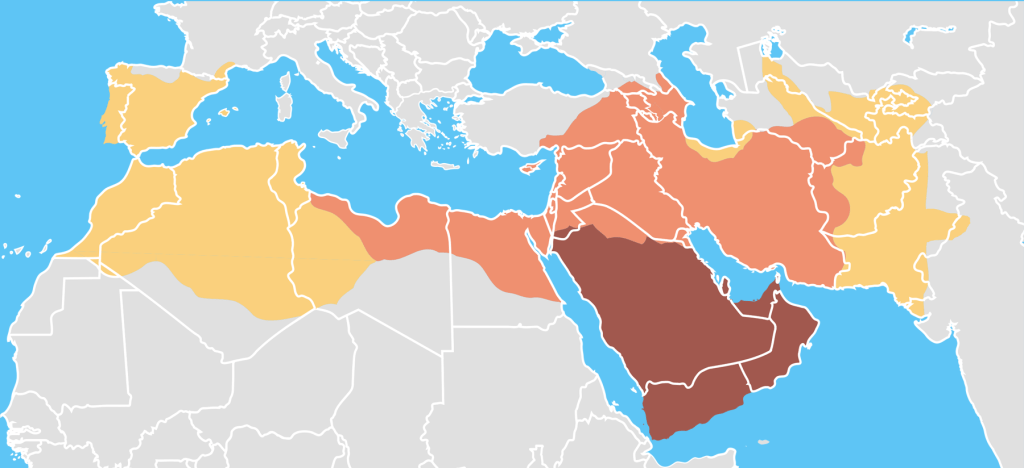
Within a century of the Prophet Muhammad’s (ﷺ) passing, Islam emerged as a unifying force for the Arab people. Muslim armies swiftly expanded their territories, conquering Palestine, Syria, Persia, and Egypt, while advancing across North Africa and into Spain. In the centuries that followed, the religion continued to spread, extending its influence throughout the Middle East, India, China, and Southeast Asia. There were several reasons for this rapid and massive expansion:
Islam is a Universal Religion
Although Islam originated in the Arab world, it transcends national boundaries and rejects distinctions based on race or ethnicity. The faith emphasizes the unity of humanity, teaching that all people were created by Allah and are equal in His eyes. Islam upholds the principle of universal brotherhood, welcoming individuals from all backgrounds to embrace the faith and become part of the global Muslim community. This inclusivity has played a significant role in its widespread appeal and growth across diverse cultures and regions.
Islam is a Religion with Wide Appeal
Unlike religions that may require intricate rituals, elaborate ceremonies, or significant sacrifices, Islam is, at its core, a simple and accessible faith designed to be practiced by anyone, anywhere. Its foundation lies in straightforward principles that guide daily life. To become a Muslim, one must sincerely declare the profession of faith, known as the Shahada, affirming the oneness of Allah and the prophethood of Muhammad (ﷺ): “There is no god but Allah, and Muhammad is His Messenger.”
Being a good Muslim involves adhering to the Five Pillars of Islam, which provide a clear and practical framework for worship and conduct. These pillars—faith (Shahada), prayer (Salah), fasting during Ramadan (Sawm), giving to charity (Zakat), and pilgrimage to Mecca (Hajj)—are acts of devotion that embody the essence of Islamic belief and practice. This simplicity and clarity in practice make Islam a faith that is both profound and universally approachable.
The World that Surrounded the Early Muslims was Confused and Corrupt
The Byzantine Christian rulers had long mistreated and oppressed both Jews and Arab Christians, often subjecting them to heavy taxation and social discrimination. As a result, Muslim conquerors were frequently welcomed not as invaders but as liberators, offering more equitable treatment and religious tolerance under Islamic rule.
Before the death of the Prophet Muhammad (ﷺ), Islam had already begun to unify and consolidate control over the Arabian Peninsula. Through a combination of spiritual teachings, social reforms, and military campaigns, the movement inspired widespread allegiance. With each conquest and addition to the Muslim community, others were encouraged to join, attracted by the promise of justice, security, and shared benefits.
Following the death of the Prophet (ﷺ), Islamic expansion gained momentum and extended far beyond Arabia. Key cities fell rapidly: Damascus in 635, Persia by 636, Jerusalem in 638, and Caesarea—despite fierce resistance—in 640. That same year, Egypt also came under Muslim rule. In the decades that followed, Islam solidified its influence, with North Africa becoming predominantly Muslim by the end of the 7th century. This swift expansion was underpinned by the inclusive and practical nature of Islamic governance, which appealed to diverse populations across these newly acquired territories.
In 711, Muslim forces, led by the Berber general Tariq ibn Ziyad, crossed the Strait of Gibraltar into Spain, initiating the conquest of the Iberian Peninsula. Within a few years, they established a stronghold in the region, marking the beginning of a period of Muslim dominance in Spain that lasted for nearly seven centuries. This region, known as Al-Andalus, became renowned for its advancements in science, art, architecture, and interfaith collaboration, particularly during its golden age.
However, the expansion of Muslim influence into the heart of Europe was halted in 732 at the Battle of Tours (also known as the Battle of Poitiers). There, Charles Martel, the leader of the Frankish forces, decisively defeated the Muslim army, preventing further incursions into Western Europe. This battle is often viewed as a turning point in European history, marking the limit of Islamic expansion deeper into Europe.
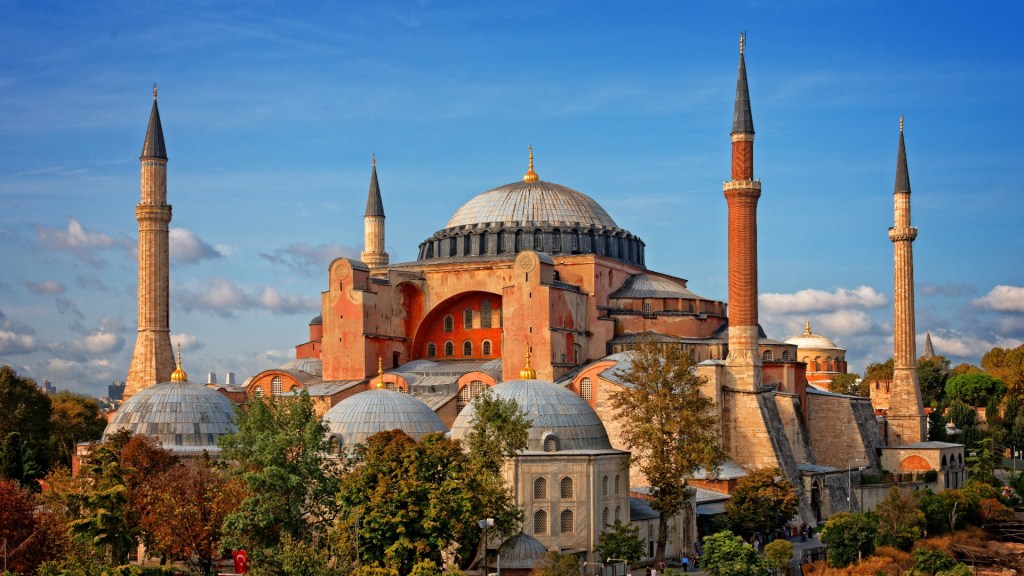
On the eastern front of the Mediterranean, the pace of Muslim territorial expansion began to slow as it faced formidable resistance from the Byzantine Empire. Constantinople, the Byzantine capital, withstood multiple sieges by Muslim forces, maintaining its position as a bastion of Christian Europe until its fall in 1453 to the Ottoman Empire.
Meanwhile, in the 9th century, the island of Sicily came under Muslim control, becoming a strategic base for raids into mainland Italy and serving as a cultural bridge between the Islamic world and Europe. The Muslim presence in Sicily left a lasting legacy, influencing the island’s architecture, agriculture, and culture, even after it was reconquered by the Normans in the 11th century.
In the eleventh century, the caliphs of Baghdad extended their influence and conquests eastward into the regions of India and China, spreading Islam through trade, cultural exchange, and military campaigns. Over time, Islam became deeply rooted in South Asia, and today, the nations of Pakistan and Bangladesh are predominantly Muslim. Additionally, India is home to one of the world’s largest Muslim populations, while significant Muslim communities also exist in China, particularly among the Hui and Uyghur ethnic groups.
In the fifteenth century, Islam spread further into Southeast Asia, where it was embraced by much of what is now Indonesia and Malaysia. This expansion was largely facilitated by Muslim traders, scholars, and missionaries who introduced the faith to local rulers and communities. Indonesia, in particular, is now the largest Muslim-majority nation in the world.
For centuries, the Muslim world remained largely within its established boundaries. However, by the late nineteenth century, renewed missionary efforts and trade networks began to expand Islam’s reach, particularly in sub-Saharan Africa. This period saw a significant growth of Muslim communities, often blending Islamic teachings with local traditions and customs.
Today, Islam continues to expand globally, with notable rapid growth in Europe and North America. Factors such as immigration, conversion, and the spread of Islamic teachings contribute to the increasing presence of Muslim communities in these regions, making Islam one of the fastest-growing religions in the world.
One of the most misunderstood aspects of Islam is the term jihad. While in some contexts it has been translated as “holy war,” its meaning is far broader and depends heavily on the context. In modern times, the word often evokes images of terrorism, violence, and extremism, but this perception misrepresents its true essence.
In its core sense, jihad means “struggle” or “striving” on the path of God. This struggle can take many forms. It may refer to physical efforts, such as building a mosque, embarking on a journey to spread the teachings of Islam, or enduring hardships to escape religious persecution. However, jihad is not limited to physical acts or armed conflict. It also encompasses the internal, personal struggle against negative instincts and passions that can lead one away from the commandments of faith.
In Islamic tradition, all forms of genuine effort and struggle for righteous purposes are seen as acts of devotion, and it is taught that God rewards such endeavors. Understanding the nuanced meanings of jihad is essential to appreciating its role within Islamic teachings.
Historically, Muslim nations, like many others, have waged wars to secure political and economic interests as well as to expand their territory and rule. However, Islamic scholars emphasize that only defensive wars can genuinely be considered jihad. Despite this, some Muslim leaders have invoked the concept of jihad– often interpreted as “holy war”- to justify their actions, with varying degrees of success and legitimacy.
For example, during the Christian Crusades, Muslim resistance was regarded as a war to defend Islam and its followers, making it a legitimate jihad in the eyes of Islamic tradition. Similarly, during World War I, the Ottoman Empire’s leader declared a jihad against the Allied forces. However, this call was not universally embraced by the global Ummah (Islamic community), with some Muslims even aligning with the Allies against the Ottomans.
In the mid-20th century, struggles for national independence in countries like Algeria, Egypt, and Indonesia were often framed as jihad but were typically limited to the context of those nations’ borders. Similarly, the conflict against Israeli occupation is viewed by some Arab Muslims as a jihad, while others see it as a political struggle for land, water, and self-determination.
Notably, some leaders have misappropriated the term jihad for personal or political gain. Saddam Hussein’s attempt to label Iraq’s invasion of Kuwait as a “holy war” was broadly dismissed by Muslim nations. Likewise, Osama bin Laden’s call for a global jihad against Western and Muslim governments was rejected by the vast majority of Muslims, who believe that attacking non-combatants, especially women and children, violates Islamic principles governing warfare.
Muslim scholars overwhelmingly agree that the use of the Qur’an to justify such attacks is a gross misrepresentation of Islamic teachings. These scholars view such interpretations as overly simplistic, self-serving, and fundamentally inconsistent with the ethical and legal traditions of Islam.
The Qur’an and Muslim tradition established a comprehensive set of taboos, many of which parallel those found in the Hebrew Bible. A significant portion of these regulations pertains to dietary laws, defining what is permissible (halal) and what is forbidden (haram). Like Jewish dietary laws, Islamic practices require the ritual slaughter of animals by cutting their throats to drain the arterial blood while invoking the name of Allah (bismillah/In the name of Allah). This method ensures the animal’s death is quick and humane while maintaining the spiritual sanctity of the act.
Muslims are strictly prohibited from consuming pork, which is regarded as the most unclean of meats in Islamic tradition. Similarly, dogs are traditionally considered unclean to eat, though it is permitted to keep dogs for practical purposes such as guarding livestock, property, or hunting. In some cultures, dogs are also kept as pets, reflecting a diversity of practices within the Islamic world.
The consumption of certain animals, such as birds of prey, carnivorous beasts, donkeys, and mules, is also forbidden. However, in some Central Asian Islamic societies, horse meat was historically permissible, whereas it can be seen as taboo in other Islamic societies.
Dietary laws became particularly significant as Islam spread to urban areas and came into contact with Christian populations, where maintaining distinct Muslim dietary practices helped reinforce communal and religious identity.
In addition to dietary prohibitions, Islam forbids the consumption of alcohol in any form, as intoxicants are seen as harmful to both the body and mind, hindering spiritual devotion. Gambling is likewise prohibited, as it is considered a source of social discord and moral corruption. These regulations reflect Islam’s emphasis on discipline, community cohesion, and moral integrity, underscoring the faith’s holistic approach to guiding both personal and communal life.
There are numerous taboos specific to various Islamic cultures, but dietary restrictions tend to be widely shared across these communities. If you, dear reader, belong to an Islamic culture and are aware of a unique cultural taboo specific to your community, we’d love to hear about it. Feel free to share where you’re from and what the taboo is in the comments below!





































 Vault of Stones