This is actually an all humanities blog. This community is for History, Anthropology. Culture, Archaeology, Theology, Philosophy, Literature and Linguistics.
Islam emerged and flourished at a pivotal moment in history, perfectly timed for its expansion. It arose when the Arab people were primed for a unifying force, coinciding with the decline of two major powers in the region. The Byzantine Empire in the Middle East was crumbling under the weight of internal corruption and mismanagement, while the Persian Empire was in a weakened state. In the early 7th century, the Persians invaded Palestine, capturing Jerusalem and Caesarea. Although the Byzantine rulers mounted a counteroffensive and reclaimed the territory, the prolonged conflict left both empires broken and exhausted, creating an ideal environment for Islam’s growth and spread.
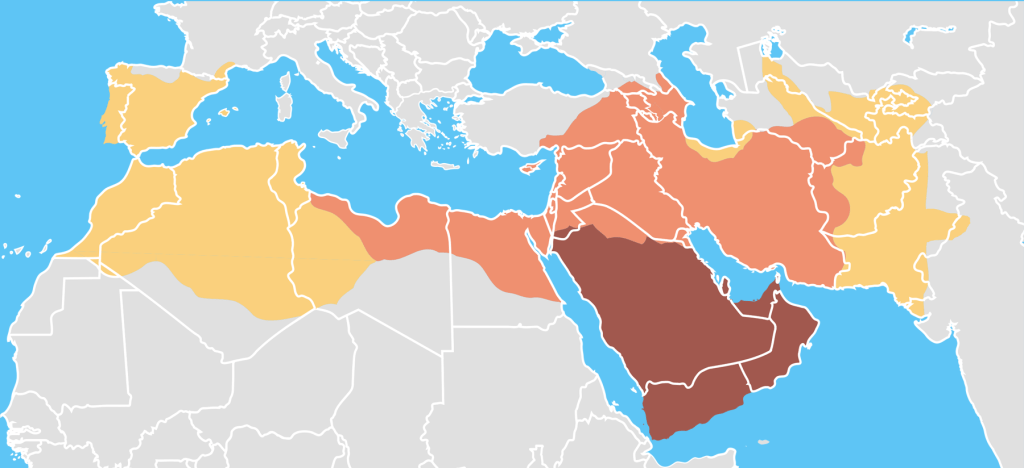
Within a century of the Prophet Muhammad’s (ﷺ) passing, Islam emerged as a unifying force for the Arab people. Muslim armies swiftly expanded their territories, conquering Palestine, Syria, Persia, and Egypt, while advancing across North Africa and into Spain. In the centuries that followed, the religion continued to spread, extending its influence throughout the Middle East, India, China, and Southeast Asia. There were several reasons for this rapid and massive expansion:
Islam is a Universal Religion
Although Islam originated in the Arab world, it transcends national boundaries and rejects distinctions based on race or ethnicity. The faith emphasizes the unity of humanity, teaching that all people were created by Allah and are equal in His eyes. Islam upholds the principle of universal brotherhood, welcoming individuals from all backgrounds to embrace the faith and become part of the global Muslim community. This inclusivity has played a significant role in its widespread appeal and growth across diverse cultures and regions.
Islam is a Religion with Wide Appeal
Unlike religions that may require intricate rituals, elaborate ceremonies, or significant sacrifices, Islam is, at its core, a simple and accessible faith designed to be practiced by anyone, anywhere. Its foundation lies in straightforward principles that guide daily life. To become a Muslim, one must sincerely declare the profession of faith, known as the Shahada, affirming the oneness of Allah and the prophethood of Muhammad (ﷺ): “There is no god but Allah, and Muhammad is His Messenger.”
Being a good Muslim involves adhering to the Five Pillars of Islam, which provide a clear and practical framework for worship and conduct. These pillars—faith (Shahada), prayer (Salah), fasting during Ramadan (Sawm), giving to charity (Zakat), and pilgrimage to Mecca (Hajj)—are acts of devotion that embody the essence of Islamic belief and practice. This simplicity and clarity in practice make Islam a faith that is both profound and universally approachable.
The World that Surrounded the Early Muslims was Confused and Corrupt
The Byzantine Christian rulers had long mistreated and oppressed both Jews and Arab Christians, often subjecting them to heavy taxation and social discrimination. As a result, Muslim conquerors were frequently welcomed not as invaders but as liberators, offering more equitable treatment and religious tolerance under Islamic rule.
Before the death of the Prophet Muhammad (ﷺ), Islam had already begun to unify and consolidate control over the Arabian Peninsula. Through a combination of spiritual teachings, social reforms, and military campaigns, the movement inspired widespread allegiance. With each conquest and addition to the Muslim community, others were encouraged to join, attracted by the promise of justice, security, and shared benefits.
Following the death of the Prophet (ﷺ), Islamic expansion gained momentum and extended far beyond Arabia. Key cities fell rapidly: Damascus in 635, Persia by 636, Jerusalem in 638, and Caesarea—despite fierce resistance—in 640. That same year, Egypt also came under Muslim rule. In the decades that followed, Islam solidified its influence, with North Africa becoming predominantly Muslim by the end of the 7th century. This swift expansion was underpinned by the inclusive and practical nature of Islamic governance, which appealed to diverse populations across these newly acquired territories.
In 711, Muslim forces, led by the Berber general Tariq ibn Ziyad, crossed the Strait of Gibraltar into Spain, initiating the conquest of the Iberian Peninsula. Within a few years, they established a stronghold in the region, marking the beginning of a period of Muslim dominance in Spain that lasted for nearly seven centuries. This region, known as Al-Andalus, became renowned for its advancements in science, art, architecture, and interfaith collaboration, particularly during its golden age.
However, the expansion of Muslim influence into the heart of Europe was halted in 732 at the Battle of Tours (also known as the Battle of Poitiers). There, Charles Martel, the leader of the Frankish forces, decisively defeated the Muslim army, preventing further incursions into Western Europe. This battle is often viewed as a turning point in European history, marking the limit of Islamic expansion deeper into Europe.
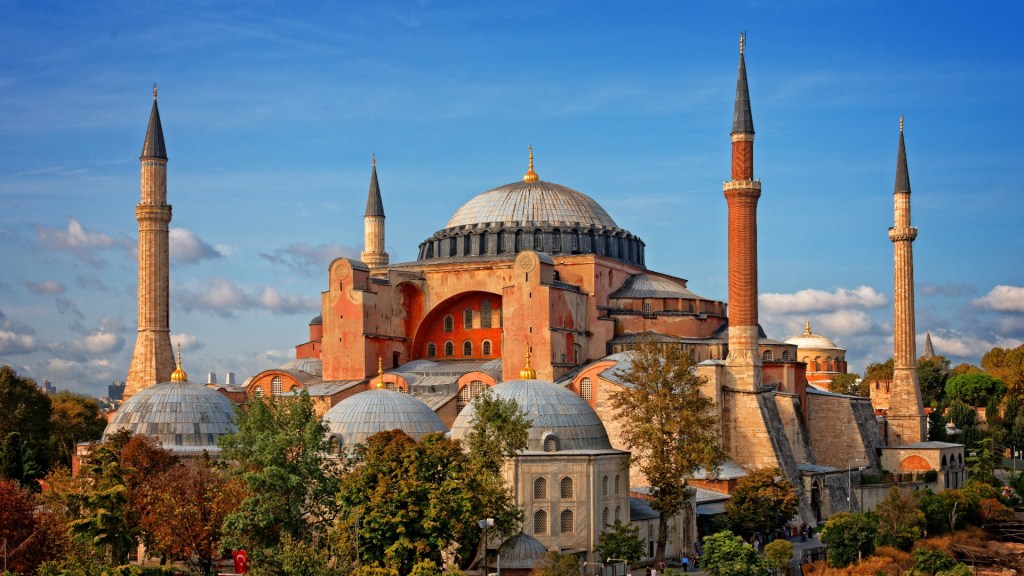
On the eastern front of the Mediterranean, the pace of Muslim territorial expansion began to slow as it faced formidable resistance from the Byzantine Empire. Constantinople, the Byzantine capital, withstood multiple sieges by Muslim forces, maintaining its position as a bastion of Christian Europe until its fall in 1453 to the Ottoman Empire.
Meanwhile, in the 9th century, the island of Sicily came under Muslim control, becoming a strategic base for raids into mainland Italy and serving as a cultural bridge between the Islamic world and Europe. The Muslim presence in Sicily left a lasting legacy, influencing the island’s architecture, agriculture, and culture, even after it was reconquered by the Normans in the 11th century.
In the eleventh century, the caliphs of Baghdad extended their influence and conquests eastward into the regions of India and China, spreading Islam through trade, cultural exchange, and military campaigns. Over time, Islam became deeply rooted in South Asia, and today, the nations of Pakistan and Bangladesh are predominantly Muslim. Additionally, India is home to one of the world’s largest Muslim populations, while significant Muslim communities also exist in China, particularly among the Hui and Uyghur ethnic groups.
In the fifteenth century, Islam spread further into Southeast Asia, where it was embraced by much of what is now Indonesia and Malaysia. This expansion was largely facilitated by Muslim traders, scholars, and missionaries who introduced the faith to local rulers and communities. Indonesia, in particular, is now the largest Muslim-majority nation in the world.
For centuries, the Muslim world remained largely within its established boundaries. However, by the late nineteenth century, renewed missionary efforts and trade networks began to expand Islam’s reach, particularly in sub-Saharan Africa. This period saw a significant growth of Muslim communities, often blending Islamic teachings with local traditions and customs.
Today, Islam continues to expand globally, with notable rapid growth in Europe and North America. Factors such as immigration, conversion, and the spread of Islamic teachings contribute to the increasing presence of Muslim communities in these regions, making Islam one of the fastest-growing religions in the world.
One of the most misunderstood aspects of Islam is the term jihad. While in some contexts it has been translated as “holy war,” its meaning is far broader and depends heavily on the context. In modern times, the word often evokes images of terrorism, violence, and extremism, but this perception misrepresents its true essence.
In its core sense, jihad means “struggle” or “striving” on the path of God. This struggle can take many forms. It may refer to physical efforts, such as building a mosque, embarking on a journey to spread the teachings of Islam, or enduring hardships to escape religious persecution. However, jihad is not limited to physical acts or armed conflict. It also encompasses the internal, personal struggle against negative instincts and passions that can lead one away from the commandments of faith.
In Islamic tradition, all forms of genuine effort and struggle for righteous purposes are seen as acts of devotion, and it is taught that God rewards such endeavors. Understanding the nuanced meanings of jihad is essential to appreciating its role within Islamic teachings.
Historically, Muslim nations, like many others, have waged wars to secure political and economic interests as well as to expand their territory and rule. However, Islamic scholars emphasize that only defensive wars can genuinely be considered jihad. Despite this, some Muslim leaders have invoked the concept of jihad– often interpreted as “holy war”- to justify their actions, with varying degrees of success and legitimacy.
For example, during the Christian Crusades, Muslim resistance was regarded as a war to defend Islam and its followers, making it a legitimate jihad in the eyes of Islamic tradition. Similarly, during World War I, the Ottoman Empire’s leader declared a jihad against the Allied forces. However, this call was not universally embraced by the global Ummah (Islamic community), with some Muslims even aligning with the Allies against the Ottomans.
In the mid-20th century, struggles for national independence in countries like Algeria, Egypt, and Indonesia were often framed as jihad but were typically limited to the context of those nations’ borders. Similarly, the conflict against Israeli occupation is viewed by some Arab Muslims as a jihad, while others see it as a political struggle for land, water, and self-determination.
Notably, some leaders have misappropriated the term jihad for personal or political gain. Saddam Hussein’s attempt to label Iraq’s invasion of Kuwait as a “holy war” was broadly dismissed by Muslim nations. Likewise, Osama bin Laden’s call for a global jihad against Western and Muslim governments was rejected by the vast majority of Muslims, who believe that attacking non-combatants, especially women and children, violates Islamic principles governing warfare.
Muslim scholars overwhelmingly agree that the use of the Qur’an to justify such attacks is a gross misrepresentation of Islamic teachings. These scholars view such interpretations as overly simplistic, self-serving, and fundamentally inconsistent with the ethical and legal traditions of Islam.
The Qur’an and Muslim tradition established a comprehensive set of taboos, many of which parallel those found in the Hebrew Bible. A significant portion of these regulations pertains to dietary laws, defining what is permissible (halal) and what is forbidden (haram). Like Jewish dietary laws, Islamic practices require the ritual slaughter of animals by cutting their throats to drain the arterial blood while invoking the name of Allah (bismillah/In the name of Allah). This method ensures the animal’s death is quick and humane while maintaining the spiritual sanctity of the act.
Muslims are strictly prohibited from consuming pork, which is regarded as the most unclean of meats in Islamic tradition. Similarly, dogs are traditionally considered unclean to eat, though it is permitted to keep dogs for practical purposes such as guarding livestock, property, or hunting. In some cultures, dogs are also kept as pets, reflecting a diversity of practices within the Islamic world.
The consumption of certain animals, such as birds of prey, carnivorous beasts, donkeys, and mules, is also forbidden. However, in some Central Asian Islamic societies, horse meat was historically permissible, whereas it can be seen as taboo in other Islamic societies.
Dietary laws became particularly significant as Islam spread to urban areas and came into contact with Christian populations, where maintaining distinct Muslim dietary practices helped reinforce communal and religious identity.
In addition to dietary prohibitions, Islam forbids the consumption of alcohol in any form, as intoxicants are seen as harmful to both the body and mind, hindering spiritual devotion. Gambling is likewise prohibited, as it is considered a source of social discord and moral corruption. These regulations reflect Islam’s emphasis on discipline, community cohesion, and moral integrity, underscoring the faith’s holistic approach to guiding both personal and communal life.
There are numerous taboos specific to various Islamic cultures, but dietary restrictions tend to be widely shared across these communities. If you, dear reader, belong to an Islamic culture and are aware of a unique cultural taboo specific to your community, we’d love to hear about it. Feel free to share where you’re from and what the taboo is in the comments below!
The status of women in pre-Islamic Arabia was significantly low. Practices such as female infanticide were reportedly common to limit the female population. Women were often regarded as property, controlled by their father, husband, or elder brother. A husband could divorce his wife unilaterally, leaving her with no recourse. Exceptions, such as Khadija (رَضِيَ ٱللَّٰهُ عَنْهَا), the first wife of Prophet Muhammad (ﷺ), who managed her own wealth and life, were exceedingly rare. Although Islam did not equalize the status of women and men, it substantially elevated their position in society.
Islam prohibited the practice of infanticide, including the killing of female babies, which had been prevalent in pre-Islamic Arabia. While Islam allowed polygamy to continue, and Prophet Muhammad (ﷺ) took several wives himself, Islam restricted the number of wives a man could have to four, with the conditions that he must be able to provide for them and their children and treat all his wives fairly. In a society where men were frequently killed in battles and marriage was the only socially acceptable state for women, polygamy served as a means of protection and support for women during this time. Many of Prophet Muhammad’s (ﷺ) wives were widows of Muslims who had died in battle.
If a Muslim wished to divorce his wife, it was an easy process compared to modern Western methods. When the husband said, “I divorce you” three times before a witness (talaq), the divorce was final. However, the Muslim woman was not left destitute. She had her possessions and dowry, which the husband paid the wife when the marriage was initially arranged. If there was a divorce, the property and dowry remained the wife’s. In most contemporary Muslim societies, women have the legal right to demand a divorce if their husbands treat them unjustly or cruelly.
Despite the liberalizing aspects of Islam, women are often expected to defer to their fathers, brothers (primarily elder brothers), and husbands, similar to many other religious traditions. The status of women in Muslim societies varies widely, influenced as much by cultural practices as by religious teachings. In countries like Saudi Arabia, Iran, and Afghanistan, women often adhere to stricter regulations regarding dress and public behavior, with some not permitted to work or study alongside men. While Saudi Arabia recently lifted its ban on women driving, restrictions remain under more conservative interpretations of Islamic law. Under the Taliban, women face even more stringent limitations.
Liberal Muslim scholars have criticized these restrictions, arguing that those who impose them are guilty of adding prohibitions not sanctioned by Allah. In contrast, many Asian and African Muslim societies offer women more visible public roles. While modest dress remains the norm, veiling is often regarded as a personal choice. In these more liberal contexts, women who wear head coverings as expressions of Islamic piety actively participate in nearly all areas of public life. Countries like Indonesia and Pakistan have even seen women hold the highest offices of President and Prime Minister, showcasing a broader spectrum of women’s roles in Muslim-majority nations.
The essential practices required to live as a devout Muslim are known as “the Five Pillars of Islam.” These core obligations include declaring the profession of faith (shahada), performing the five daily prayers, giving alms to those in need, fasting during the holy month of Ramadan, and, if feasible, making a pilgrimage to Mecca.
The First Pillar – The Shahada
The most fundamental religious act in Islam is the profession of faith, expressed in the declaration: “La ilaha illa Allah; Muhammad rasul Allah” (There is no deity but Allah; Muhammad is the messenger of Allah). This declaration, known as the shahada, holds profound significance in a Muslim’s life. It is traditionally the first words whispered into the ears of a newborn Muslim and often the last words recited by a dying believer. Devout Muslims strive to repeat this powerful affirmation frequently throughout their day, as its sincere utterance is what defines and affirms one’s identity as a Muslim.
The Second Pillar – Salaht (Daily Prayers)
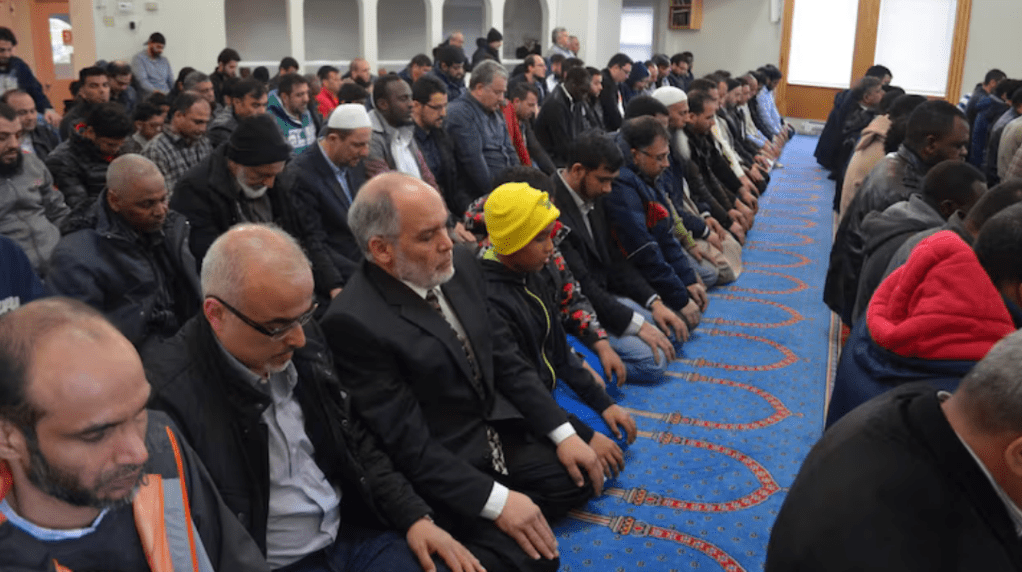
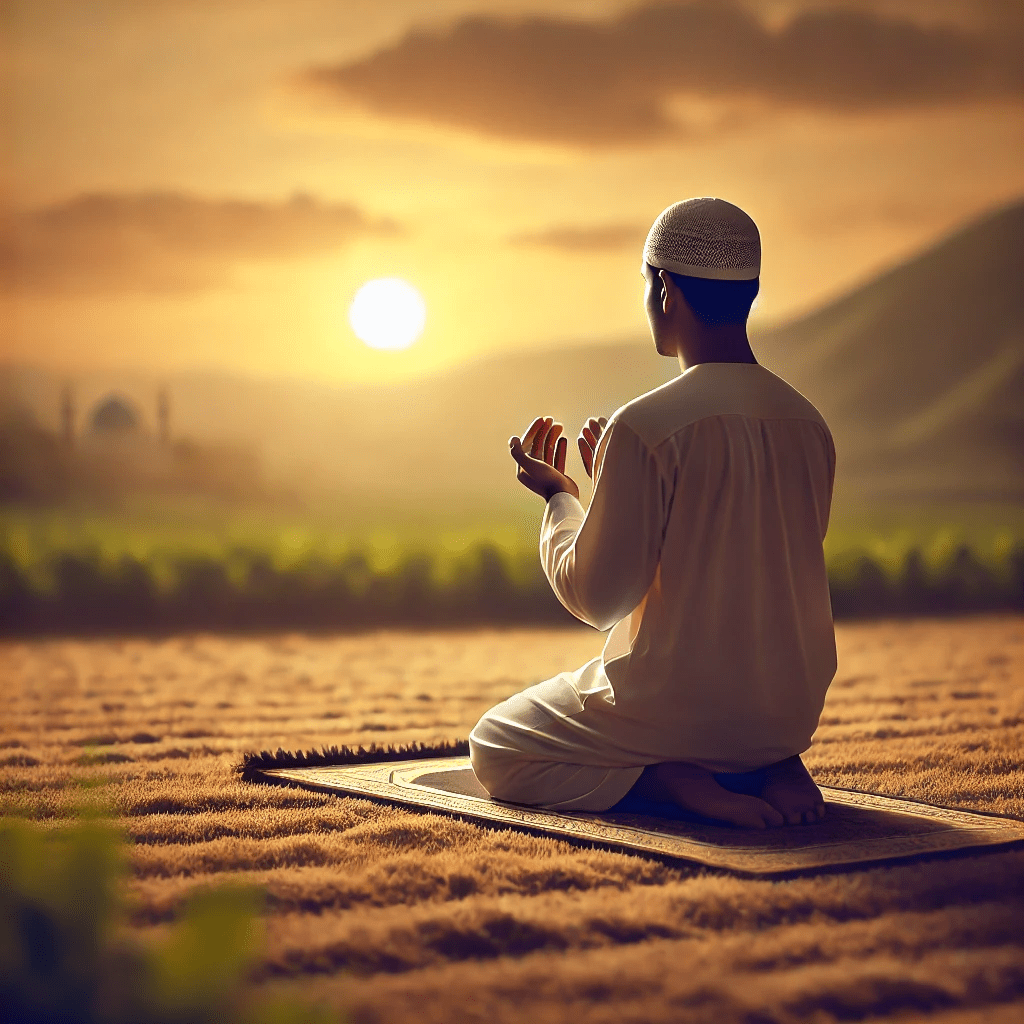
Muslims are required to pray at least five times a day at specific times: dawn (Fajr), midday (Dhuhr), mid-afternoon (Asr), sunset (Maghrib), and nightfall (Isha). In many Muslim communities, the call to prayer (adhan) is announced by a muezzin, traditionally from the top of elegant towers called minarets. In smaller communities, the call may be made from the entrance of local mosques. Wherever Muslims are, they pause to perform the prescribed prayers.
Before praying, Muslims must cleanse themselves of physical impurities through a ritual called ablution (wudu). This involves washing the hands, face, and feet. Most mosques are equipped with washing facilities for this purpose. In situations where water is unavailable, Muslims may use clean sand or soil in a symbolic act of purification known as tayammum.
During prayer, worshipers face Mecca and perform a series of prostrations and recitations. It is customary for men and women to pray separately. Some mosques are exclusively for men, while others provide designated areas for both genders. In some cultures, women are not obligated to attend communal prayers in mosques, as they may prioritize caring for children, managing household responsibilities, or attending to their own health. Praying at home is considered equally valid for women, reflecting flexibility in Islamic practice to accommodate different circumstances.
The Third Pillar – Zakaht (Almsgiving)
Muslims are obligated to share their wealth with those in need, including the poor, widows, orphans, and the elderly. This act of charity, known as almsgiving (zakat), may also be directed toward supporting religious institutions that provide aid on a larger scale, as well as benefiting scholars and students. Charity is not merely encouraged but is a requirement under Islamic law, assessed as a tax ranging from 2.5% to 10% of an individual’s wealth, depending on the type of assets.
Islam places great emphasis on the dignity of both giving and receiving alms, viewing both as acts that invite God’s blessings. Unlike in some societies, begging is not seen as dishonorable in Islam when it arises from genuine need. The spirit of zakat fosters a sense of communal responsibility and compassion, ensuring that wealth is redistributed to support those less fortunate.
The Fourth Pillar – Sawm (Fasting)
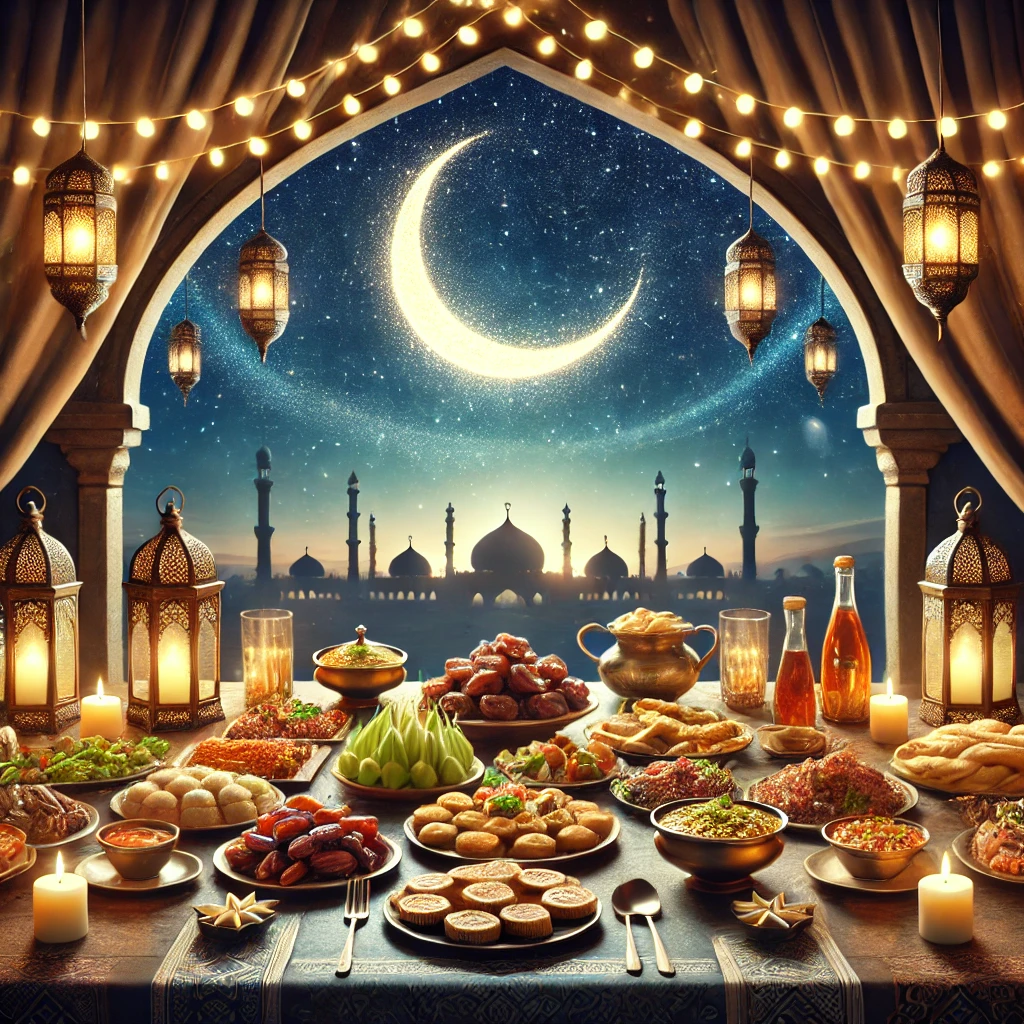
Many religions include fasting as part of their observances, though it is often brief or limited. For example, Jews fast on the Day of Atonement (Yom Kippur), while Roman Catholic Christians observe certain fast days and abstain from eating meat during Lent. Islam, however, prescribes one of the longest and most rigorous fasts. Each year during the holy month of Ramadan, Muslims fast from dawn to sunset, refraining from eating, drinking, smoking, and engaging in intimate relations during daylight hours.
This fast is observed in commemoration of the month when the Prophet Muhammad (ﷺ) first received divine revelation. Because the Islamic calendar is lunar, Ramadan shifts each year, occasionally falling during summer, when fasting from food and water in the long, hot days can be especially challenging. According to Islamic tradition, the fast begins at dawn, marked by the moment one can distinguish a black thread from a white thread in the morning light. It ends at sunset when these threads can no longer be distinguished.
Certain groups are exempt from fasting, including the sick, travelers, nursing mothers, and children. However, they are encouraged to compensate for missed fasts at a later time or provide meals to those in need as an alternative.
The conclusion of Ramadan is marked by a joyous three-day celebration known as Eid al-Fitr, during which families gather, share meals, and give thanks. Completing the Ramadan fast is believed to bring spiritual purification and forgiveness of sins, reflecting the mercy and blessings of Allah.
The Fifth Pillar – Hajj (Pilgrimage)
The pilgrimage to Mecca, known as the Hajj, has deep historical roots, originating as a central ritual in the pre-Islamic Arab religion. It played a significant role in the early history of Islam and is described in the Qur’an as a fundamental duty for Muslims. The Prophet Muhammad (ﷺ) purified the Kaaba of its idols and, according to Islamic tradition, restored it as a shrine dedicated to Allah, the one Creator.
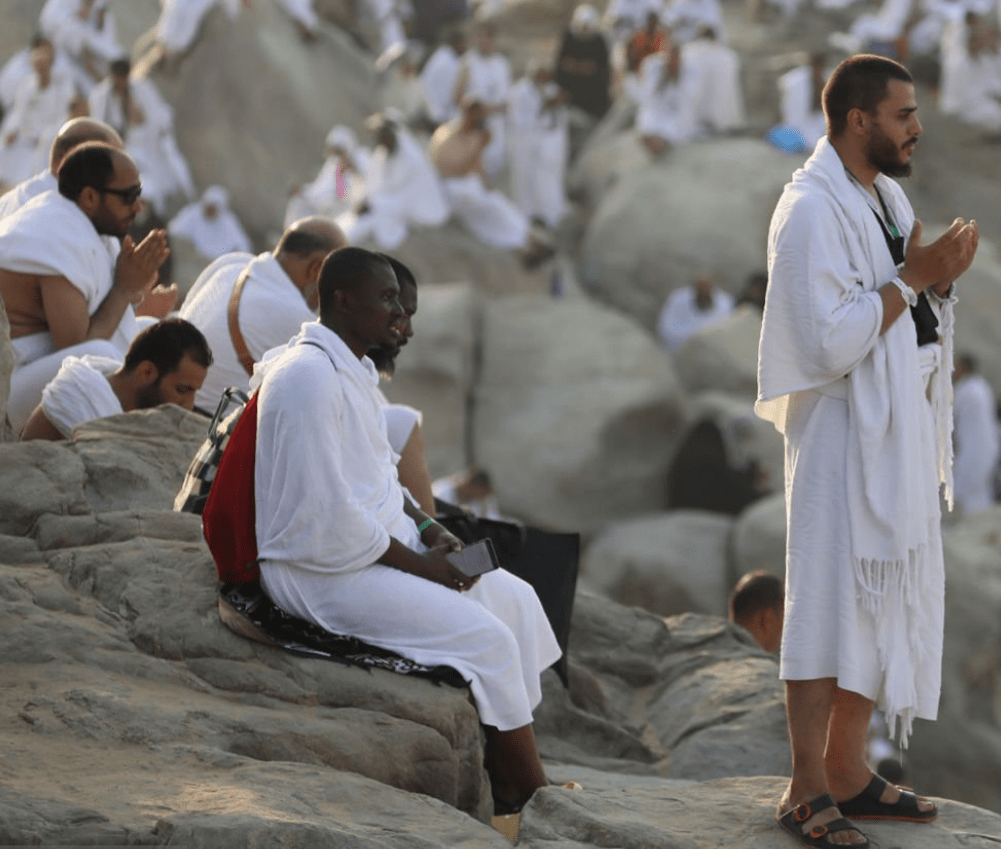
Every Muslim who is physically and financially able is required to perform the Hajj once in their lifetime. This sacred pilgrimage occurs during the Islamic lunar month of Dhu al-Hijjah, attracting millions of Muslims from around the world. For many, the journey represents a profound spiritual commitment, with some using their life savings to make the trip. Before modern transportation, the journey was arduous, and for the elderly or infirm, it often became a one-way trip, regarded as a blessed way to meet one’s end while fulfilling a divine obligation.
Upon reaching the outskirts of Mecca, pilgrims leave behind their modes of transport and complete the journey on foot. They don simple garments and sandals: men wear unstitched white cloth without head coverings, while women dress modestly in plain clothing. These garments eliminate distinctions of wealth or status, emphasizing equality before God. During much of the Hajj, pilgrims abstain from food, drink during daylight hours, intimate relations, and cutting of the hair and nails.
Key rituals during the Hajj include visiting the sacred Zamzam well, believed to have been provided by Allah to Hagar and her son Ishmael. Pilgrims perform Tawaf by circling the Kaaba seven times and, if possible, kiss the sacred black stone embedded in its wall. On the tenth day, they offer an animal sacrifice, often a sheep or goat, commemorating Abraham’s willingness to sacrifice his son in obedience to God’s command.
The pilgrimage often extends to Medina, where pilgrims pay their respects at the Prophet Muhammad’s (ﷺ) grave and visit his mosque. Upon returning home, Muslims who have completed the Hajj are honored with the title Haji or Hajjah, signifying their fulfillment of this profound religious obligation. This title serves as a lifelong reminder of their devotion and achievement.
From the Qur’an and the early years of Islamic life, certain religious institutions developed that are almost universally recognized by Muslims.
Islam is not a temple-oriented religion. While certain places hold special significance for Muslims, the nomadic lifestyle of the early Arab people would have been incompatible with a requirement to worship in fixed temples. Instead, the nature of their lives necessitated the ability to worship Allah freely and regularly, regardless of location.
As a result, Muslim worship is conducted in a variety of settings, with the mosque serving as a communal gathering place rather than a mandatory site for daily prayers. Prophet Muhammad (ﷺ) designated Friday as a special day for communal worship, paralleling the Sabbath traditions of Jews on Saturday and Christians on Sunday. However, unlike these Sabbaths, Friday is not a day of rest in Islam. Instead, it is the one day of the week when Muslim men are obligated to perform the congregational prayer (Jumu’ah) at the mosque.
During this service, an imam—selected by the community for his knowledge and piety—leads the prayer. The Friday gathering also includes a sermon, or khutbah, which may be delivered in Arabic or the congregation’s native language, addressing spiritual, ethical, or practical matters. Outside of this communal obligation, Muslims are free to fulfill their other religious duties independently, without needing the presence of a mosque or its leadership.
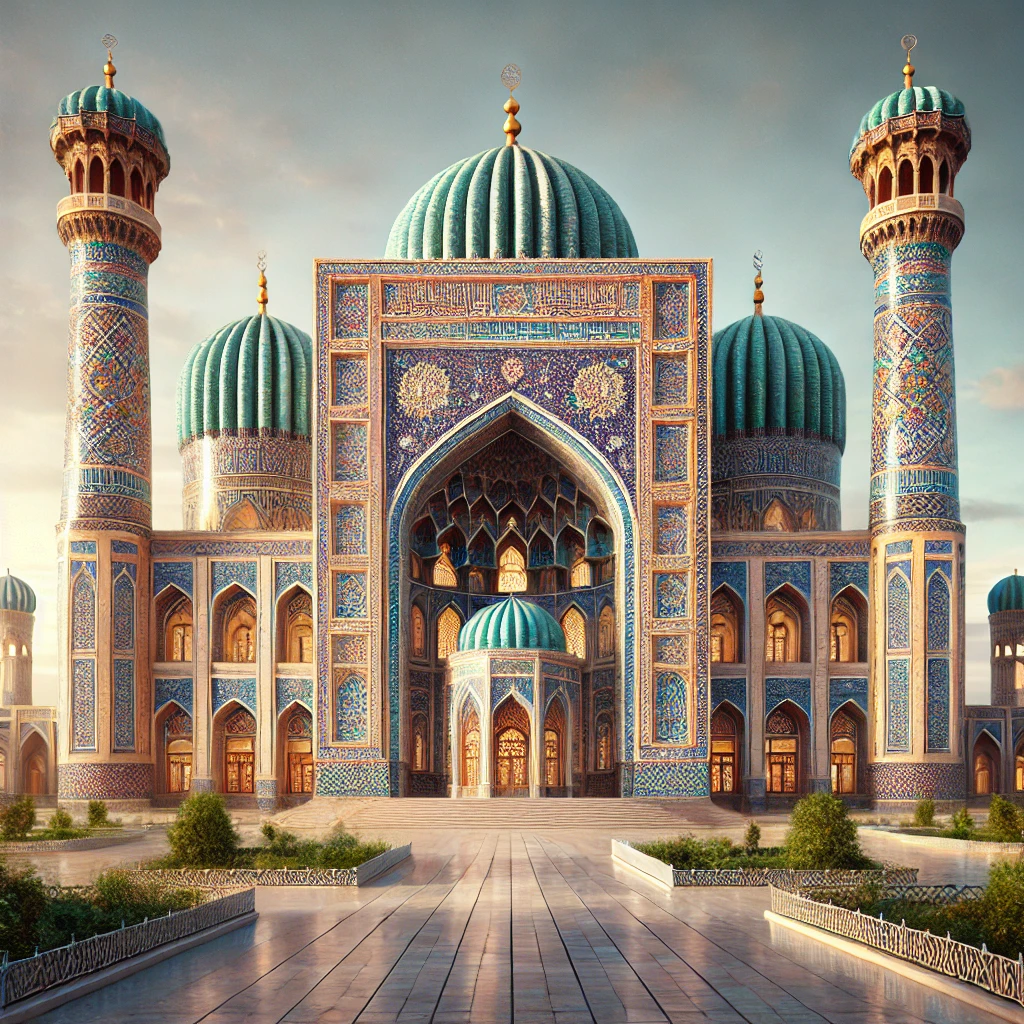
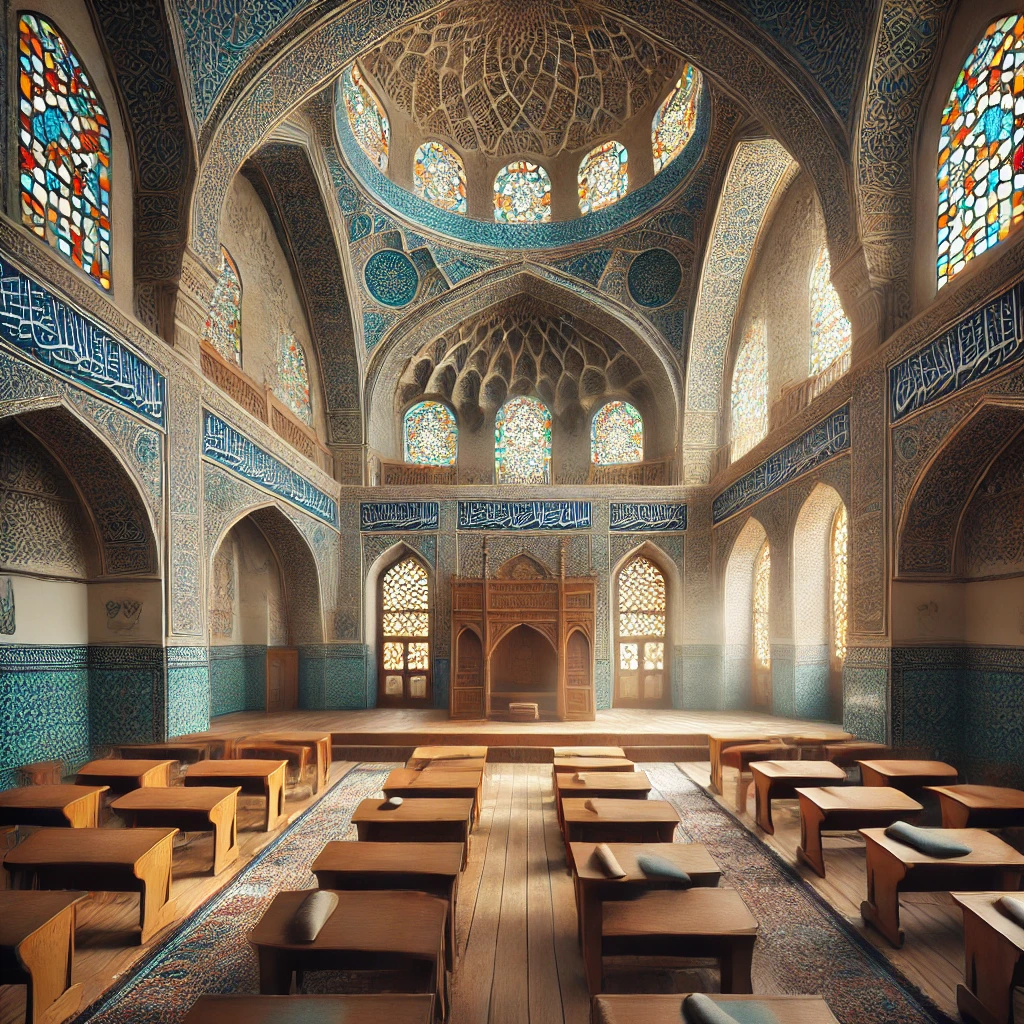
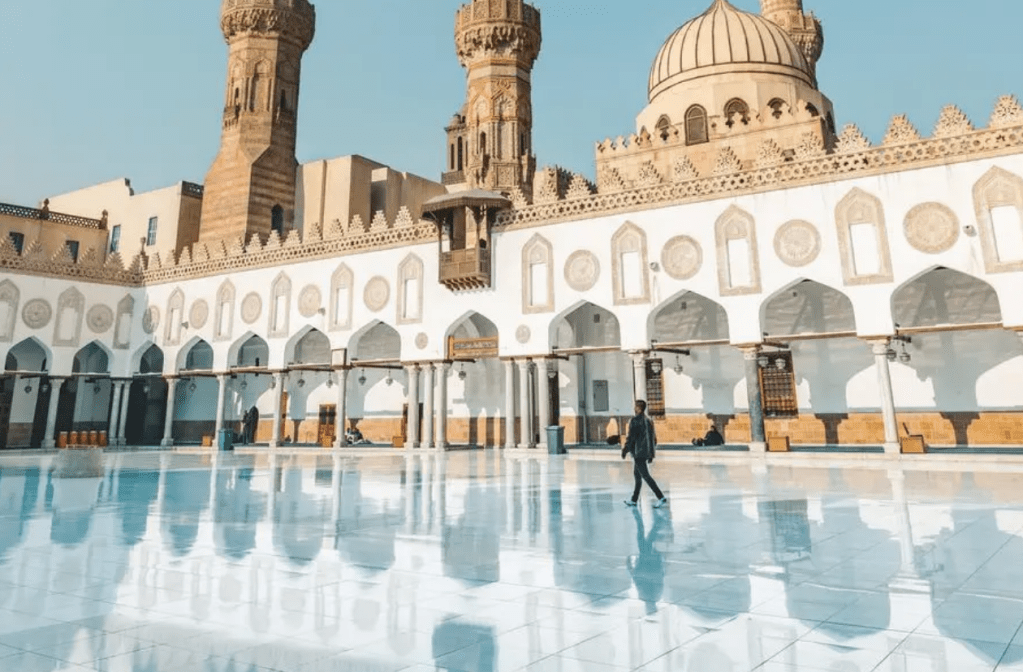
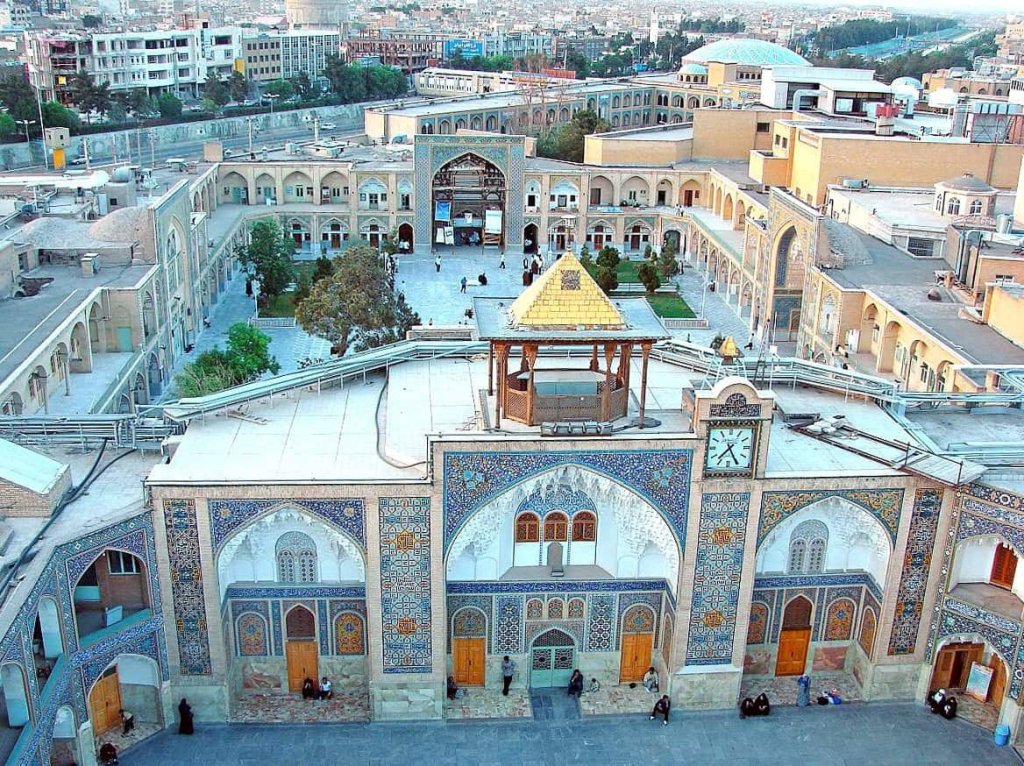
Mosques have historically functioned as schools and libraries, serving as vital centers of learning in the Islamic world. For much of Islamic history, the mosques of Mecca and Medina were among the foremost hubs of religious and intellectual activity. Over time, specialized educational institutions known as madrasas emerged alongside large urban mosques. These schools provided instruction in various disciplines, including Qur’anic recitation and interpretation, Hadith studies, theology, Islamic law (fiqh), and, in many cases, the mystical teachings and practices of Sufism.
In major centers of Islamic scholarship, numerous madrasas flourished, with some evolving into renowned universities that continue to attract students from across the globe. Among the most famous of these is Al-Azhar University in Cairo, widely regarded as one of the oldest universities in the world. Al-Azhar has long held a central role as the preeminent theological institution in the Sunni Muslim world. Similarly, the city of Qom in Iran is home to distinguished madrasas that serve as leading centers of Shia Islamic learning.
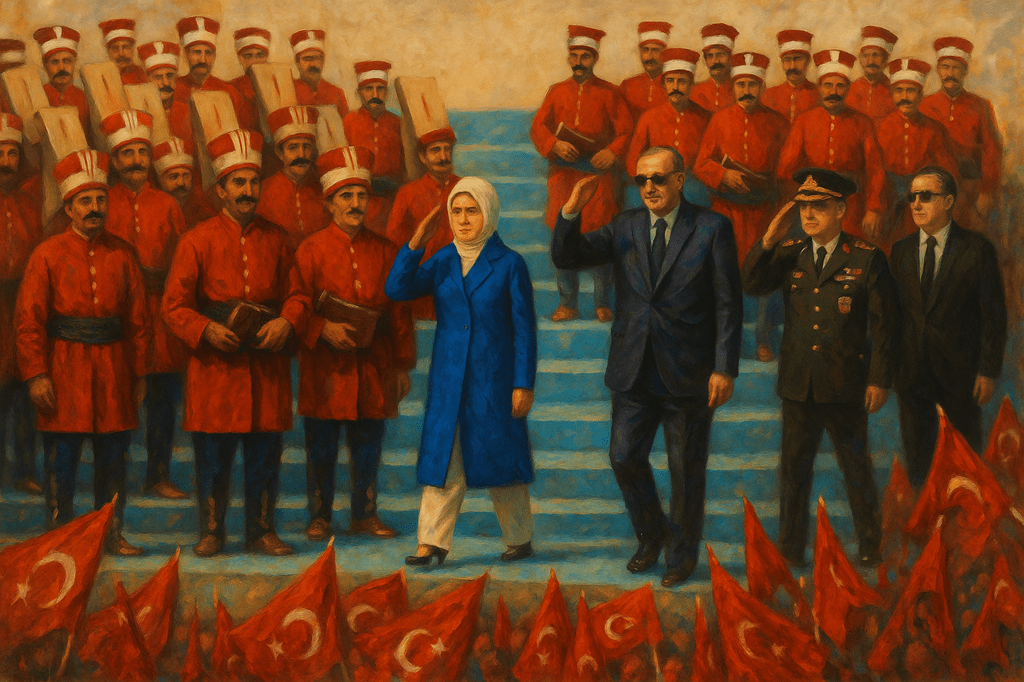
In the Middle East, fear-based narratives are a familiar tool in shaping public opinion and policy. Over the decades, the region has witnessed waves of ideological demonization, often driven by local and global powers vying for influence. One such narrative today is the so-called “Neo-Ottomanism scare”—the idea that Turkiye is attempting to resurrect Ottoman imperial ambitions in the Middle East and beyond. This fear is not only exaggerated but also a distraction from the region’s deeper, more pressing challenges.
The Ottoman Empire, which ruled vast portions of the Middle East for centuries, left a mixed legacy. For some, it is remembered as a unifying force that brought relative stability, while for others, it is associated with domination and exploitation. These historical memories make the idea of “Neo-Ottomanism” an emotional and divisive topic. However, projecting this centuries-old context onto contemporary Turkish foreign policy oversimplifies history and ignores the vastly different geopolitical realities of today.
Unlike the Ottoman period, modern Turkiye is not a hegemonic empire but a nation-state grappling with internal challenges, a competitive economy, and limited resources. While Turkiye’s policies may sometimes evoke memories of Ottoman influence, they are primarily driven by pragmatic considerations rather than grandiose imperial aspirations.
This neo-Ottomanism narrative persists due to several aggravating factors. One of the aggravating factors are regional power rivalries. Countries like Saudi Arabia, the UAE, and Egypt often amplify fears of Neo-Ottomanism to counter Turkiye’s growing influence in the region. These fears are less about Turkiye’s actual capacity to dominate and more about competing visions for the Middle East. For example, Turkiye’s support for political Islamist movements like the Muslim Brotherhood directly challenges the secular-authoritarian or monarchic models favored by its regional rivals.
Another factor is that Turkiye provides a convenient scapegoat. In countries struggling with internal crises- be it economic turmoil, political instability, or security threats- the Neo-Ottomanism narrative serves as a convenient distraction. Blaming Turkiye for meddling in regional affairs diverts attention from domestic shortcomings, uniting people around a perceived external enemy.
The exploitation of the historical trauma in the region is also another aggravating factor that keeps this neo-Ottomanism paranoia going. The Ottoman Empire’s history is often invoked to stoke fear, especially in Arab nations where Ottoman rule was resented by certain segments of society. However, this selective invocation of history ignores the fact that the Ottoman era also included periods of prosperity, cultural flourishing, and coexistence that many in the region benefited from. Framing Turkiye’s current policies as an imperialist revival weaponizes historical grievances to serve present-day political agendas.
The reality is, Turkiye’s regional actions are neither altruistic nor expansionist. They are driven by a combination of economic necessity, national security concerns, and ideological leanings. From military interventions in Syria and Iraq to involvement in Libya, Turkiye’s actions are about securing borders, projecting power in a multipolar region, and countering threats from groups like the PKK or ISIS, not reestablishing the Ottoman Caliphate. For example: In Syria, Turkiye’s incursions are aimed at preventing the creation of a Kurdish state along its border, which Ankara views as a direct threat to its territorial integrity; In Iraq, Turkiye’s military presence is primarily focused on combating PKK militants rather than controlling territory; and in Libya, Turkiye’s involvement stems from energy interests in the Mediterranean and alliances with factions that serve its geopolitical goals. These actions may be assertive and sometimes controversial, but they are far removed from the expansive ambitions of an empire.
This neo-Ottomanism scare weakens and harms the entire West Asian region. It distracts from local problems as the Middle East faces numerous challenges: economic inequality, youth unemployment, environmental degradation, and a lack of democratic governance. Focusing on an exaggerated external threat like Neo-Ottomanism shifts attention away from addressing these pressing issues.
Neo-Ottomanism deepens divisions as the narrative fuels existing rivalries and exacerbates polarization in the region. It pits Turkiye and Arab nations against each other, sowing distrust and undermining opportunities for cooperation on shared challenges, such as managing water resources, stabilizing conflict zones, and fostering trade.
This unfounded fear of Neo-Ottomanism only benefits external powers because it plays into the hands of global powers like the United States, Russia, and China, which exploit regional divisions to maintain their own influence. Instead of uniting against common threats, West Asian countries waste resources, time, and energy countering exaggerated fears of Turkish domination.
From a West Asian viewpoint, it is essential to recognize Turkiye’s actions for what they are: the maneuverings of a regional power seeking to protect its interests in a volatile environment. Viewing every Turkish move through the lens of Neo-Ottomanism risks oversimplifying the complex web of alliances, rivalries, and historical legacies that define the region.
Instead of succumbing to fear-mongering, Middle Eastern nations should focus on building resilience, engaging in dialogue, and reclaiming their agency. Addressing internal weaknesses, such as governance and economic reform, will reduce vulnerabilities to external influence. Considering that Turkiye is a key player in the region, constructive engagement is far more productive than antagonism. The Middle East should not allow itself to be defined by external narratives, whether they come from Turkiye, the West, or other powers.
This paranoia about neo-Ottomanism is a scare rooted in distraction. Just as the Red Scare in the West was an overblown narrative that fueled division and paranoia, the Neo-Ottomanism scare in the Middle East is largely a distraction. Turkiye’s policies, while assertive, are far from the imperial ambitions some claim them to be. The region’s history is too complex, and its present challenges too urgent, to waste energy on such simplistic fears.
For the Middle East to thrive, it must move beyond these divisive narratives and focus on building a future that prioritizes cooperation, development, and the well-being of its people. Fear of a Neo-Ottoman empire belongs more to the realm of political propaganda than reality.
Because the Quran is the word of God, its messages are the authority of all Muslims. The religion of Islam demands strict monotheism and that Muslims recognize the oneness of God and that God is the sole creator of everything. Unlike the early polytheists of Mecca and the Byzantine Christians who were in dispute over what part Jesus (ﷺ) played in the Godhead, Muslims believe that there is only one God, complete, eternal, and undivided. Of all the other Religions in the entire world, only Judaism insists on such absolute monotheism.
Quran 112 Al Ikhlas (The Sincerity)
Say: He is God, One, God, the everlasting Refuge, Who has not begotten, And has not been begotten And equal to Him is none.
Allah (God’s) role as an omnipresent, omniscient, and omnipotent creator of the universe is heavily emphasized in the Quran.
Quran 7:54 (The Heights)
Indeed, your Lord is Allah, Who created the heavens and the earth in six Days, then established Himself on the Throne. He makes the day and night overlap in rapid succession. He created the sun, the moon, and the stars—all subjected to His command. The creation and the command belong to Him ˹alone˺. Blessed is Allah, Lord of all worlds!
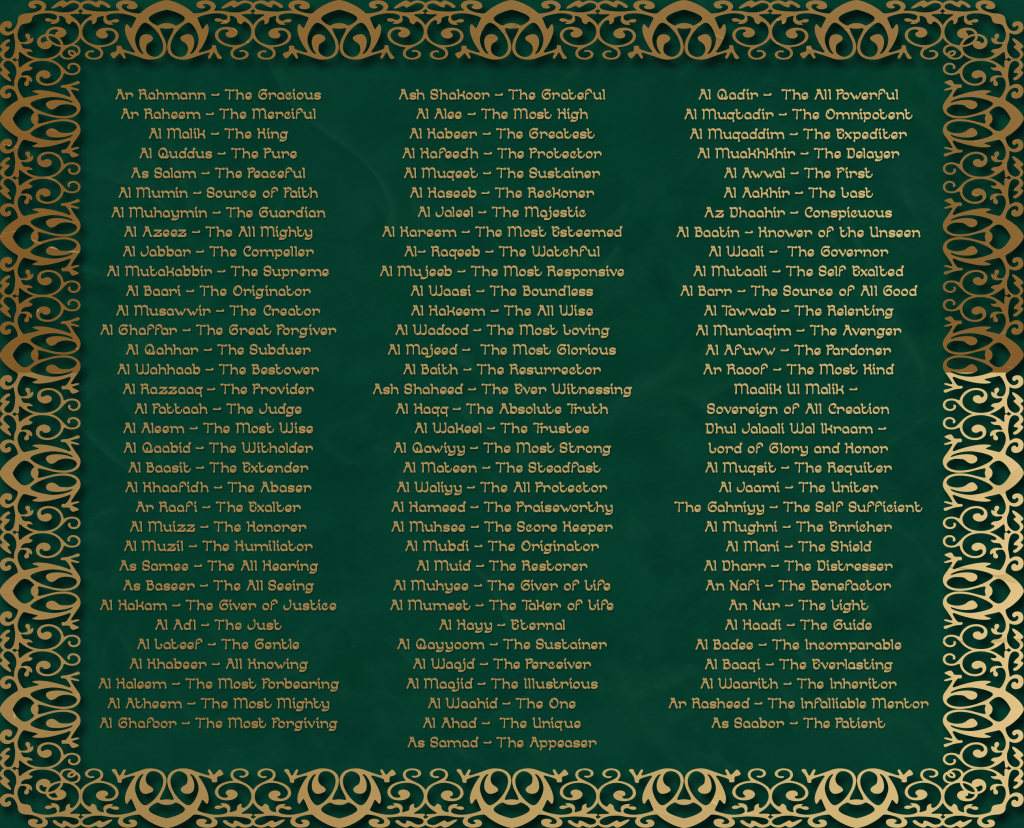
According to Muslim tradition, Allah has 99 names. Devout Muslims repeat these names in a manner similar to that of a Roman Catholic reciting the rosary.
Although Allah possesses the characteristics of power, sovereignty, and majesty, Allah is also characterized by justice and mercy. Allah will repay evil with justice, and righteousness with mercy.
The mercy of God is often emphasized in Muslim worship and practice. It is traditional for a Muslim who is giving a speech or writing to begin with the words, ‘In the name of God, the Merciful and Compassionate.’
‘Indeed, it is We who sent down the Qur’an and indeed, We will be its guardian.’ -Quran ‘Al-Hijir’ Verse 9
The scripture is Islam is called the ‘Quran.’ The word Quran means both ‘reading’ and ‘recitation.’ Muslims believe that the Quran is a recitation of an eternal scripture, written in heaven and revealed, chapter by chapter, to the Prophet Muhammad (ﷺ). The title of the scripture also relates to the first Surah (chapter), which is ‘Recite in the name of thy Lord who created…’
It can be argued that no scripture in the history of the world has been so influential to its people. Surely no scripture has been read as much or committed to memory as often. Although Jewish and Christian people revere their scripture, human, though inspired, authorship is acknowledged. Such is not the case with the Quran. The Quran is the direct word of God. It is eternal, absolute, and irrevocable. The Quran is believed to be God’s last word to humanity. Islam respects the Jewish and Christian scriptures, but the Quran is understood as God’s final message.
The Quran was revealed to Muhammad verbally, as he committed it to memory. Ever since it has remained unaltered and unchanged. The Quran of today is the exact same Quran at the time of the Prophet Muhammad. This is the miracle of the Quran itself, as God promised that it would be protected from corruption.
Recitation of the Quran is an important ritual and the source of God’s blessing because it produces his divine speech. Customarily, the first thing a Muslim infants hear when they are born is verses from the Quran. These verses are often gently chanted in their ears. Beautiful calligraphy verse from the Quran adorns the walls of the homes of Muslims. And its verses are often the last thing Muslims hear before death.
Among Muslims, it is considered a supreme act of piety and devotion to commit the entire Quran to memory. Those who achieve this extraordinary feat are given the honorary title of ‘Hafiz.’
The Quran is considered the exact words of God. The revelations that make up the Quran are organized into 114 chapters called ‘Surahs.’ The Surahs contain about 6,000 verses, called ‘Ayats.’ There is no topical or chronological order to the Quran. They are arranged based on the length of the Surah in descending order. The longest Surah contains 287 Ayats, and the shortest only contains 3.
Clicking on the Quran button below will take you to an online Quran hosted on quran.com
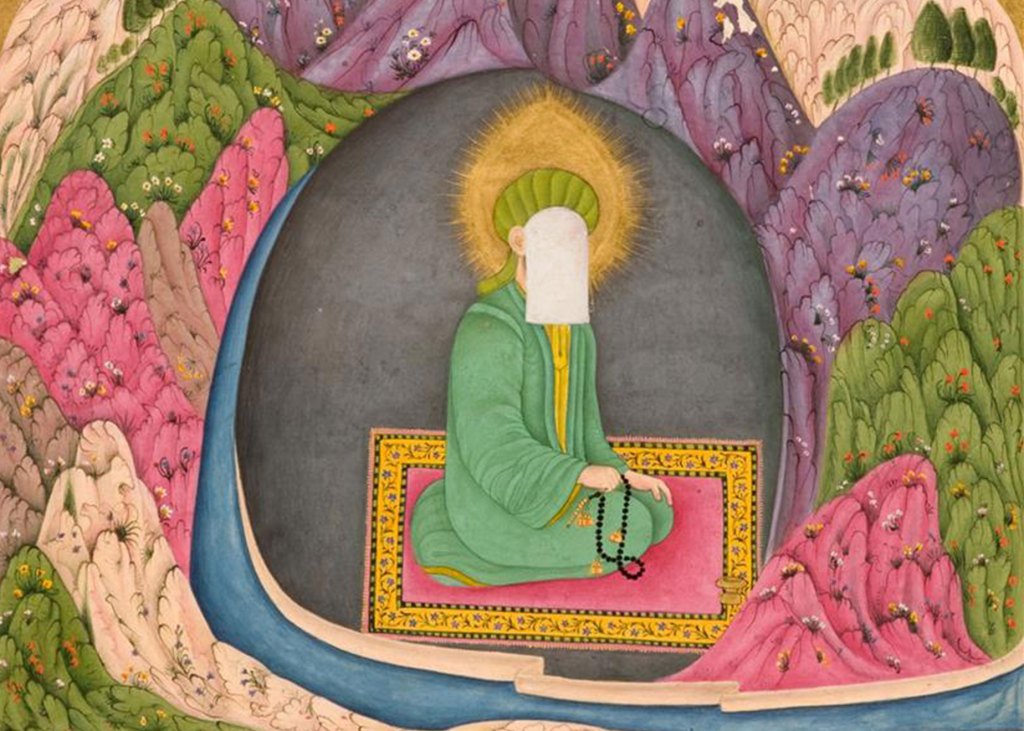
1720 painting of the Prophet Muhammad, titled ‘Prophet Muhammad in the Cave of Hira.’ Paintings and images of any of the prophets is taboo to most Muslims. However, there was a time when Persian, Ottoman, and Mughal artists would paint the Prophet in miniature for personal manuscripts, though a veil was usually used to hide his face.
Born: Around 570 C.E. (Mecca)] Died: 632 (Medina) Father: Abdullah Ibn Abd Al-Muttalib Mother: Amina Bint Wahb Milk Mother: Halimah bint Abi Dhuayb Siblings: None Milk Siblings: 2 milk-brothers, Abd Allah Ibn Al-Harith, Abdullah Al-Harith. 2 milk-sisters, Hothafa Bint Al-Harith, Anissa Bint Al-Harith
Because Islam is one of the youngest of the world’s religions, the details of the life and the founder are more readily available than those of other founders. No one can question that Muhammad (ﷺ) was a historical figure and lived in the 7th century C.E.
Muhammad was born into the clan of Al-Hashim of the Quraysh tribe. The Quraysh tribe controlled the Kaaba in Mecca. Muhammad was orphaned at a very young age. His father died of an illness while his mother was pregnant with him. When Muhammad was an infant, his mother sent him into the desert to be fostered by a Bedouin tribe. This was a custom of the time. Having a milk mother was a sacred tradition. It was believed that growing up in the desert as a semi-nomad was very important for character development. Muhammad was fostered by his milk-mother until he was six years old. Afterwards, he returned to his mother and his own tribe. After he returned, Muhammad went with his mother to visit her family in Yathrib. Shortly after this, Muhammad’s mother died of an illness, leaving Muhammad a young orphan.
After losing both parents, Muhammad joined the household of his uncle, Abu-Talib, who was the chief of the Quraysh tribe. Life for an orphan in the 7th century was difficult. Muhammad was not able to obtain a formal education, and it was noted that Muhammad may have been illiterate or barely literate. This is why Muslims consider the revelation of the Quran to him all the more miraculous. He was not some kind of skilled literary poet, yet suddenly, poetic words started flowing from him.
In the 6th century C.E., the merchants of Mecca controlled the trading caravans that moved between the Indian Ocean and the Mediterranean Sea. This, along with the Kaaba, brought great wealth to Mecca. Muhammad worked and traveled with the caravans. During his travels, he would have come into contact with people from many different cultures and religions. It is assumed he met plenty of Christians, Jews, and Zoroastrians during his travels. Something these three religions had in common was that all believed in one God; and they all had scripture that they believed to be the word of God; and they all believed that the world would end one day, the righteous would be rewarded, and the evil would be punished.
Years as a caravaner most likely taught Muhammad mathematical and business skills. He earned the reputation of being honest, faithful, loyal, and trustworthy. This is probably what afforded Muhammad the opportunity to meet the woman who would become his first wife.
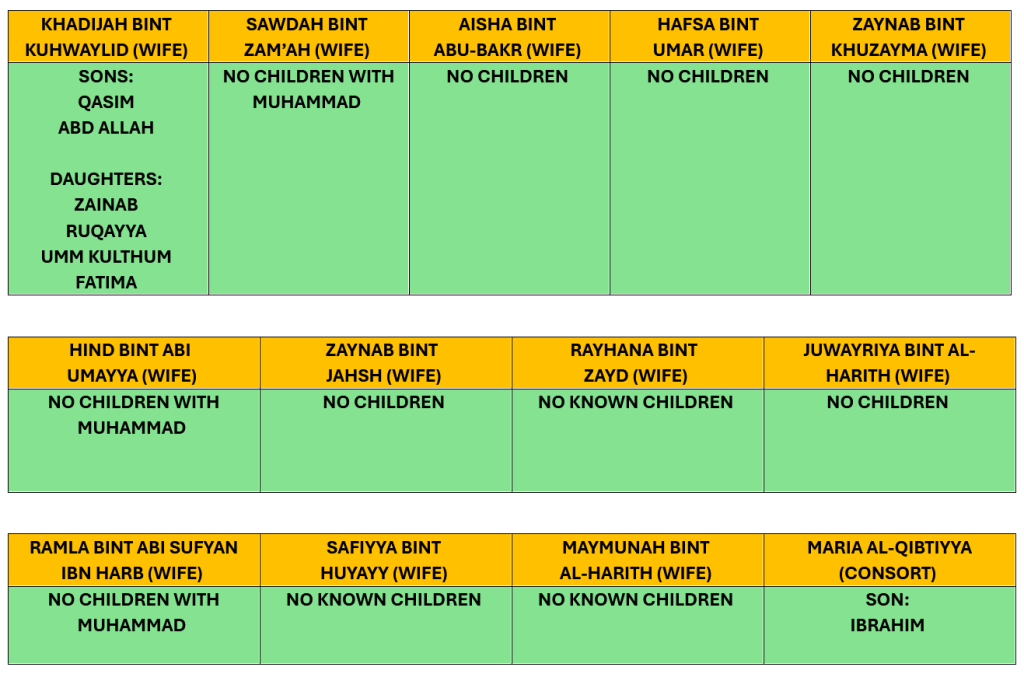
Khadija bint Khuwaylid (سلام الله علیها) was a wealthy widow and owner of a caravan. When she married Muhammad, she was forty years old, and he was twenty-five. Even though polygamy was a custom in their culture, Muhammad never took another wife during Khadija’s lifetime. She was Muhammad’s strongest supporter and the first convert to Islam.
During their 25-year marriage, Khadija bore Muhammad two sons and four daughters. Their sons died in early childhood.
THE REVELATION IN THE CAVE ON MOUNT HIRA
In the years following this marriage, Muhammad began to go into the hills surrounding Mecca to ponder the fate of his people. He was especially concerned about their idolatry, and the fate that would await them on judgement day. During these periods of meditation, he received visits from the archangel Gabriel. According to Islamic tradition, during the month of Ramadan, in a cave on Mount Hira, Gabriel brought the following command from God:
Recite! In the name of the Lord who created! Who created man from a blood clot! Recite! And the Lord is the Most Generous. Who was taught by the pen- Taught man what he knew not.
At frequent intervals throughout the rest of his life, Muhammad received revelations from God in this fashion. Muhammad memorized the contents of these divine messages and taught them to his companions. Eventually, they were committed to writing and became scripture contained in the Holy Quran.
Muslims believe that Muhammad is the last of the prophets, and that all the prophets who came before had only pieces of God’s message. It is believed that the final and complete message was revealed to Muhammad. Islam does not deny the validity of other religions, but rather sees itself as the completion of God’s covenant with His human creation.
Muhammad never considered himself to be anything other than a prophet and messenger. He never claimed to be divine. His mission was only to deliver God’s final message to the people.
When Muhammad first began to preach God’s message to the people of Mecca, he was not received well. Many were even openly hostile toward him. Many of them saw his preaching of the oneness of God and the sin of idolatry as a threat to their economic success. Many travelers from all over the world came to the Kaaba for pilgrimage and did a lot of business in Mecca.
Those closest to Muhammad were among the first converts to Islam. Aside from his wife, Khadija, there was also his cousin Ali, a former slave, Zayd, and his close friend, Abu Bakr. In the following years, more converts joined them. Most converts came from the poorer, enslaved, and younger people in their society. The fact that Islam began to preach that all people were equal before God appealed to a lot of people. Especially those who were underprivileged and treated as lesser. The reaction to this was that the elder and wealthier class of people who enjoyed their status and privileges aggressively opposed these ideas.
Muhammad continued his preaching regardless, and even though most of his own clan were not Muslims in the beginning, they still protected one of their own. If Muhammad was not from the Quraysh tribe, who was the most powerful tribe in Mecca, things most likely would have been even more dangerous and more difficult for Muhammad. Eventually, though, the opposition became more severe and violent, and Muhammad encouraged his followers to leave Mecca.
THE MIGRATION (HIJRAH)
In 615 C.E., about 15 Muslims fled Mecca and took refuge in the Christian Kingdom of Abyssinia (Ethiopia). Muhammad and the rest of his followers stayed behind and continued to preach in the face of prosecution.
In 619 C.E., Muhammad suffered the loss of his two greatest supporters. His powerful uncle and chief, Abu-Talib, and his beloved wife, Khadija. The death of Abu-Talib left him without the protection of his tribe, and life became extremely difficult for the Muslims in Mecca. After Khadijah’s death, Muhammad married Sawdah bint Zam’ah (سلام الله علیها). She was around 40 years old and a widow with six children.
One of the most significant events in the history of Islam was in 620 C.E. A group of six men journeyed from the city of Yathrib (Medina). They came to seek the wisdom of Muhammad, whom they had heard was an honest, just, and wise man. At the time, Yathrib was a city divided by clan warfare and internal strife. They needed an impartial person to judge their disputes, and this delegation of men believed that Muhammad could be that judge. Muhammad considered their offer, but made no final decision.
The following year, 12 more delegates from Yathrib appeared in Mecca to seek Muhammad’s counsel. Ten of these twelve men were from Jewish tribes. A few of the Jewish men thought that Muhammad could possibly be the Messiah. An invitation was extended to him to become the governor of their city again.
In 622 C.E., Muhammad and his followers had to sneak out of Mecca in order to avoid assassins who wanted to eliminate Muhammad. After the escape, Muhammad finally made it to Yathrib. The journey from Mecca to Yathrib is known as the hijrah (the migration). This is the moment from which Muslims date their calendar, and it was most likely around the time that they started to refer to this city as Medina.
In Medina, the Muslims took up residence beside the other tribes and clans. Muhammad may have been invited to govern and arbitrate between the tribes there, but the people there were of different religions. An agreement was made, known as the ‘Medina Charter.’ This agreement granted political authority to Muhammad, but gave freedom of religious practice to the members of other religious communities. Three of the tribes in Medina were Jewish, and most of the others were Christian and probably other religious groups.
In Mecca, Muhammad was dealing mainly with polytheists, but in Medina, he was met with strong resistance from Jewish monotheists. This began to create divisions between the Jews and Muslims. Around this time, Muhammad instructed Muslims that they would face Mecca to pray, when before they were praying toward Jerusalem. Regardless of this change, Jerusalem still remains the third-holiest city to Muslims after Mecca and Medina.
In 623 C.E. Muhammad married Aisha (سلام الله علیها). She was the daughter of his friend Abu Bakr. This marriage is the most controversial marriage of Muhammad, because Aisha was very young at the time. However, it was common for political marriage alliances between tribes. This marriage cemented a tribal alliance between the good friends by linking their clans. This does not imply that Muhammad and Aisha had a marital relationship at the moment of the marriage. There is no actual evidence of this.
Around this time, conflicts started to heat up between Medina and Mecca. The conflicts began as Muslims raiding caravans from Mecca, but intensified and widened into full-scale military campaigns. The Arabs at this time did not consider it dishonorable to raid caravans. Such raids allowed Muslims to seek revenge against Mecca, but also to acquire money and goods.
During the Battle of Badr in 624 C.E., the Muslims defeated Mecca. Muhammad’s presence during this battle rallied and encouraged his Muslim fighters, gave them strength, valor, fortitude, and determination. Their victory reinforced their loyalty to their prophet and even attracted others to Islam.
Conflict between the Muslims and Jewish tribes began to increase also. By now, the Jewish people had rejected any notion that Muhammad could possibly be the awaited Messiah. The same Jewish tribes that invited him to Medina even began to mock and ridicule him publicly. This was probably a reaction to Muhammad’s growing influence and more people converting to Islam. This mocking and humiliation was probably somewhat similar to what Jesus (ﷺ) experienced during his time. There were even times when some of the Jewish tribal leaders would support Mecca against the Muslims. Due to this treachery, the Jewish people were given a choice: either convert to Islam or leave the city.
In 625 C.E., Muhammad married Hafsa bint Umar (سلام الله علیها), a young widow. Hafsa was considered an intellectual and scholar. Marriage to Hafsa also solidified an alliance with her father’s tribe. In this same year, Muhammad also married Zaynab bint Khuzayma (سلام الله علیها), a divorcee, and Hind ‘Umm Salama’ bint Abi Umayya (سلام الله علیها), another widow with five children. These two marriages encouraged Muslim men not to be discouraged from marrying divorcees and widows. Marriage to Zaynab was also an important political match for Muhammad, and Umm Salama was the widow of Muhammad’s Bedouin milk-brother.
THE ATTEMPTED SIEGE OF MEDINA AND THE BATTLE OF KHAYBAR
In 627 C.E., 10,000 soldiers from Mecca attempted to lay siege to Medina, but had to retreat when they failed to take the city. Islamic historians consider this battle a great victory for Muhammad and a major turning point for the Muslims. This was also the year when Muhammad married Zaynab bint Jahsh (سلام الله علیها), his cousin. Initially, Muhammad tried to arrange a marriage between her and his foster son Zayd (who was his former slave), and Zaynab rejected this proposal at first, but after understanding the meaning behind it accepted.
For some reason, the marriage did not last. Zayd and Zaynab divorced. And then Muhammad married her. The initial arranged marriage between Zayd and Zaynab was to show the community that one’s class or social status, current or former, has no standing, as all were equal before God. Muhammad’s marriage to Zaynab after the divorce showed that a foster child still belongs to their own tribe and that they did not have the same cultural kinship as milk siblings and milk fosterlings did. (This custom will be explained in more depth in another publication.)
Also in 627 C.E., it is believed that Muhammad freed and married his Jewish captive, Rayhana bint Zayd (سلام الله علیها). The reason why it is believed that they married is that there was a mention of Muhammad paying Mahr upon marriage to her. Mahr is a bride’s gift. It is much like a dowry, gifted to the bride by her Muslim husband upon their marriage.
In 628 C.E., Muhammad made two more marriages. He married two widows, Juwayriya bint al-Harith (سلام الله علیها) and Ramla bint Abi Sufyan ibn Har (سلام الله علیها). These two marriages were also strategic tribal alliances. Juwayriya was a member of the Banu Mustaliq tribe. Ramla’s father was a member of the Umayya Clan and chief of the Quraysh tribe. At the time, Ramla’s father was Muhammad’s most formidable adversary and opponent. Eventually, Ramla’s father converted to Islam and joined with Muhammad. In this year, Muhammad attempted to enter Mecca on pilgrimage with his Muslim followers, but they were prevented from entering the city.
628 was also the year of the Battle of Khaybar. During this battle, the Jewish people of Khaybar (who had betrayed Muhammad and were exiled from Medina previously), faced off with the Muslims, which resulted in a Jewish defeat. In this battle, Safiyya bint Huyayy (سلام الله علیها) was widowed and captured. Muhammad decided to marry Safiyya. Aside from accounts of her exceptional beauty, she was an important, prominent, and influential person in her tribe. In this year, Muhammad also married twice widowed, Maymunah bint al-Harith (سلام الله علیها). Her father was a member of the Hilali tribe.
Another woman who joined Muhammad’s household was Maria al-Qibtiyya (سلام الله علیها). She and her sister were Coptic Christian slaves from Egypt and were gifted to Muhammad. Muhammad gave the sister to his good friend, Hassan ibn Thabit, and kept Maria for his own household. Muslim scholars do not believe that Muhammad ever married Maria, but there is a record that she was freed after she gave Muhammad a son and that she was given the same courtesy title, “Mothers of the Believers,’ just as his wives were.
THE HAJJ (THE PILGRIMAGE)
By 629 C.E., Islam had grown so strong that a peace agreement was negotiated between Mecca and the Muslims of Medina. No one could prevent them from entering the city for pilgrimage this time.
In 630 C.E., Muhammad and an army of 10,000 Muslims came to conquer Mecca. After their victory, Muhammad went straight to the Kaaba and destroyed all the idols and images within it. Afterwards, Muhammad was viewed as the leader of the Arabian people.
During the next few years, Islam continued to grow. Disciples were sent to deliver the Quran and spread the Word of God to the Bedouin of the Arabian desert and the surrounding nations. In 632 C.E., Muhammad led the Muslims on another pilgrimage to Mecca. By this time, he was 62 years old and in declining health. Upon his return to Medina, he delivered his final farewell message to the Muslim people and died in the arms of his wife, Aisha. The following words were spoken at his funeral by his good friend and father-in-law, Abu Bakr:
O ye people, If anyone worships Muhammad, Muhammad is dead! But if anyone worships God, He is alive and dies not!
There had been no arrangements regarding Muhammad’s successor.







 Vault of Stones