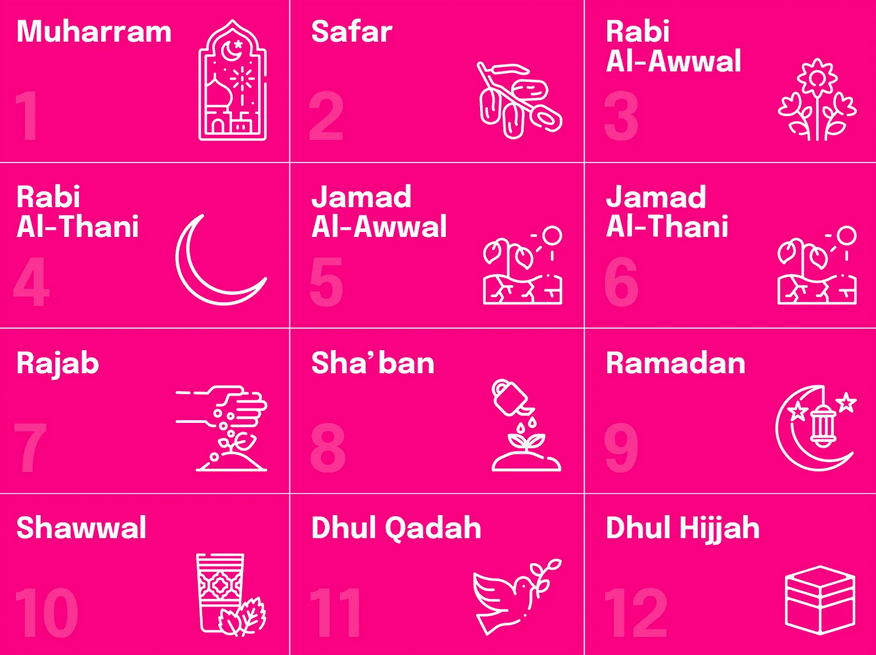
Islam employs its own unique lunar calendar, consisting of twelve months, with each month having either twenty-nine or thirty days, totaling 354 days in a lunar year. To account for the difference between the lunar and solar years, an extra day is added to the last month of the year eleven times within a cycle of thirty years. As a result, 103 Islamic years equate to approximately 100 solar years.
Muslims mark their calendar from the Hijrah, which is the migration of the Prophet Muhammad (ﷺ) from Mecca to Medina in 622 C.E. Therefore, significant dates in Islamic history, such as the year of the Prophet’s (ﷺ) passing, are noted as 10 A.H. (After Hijrah) rather than 632 C.E. This system of dating reflects the importance of the Hijrah in the Islamic tradition and serves as a reminder of the beginning of the Muslim community.
Among the five pillars of Islam, Muslims are commanded to engage in daily prayers (Salaht), fast during the holy month of Ramadan (Sawm), and make the pilgrimage to Mecca (Hajj) at least once in their lifetime, if able. These practices are fundamental to their faith and are integral to the Islamic way of life. In addition to these core obligations, Muslims are also required to observe two annual feasts.
Eid al Fitr (Feast of Breaking-Fast)
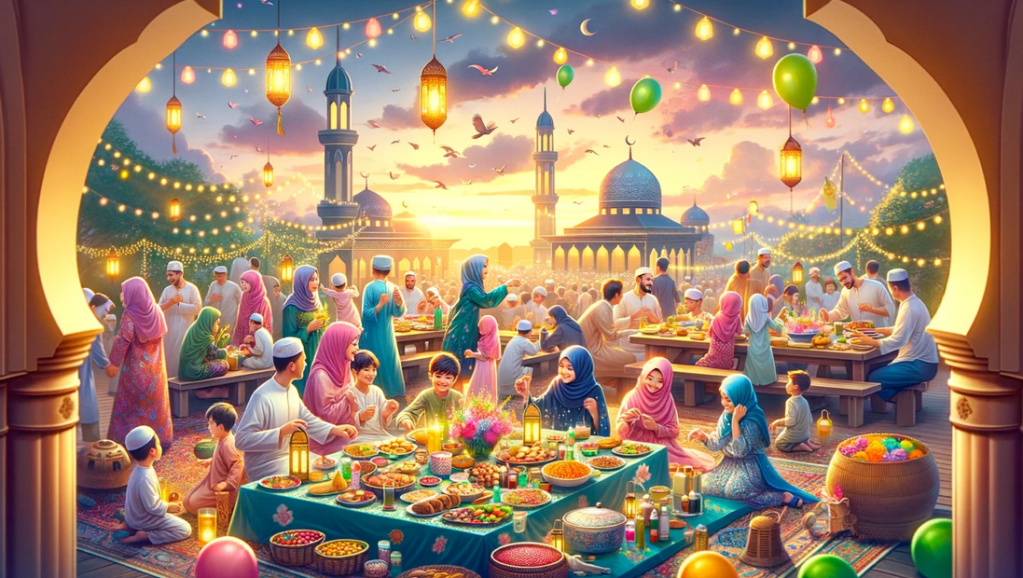
Eid al-Fitr is celebrated on the first day of Shawwal, the month following Ramadan, marking the end of fasting and the beginning of a return to normal life. This joyous festival symbolizes spiritual renewal and gratitude to Allah for the strength shown during Ramadan. It is a time of feasting, joy, and communal celebration, and traditionally lasts for up to three days.
During Eid al-Fitr, Muslims engage in various customs and rituals. The day begins with a special prayer called the Salat al-Eid, performed in congregation at mosques or open fields. This prayer is often followed by a sermon (khutbah) that emphasizes charity and community. As part of the celebration, it is customary for Muslims to give Zakat al-Fitr, a form of almsgiving meant to purify those who fast and assist the less fortunate, ensuring that everyone has the means to participate in the festivities.
In many Muslim societies, Eid al-Fitr is a time for exchanging gifts, visiting friends and relatives, and honoring the memory of deceased loved ones. Families often hold gatherings that include elaborate meals featuring traditional dishes, reflecting the diverse culinary practices of different cultures.
Additionally, it has become common for Muslims to send Eid al-Fitr cards, similar to the way Christians send Christmas cards, to convey warm wishes and blessings to family and friends. This practice reinforces community bonds and fosters a spirit of goodwill during this significant time of celebration.
Some common gifts given during this holiday are:
-Money (Eidi): It is traditional for adults to give children and younger family members money, often referred to as “Eidi.” This is a way to share the joy of the festival and help children feel included.
-Clothing: New clothes are often purchased for family members to wear on Eid, symbolizing renewal and celebration. It is common for families to buy traditional attire or festive outfits.
-Sweets and Confectionery: Specialty sweets and desserts are prominent during Eid. Gifts of homemade or purchased sweets, such as baklava, dates, or cookies, are often shared among friends and family.
-Personal Items: Items such as jewelry, perfumes, or decorative goods can also be given as gifts. These are often thoughtful presents that reflect the recipient’s taste and preferences.
-Decorative Gifts: Some people give home decor items, such as candles, decorative plates, or artwork, to celebrate the festive spirit.
-Food Baskets: Gift baskets filled with an assortment of food items, including fruits, nuts, or specialty items, are also popular as a means of sharing prosperity and abundance.

Eid al Adha (Feast of Sacrifice)
Eid al-Adha, also known as the “Festival of Sacrifice,” is celebrated on the 10th of Dhul-Hijah, the final month of the Islamic lunar calendar, which coincides with the Hajj pilgrimage. Though it is closely linked with the pilgrimage and an integral part of the Hajj rituals, Eid al-Adha is observed by Muslims worldwide, even by those who are not performing Hajj.
This significant feast commemorates the moment when the Prophet Ibrahim (Abraham) demonstrated his unwavering faith by being willing to sacrifice his son Isma’il (Ishmael) in obedience to God’s command. At the moment of sacrifice, God recognized Ibrahim’s profound devotion and provided a ram as a substitute, allowing him to fulfill the command without harming his son. This event illustrates themes of faith, obedience, and divine mercy.
On Eid al-Adha, the head of each household is traditionally required to sacrifice a livestock animal, such as a sheep or goat, as an act of worship and gratitude. This act of Qurbani (sacrifice) serves not only as a remembrance of Ibrahim’s willingness to submit to God’s will but also as a way to share blessings with others.
After the sacrifice, the meat is divided into three portions: one third is for the family, one third is given to relatives and friends, and the final third is distributed to those in need within the community. This practice fosters a sense of unity and generosity, ensuring that even the less fortunate can partake in the celebrations and enjoy a festive meal.
Eid al-Adha also features special prayers, known as the Salat al-Eid, performed in congregation, and often includes communal celebrations, festive meals, and the exchange of greetings and well-wishes among family and friends. The holiday emphasizes the values of sacrifice, charity, and compassion, as communities come together to celebrate and reflect on their faith.
New Year
Muharram marks the beginning of the Islamic lunar calendar and holds significant importance in the Muslim faith. It is a month of reflection, remembrance, and various religious observances. Traditionally, it is believed to be the month in which the Hijrah, the migration of the Prophet Muhammad (ﷺ) from Mecca to Medina, occurred, symbolizing a pivotal moment in Islamic history and the establishment of the Muslim community.
In Sunni communities, the tenth day of Muharram, known as Ashura, is recognized as a day of fasting. Muslims are encouraged to fast on this day as a means of drawing closer to Allah, seeking forgiveness, and reflecting on the teachings of Islam. The Prophet Muhammad (ﷺ) is reported to have fasted on Ashura as it commemorates the day when Prophet Moses and the Israelites were saved from Pharaoh’s oppression. Sunnis may also observe the day by fasting on the ninth and tenth days of Muharram to distinguish their practices.
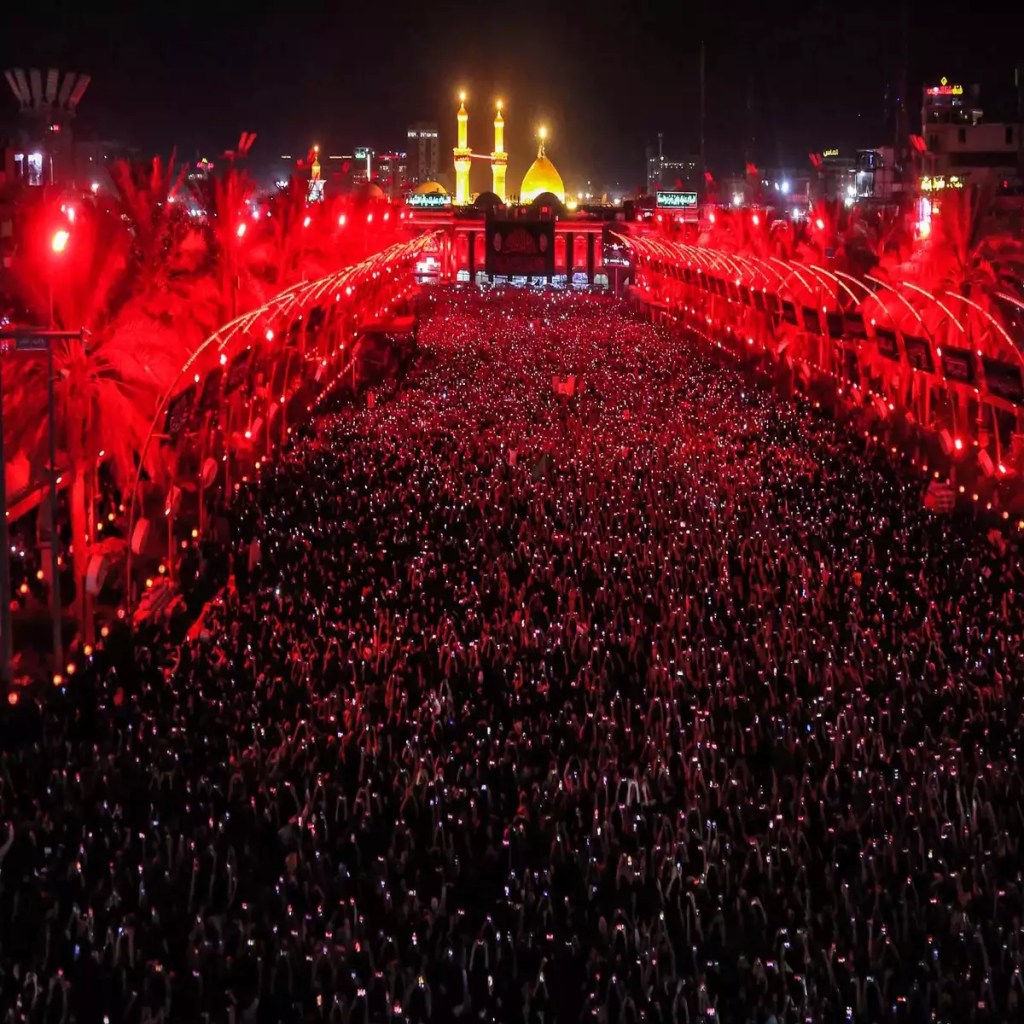
For Shia Muslims, however, the significance of Ashura takes on a different and deeply profound meaning. It commemorates the Battle of Karbala, which occurred in 680 CE. This battle was a pivotal moment in Islamic history, where Imam Hussein, the grandson of the Prophet Muhammad (ﷺ) and a symbol of justice and sacrifice, stood against the tyranny of Yazid ibn Muawiya. Imam Hussein and his companions were martyred, and their sacrifice is viewed as a powerful example of standing up for truth and justice against oppression. Shia Muslims observe Ashura with various rituals, including mourning ceremonies, processions, and recitations of the events of Karbala, reflecting on the lessons of sacrifice, resilience, and the importance of standing against injustice.
Throughout Muharram, Muslims from both Sunni and Shia traditions engage in acts of charity, prayer, and community gatherings, using this month as an opportunity for spiritual renewal and unity. The observance of Muharram serves to deepen one’s faith and connection to the foundational events of Islam, reinforcing values of compassion, justice, and the struggle against injustice.
Mawlid an Nabi (Prophet Muhammad’s (ﷺ) Birthday)
The traditional celebration of the birth of Prophet Muhammad (ﷺ), known as Mawlid al-Nabi, occurs on the twelfth day of Rabi al-Awwal, the third month of the Islamic lunar calendar. This special occasion is rich in spirituality and community engagement, commemorating the life and teachings of the Prophet, who is revered as the final messenger of God in Islam.
Central to the festivities is the recitation of the Prophet Muhammad’s (ﷺ) biography, highlighting his noble character, significant life events, and contributions to humanity. Many communities gather for special prayers, known as Salawat, which invoke blessings upon the Prophet. These prayers express love and reverence, thanking Allah for sending Muhammad (ﷺ) as a guide.
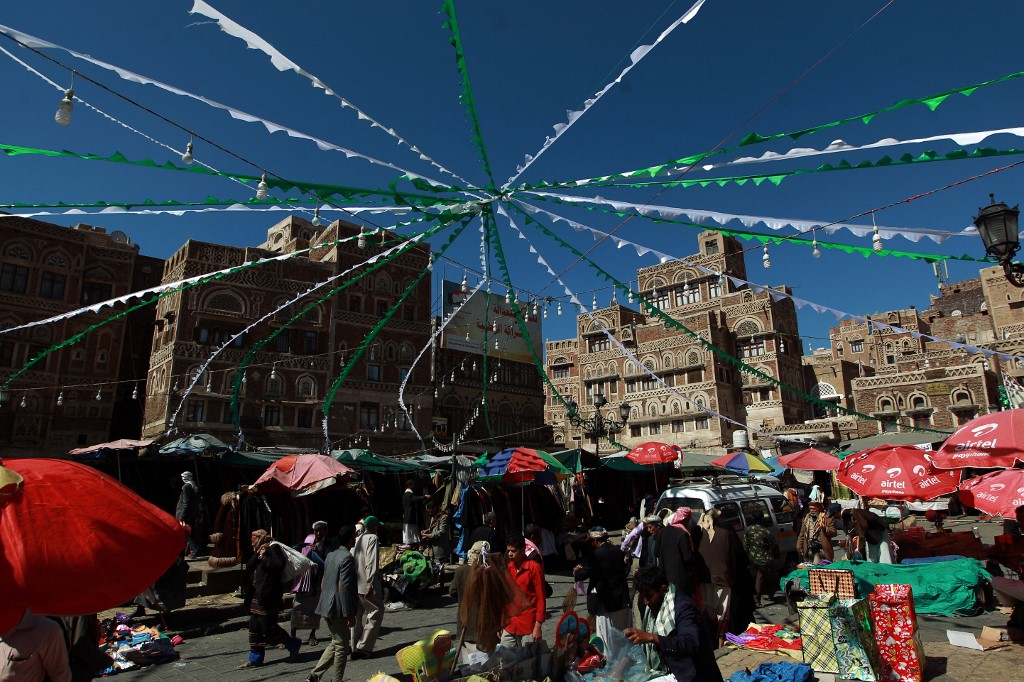
In various regions, Mawlid al-Nabi is marked by vibrant processions in which participants chant praises, recite poems (known as nazms), and engage in communal singing that celebrates the Prophet’s exemplary life. These processions may feature beautifully decorated banners and, in some cultures, traditional music and dance, reflecting the rich cultural heritage of the communities.
Feasting is also an integral part of the celebration, with families and friends coming together to share special meals. Sweets and traditional dishes are often prepared, symbolizing joy and gratitude for the blessings of the Prophet.
However, the observance of Mawlid al-Nabi is not universally accepted within the Muslim community. The ultra-conservative Wahhabi movement in Arabia, along with some other groups, refrains from celebrating the Prophet’s birthday, viewing it as a modern innovation (Bid’ah) that is not rooted in the practices of the early Muslim community. They emphasize a more austere interpretation of Islamic practice, focusing on the teachings of the Qur’an and the Sunnah.
In contrast, many Muslim communities, particularly those influenced by Sufism, use this occasion to honor not only the Prophet Muhammad (ﷺ) but also the birthdays of revered saints, particularly the founders of various Sufi orders. These celebrations often include special prayers, poetry readings, and gatherings that foster a sense of unity and spiritual reflection.
Overall, Mawlid al-Nabi serves as a rich occasion for Muslims around the world to celebrate their faith, gather in community, engage in acts of devotion, and reflect upon the profound impact of the Prophet Muhammad (ﷺ) in their lives.
 Vault of Stones