After the glories of the Baghdad Caliphate, Islam experienced a period of relatively stable existence. This era witnessed significant events such as the battles with Christian Crusaders over the holy sites in Palestine during the 12th and 13th centuries, which saw the emergence of Saladin, one of Islam’s most illustrious leaders. Additionally, Islam expanded eastward into regions like India, China, and Southeast Asia. The 14th century also marked the rise of the Ottoman Empire. However, despite these developments, Islam never fully regained the wealth, power, and political unity it had during the golden age of the Abbasid caliphs.
As European countries transitioned from the medieval period to the industrial age, many Islamic nations remained in pre-industrial societies. Several reasons have been suggested for this period of relative quiet in the Islamic world. A key factor is the inherently conservative nature of the religion. While most religions tend to be conservative, Islam is considered particularly so. Muslims believe that Muhammad (ﷺ) was the last of God’s prophets and that the Qur’an contains God’s final message to humanity. For salvation, the focus is on understanding the Qur’an and applying its teachings to one’s life. Consequently, conservative Muslim scholars often concluded that there was little need to seek new knowledge or embrace change, especially when such influences came from outside the Muslim community. In response to growing pressures from the industrialized West, some conservative scholars and communities chose to retreat into self-imposed isolation.

Another significant reason for the lack of change among Muslims might have been their sense of self-satisfaction compared to European countries. Muslims had decisively defeated the Christian Crusaders who invaded their lands and later captured the formidable city of Constantinople from its Christian defenders. Consequently, the Islamic world harbored a sense of military and cultural superiority over Christian countries. However, in the 16th century, advancements in naval and military technology, alongside newfound wealth from the Americas, shifted the global balance of power in favor of Europeans. Particularly in the Middle East, Muslims were slow to recognize and understand the implications of these developments. Some scholars suggest that it was not until Napoleon’s conquest of Egypt in the early 19th century that Islamic nations became acutely aware that Europeans had made many advancements surpassing their own.
A third reason for the slow transition of Muslim nations into the modern era was the rise of highly conservative groups within Islam that actively opposed change. The most notable among these was the Wahhabi movement, founded in 1744 by Muhammad Ibn-Abd-Wahhab. Wahhabism is characterized by its strict traditionalism and rejection of all forms of innovation. When the House of Saud came to power in Arabia, this puritanical movement aligned itself with their rule, further entrenching its influence. In the 19th century, Wahhabis suppressed Sufi practices and other groups they viewed as deviations from what they understood to be the true Islam of the Prophet Muhammad (ﷺ) and his close companions. Today, the Wahhabi movement is most prominent in Saudi Arabia, where the vast wealth of the Saudis has enabled them to send missionaries across the Muslim world. Consequently, few Muslim societies remain untouched by Wahhabi-inspired puritanical movements.
The isolation of the Muslim world began to break down in the early 20th century, significantly altering its relationship with the modern world. By this time, advancements in transportation and communication brought the Muslim world closer to European powers. World War I saw the Ottoman Empire align itself with Germany and Austria in the conflict. Following the war, the victorious Allies- comprising Britain, France, and the United States- disassembled the Ottoman Empire, leading to the imposition of their control over much of the Middle East. In the years following World War I, the lands that were once under Ottoman rule began to evolve into independent nations. It is important to note that the boundaries of many of these newly formed nations were drawn arbitrarily by European powers in the aftermath of the war, often disregarding the cultural and historical context of the region. This created lasting complexities that continue to affect the Middle East today.

The Arab nations of the Middle East were discovered to hold the world’s largest reserves of crude oil, transforming their global significance. As demand for oil surged and domestic production in the United States and Europe could no longer satisfy this need, the wealth and political clout of Arab nations grew dramatically. This newfound prominence has sparked a resurgence of interest in Islam, both within the region and beyond. The importance of Muslim states in the Middle East can no longer be overlooked; they have become vital players in the industrialized world. Similarly, Indonesia, with its population exceeding 200 million and vast petroleum reserves, is poised to assume a larger role in both the Asian and Islamic landscapes in the 21st century, further underscoring the geopolitical significance of the Muslim world today.
The internal resurgence of Islam has manifested in various significant ways. One prominent aspect is the emergence of reform movements from within the faith. Some Muslims have engaged in textual criticism of the Qur’an, akin to approaches taken by Christians and Jews with their scriptures. Their aim is to uncover what the Pakistani scholar Fazlur Rahman termed the “major themes of the Qur’an” and apply these insights to address contemporary political and economic challenges.
Additionally, there has been a shift in traditional Islamic scholarship toward pressing questions such as developing a philosophy of science grounded in ethical principles, as well as exploring what Indonesian reformer Nurcholish Madjid identifies as the “Islamic roots of modern pluralism.” Furthermore, Islamic feminists have highlighted portions of the Qur’an and hadith that advocate for the just treatment of women, using these texts as a foundation to expand women’s religious, social, and economic roles in the modern Islamic world. This multifaceted revival illustrates the dynamic nature of contemporary Islamic thought and its capacity to engage with modernity while remaining rooted in tradition.
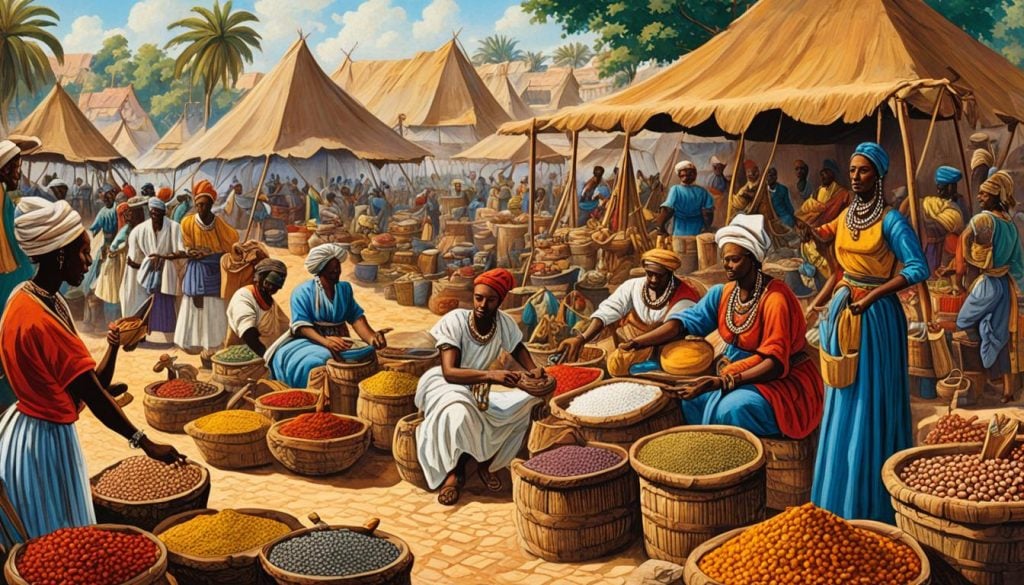
One of the most notable outcomes of the resurgence of Islam in the 20th century has been its vibrant and active missionary movement across Africa. The movement of Muslim missionaries south of the Sahara began in the late 19th century, coinciding with the end of the slave trade, which opened the door for the conversion of Africans to Islam. While Islam has been present in parts of Africa since the 7th century, with North Africa being among the earliest regions outside Arabia to embrace the faith, the influence of Islam has long permeated the continent’s interior, particularly in urban areas.
For centuries, Muslim merchants and traders engaged with various communities across Africa, fostering connections and sharing their faith. The colonial presence of European powers in the 18th and 19th centuries inadvertently facilitated Muslim missionary efforts, allowing the teachings of Islam to reach deeper into the interior regions.
This revival underscores the enduring relevance of Islam, as it continues to inspire individuals and communities throughout Africa, promoting a message of unity, faith, and social justice. The growth of Islam in Africa not only reflects the spiritual desires of its people but also symbolizes a broader embrace of cultural and religious identity in the face of modern challenges.

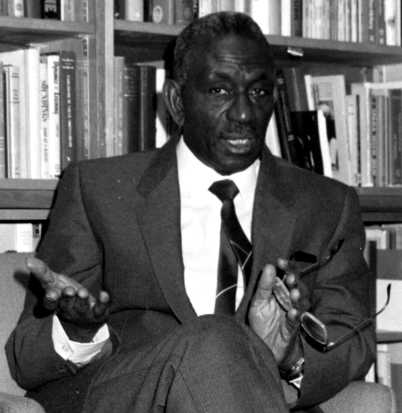

The abuses inflicted upon Africans by colonial powers also created an opportunity for the spread of Islam. As African nations fought for and ultimately achieved their independence, many found a profound avenue for expressing their resistance to European colonialism and its associated values through conversion to Islam. Unlike Christianity, which was often associated with colonial rule, Islam’s teachings transcend color and ethnic origin, presenting itself as a faith that embraces diversity and equality among all believers.
For many people across Africa, Asia, and the Middle East, Islam has come to symbolize not only spiritual fulfillment but also the struggle for social justice and self-determination. It serves as a rallying point for those seeking to reclaim their identities and assert their rights in the face of historical oppression. This alignment of Islam with movements for justice and freedom reinforces its relevance in modern society, as it inspires individuals to advocate for their own dignity and the welfare of their communities. Through its core principles of equality and justice, Islam continues to resonate deeply with those who aspire for a more just and equitable world.
 Vault of Stones