Islam, like most major religions, is not a monolithic body. While the majority of Muslims share common beliefs in the fundamental principles of Islam, there is considerable diversity in interpretations, beliefs, and practices across different cultures, sects, and communities.

SUNNI
Approximately 85% of Muslims worldwide identify as Sunni. Sunni Muslims view themselves as the custodians of Islamic orthodoxy and tradition, grounding their faith and practices in the Qur’an and the traditions (Hadith) of the early Muslim community. According to Sunni teachings, the Qur’an and Hadith serve as the primary sources of religious and legal authority.
The Hadith, which are accounts of the words and actions of the Prophet Muhammad (ﷺ) and his close companions, provide detailed guidance that complements the Qur’an. Thousands of Hadith have been meticulously recorded from witnessed accounts and are used by Muslim scholars to address legal questions and clarify the ritual practices of Islam.
The study of the Qur’an and Hadith remains a cornerstone of religious education in Sunni Muslim societies. In addition to these foundational texts, Sunni scholars employ methods such as analogy (qiyas) and consensus (ijma) to resolve issues not explicitly addressed in the Qur’an or Hadith. These tools are particularly vital for developing Islamic solutions to contemporary challenges in the modern world.
As Islam expanded and absorbed the cultural and social influences of the diverse regions where it spread, various schools of thought and interpretation emerged. These schools differed in the emphasis they placed on the Qur’an, the Hadith, and the role of human reasoning in deriving religious and legal rulings. Within Sunni Islam, four major schools of thought, known as madhabs, were established. Every Sunni Muslim typically aligns with one of these schools, which guides their understanding and practice of Islamic teachings.
HANAFI

The Hanafi school of thought, one of the four major Sunni madhabs, originated in Kufa, Iraq, and was founded by Imam Abu Hanifa (699–767 CE). It is known for its emphasis on reason, analogy (qiyas), and consensus (ijma) alongside the Qur’an and Hadith in deriving Islamic rulings.
The Hanafi school is the most widespread of the Sunni schools and is predominant in several regions, including:
- South Asia: Countries like India, Pakistan, Bangladesh, and Afghanistan.
- Central Asia: Including Uzbekistan, Turkmenistan, Tajikistan, and Kazakhstan.
- Turkiye: As the Ottoman Empire adopted Hanafi jurisprudence as its official school.
- The Balkans: Due to Ottoman influence in Southeastern Europe.
- Parts of the Middle East, Such as Iraq and Syria.
Its broad geographical spread reflects the influence of the Abbasid and Ottoman Empires, which facilitated the dissemination of Hanafi thought
MALIKI

The Maliki school of thought, one of the four major Sunni madhabs, was founded by Imam Malik ibn Anas (711–795 CE) in Medina, Saudi Arabia. This school places significant emphasis on the practices (‘amal) of the people of Medina, viewing them as a reflection of the Prophet Muhammad’s (ﷺ) original teachings. Alongside the Qur’an and Hadith, the consensus of the Medinan community plays a critical role in Maliki jurisprudence.
The Maliki school is predominant in the following regions:
- North Africa: Morocco, Algeria, Tunisia, Libya, and Mauritania.
- West Africa: Countries such as Senegal, Mali, Chad, Niger, and parts of Nigeria.
- Sudan: Particularly in its northern regions.
- Parts of the Arabian Peninsula: Historically, in regions like Bahrain and parts of Yemen.
The school’s prominence in these areas reflects the influence of early Islamic trade routes and the spread of Islamic teachings through North and West African scholars and traders.
SHAFI’I

The Shafi’i school of thought, one of the four major Sunni madhabs, was founded by Imam Al-Shafi’i (767–820 CE). It originated in Egypt and Iraq, where Imam Al-Shafi’i developed his legal principles, synthesizing aspects of the Hanafi and Maliki schools while introducing a systematic approach to jurisprudence. This school places strong emphasis on the Qur’an, Hadith, consensus (ijma), and analogy (qiyas).
The Shafi’i school is predominant in the following regions:
- East Africa: Particularly in Somalia, Eritrea, Djibouti, and parts of Kenya and Tanzania.
- Southeast Asia: Including Indonesia, Malaysia, Brunei, Thailand, and the southern Philippines.
- Southern Arabia, Especially in Yemen.
- The Levant: In parts of Palestine, Jordan, and Syria.
- Egypt: Historically significant, though now the Hanafi school is more widespread there.
The spread of the Shafi’i school was significantly aided by trade and the efforts of Muslim scholars and missionaries, especially along maritime routes in Southeast Asia and East Africa.
HANBALI

The Hanbali school of thought, one of the four major Sunni madhabs, was founded by Imam Ahmad ibn Hanbal (780–855 CE) in Baghdad, Iraq. This school is known for its strict adherence to the Qur’an and Hadith as primary sources of Islamic law, with limited reliance on analogy (qiyas) or speculative reasoning. Hanbali jurisprudence emphasizes textual evidence and is considered the most conservative of the four Sunni schools.
The Hanbali school is predominantly followed in:
- Saudi Arabia: It is the official school of thought in the Kingdom and forms the basis of the country’s legal system.
- Parts of the Arabian Peninsula: Including Qatar and parts of the United Arab Emirates.
- Other regions: Smaller Hanbali communities exist in Iraq, Syria, and Jordan.
The prominence of the Hanbali school in Saudi Arabia is closely tied to its association with the Wahhabi reform movement, which emerged in the 18th century and adopted Hanbali jurisprudence as its foundation.
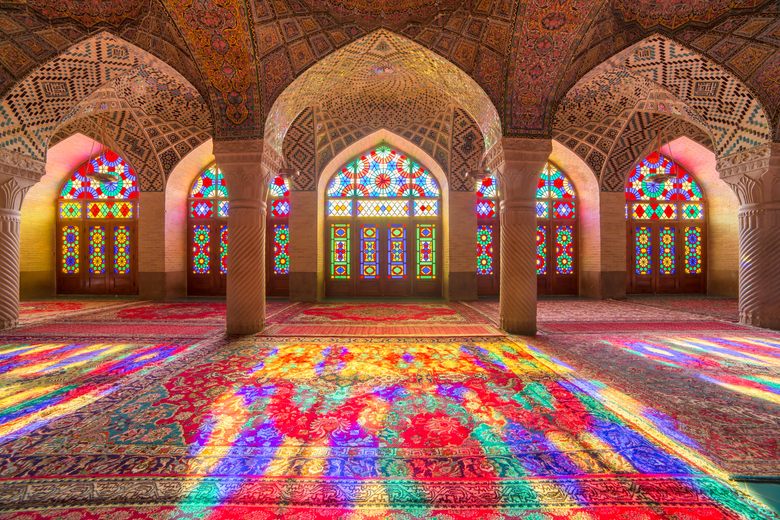
SHIA (SHI’ITE)
The emergence of the Shia branch within Islam represents a significant division in the faith’s history. This split originated as a political dispute over the leadership of the Muslim community, but later developed profound theological dimensions.
Following the death of the Prophet Muhammad (ﷺ), no clear instructions were left regarding his succession. As a result, leadership passed to three of his close companions, known as the first three caliphs. However, a group of Muslims believed that the Prophet (ﷺ) had designated his cousin and son-in-law, Ali ibn Abi Talib, as his rightful successor.
Ali eventually became the fourth caliph in 656 CE, but his rule was marked by political strife and conflict. He struggled to maintain control and was assassinated in 661 CE, after which the Umayyad dynasty assumed the caliphate.
Ali’s youngest son, Husayn, later challenged the Umayyad rulers in 680 CE. This culminated in the Battle of Karbala in modern-day Iraq, where Husayn and most of his family were killed. This event holds deep significance for Shia Muslims, who regard Husayn and his family as martyrs and view their sacrifice as a symbol of resistance against tyranny and injustice. The tragedy of Karbala continues to be commemorated annually during Ashura, a central observance in Shia Islam.
Throughout Islamic history, there has always been a group of believers who held that the leadership of the faith should remain within the lineage of Ali ibn Abi Talib, the cousin and son-in-law of the Prophet Muhammad (ﷺ). In the early days, these individuals were referred to as Alids, reflecting their allegiance to Ali and his descendants. Over time, this group became known as Shia Ali (the Party of Ali), which eventually evolved into the term Shi’ites.
Here are some of the ways in which the Shia differ from the Sunni:
- Shia Muslims believe that while divine revelation concluded with the Prophet Muhammad (ﷺ) and the Qur’an, subsequent generations were guided by divinely inspired leaders known as imams. In Sunni Islam, the term imam typically refers to someone who leads communal prayers, a role with primarily spiritual and organizational significance. However, in Shia Islam, the title of imam holds profound importance. Shia imams are viewed as spiritual and temporal leaders who possess divine authority and infallibility, serving as interpreters of God’s will and guides for the Muslim community.
- Shia Muslims believe that following the tragic events of 680 CE, the next imam was Zayn al-Abidin, another son of Ali ibn Abi Talib. Diverging beliefs about the succession of imams led to the formation of distinct Shia sects. One group, known as the ‘Seveners’ (Ismailis), holds that after Zayn al-Abidin, there were six additional imams, culminating in a total of seven divinely appointed leaders. Another group, the ‘Twelvers’ (Ithna Ashari), believes that Zayn al-Abidin was succeeded by a further eleven imams, resulting in a lineage of twelve imams in total. Both sects share the belief that some of these imams did not die but instead went into hiding and are awaiting their return to earth and guide humanity.
- A concept, especially prominent among Twelvers, centers on the belief that the Mahdi, the twelfth imam, will reappear as a messianic figure to establish justice and restore true faith on earth.
- Due to the profound significance of Husayn’s martyrdom, Shia Muslims place a strong emphasis on the concept of martyrdom in their religious practice and identity. Each year, on the 10th day of Muharram, known as Ashura, the events of Husayn’s tragic death are commemorated through passion plays, processions, and rituals that reenact his sacrifice at the Battle of Karbala. The site of Husayn’s martyrdom in Karbala, Iraq, holds immense spiritual importance and has become a central destination for pilgrimage among Shia Muslims. Additionally, other locations associated with Husayn’s life and family are considered sacred and are frequently visited by Shia pilgrims as acts of devotion and remembrance.
- Shia Muslims often view traditional Sunni interpretations of the Qur’an with skepticism. They argue that the absence of explicit references to Ali as the rightful successor to the Prophet Muhammad (ﷺ) in the current version of the Qur’an suggests that it may have been altered or selectively interpreted by those opposed to Ali’s leadership. As a result, Shia theology emphasizes that the Qur’an contains deeper, hidden meanings (batin) that can only be fully understood through allegorical interpretation (ta’wil), guided by the divinely inspired imams. These imams are believed to possess unique insight into the true and esoteric meanings of the Qur’an, beyond its apparent, literal message.
In 1502, Shia Islam was established as the state religion of Persia under the Safavid dynasty, a status it has maintained in present-day Iran. Neighboring Iraq also has a significant Shia population, comprising approximately 60% of its Muslim population. Additionally, Shia minorities can be found in countries such as Saudi Arabia, India, Pakistan, Yemen, and parts of East Africa.
In recent decades, substantial Shia communities have also emerged in the United States and Europe, driven in part by the migration of Muslims, many of them moderates, following the Iranian Revolution of 1979. Globally, Shia Muslims are estimated to make up between 10% and 15% of the total Muslim population.
Like Sunnis, Shias have different schools of Islamic thought. Shia have 4 primary schools of thought.
ITHNA ASHARIYAH (TWELVERS)

The Twelvers are the largest branch of Shia Islam. Twelvers believe in a line of twelve divinely appointed imams, starting with Ali ibn Abi Talib and ending with Muhammad al-Mahdi, the twelfth imam, who is believed to be in hiding and will reappear as the Mahdi to establish justice. Twelvers are found in many countries:
- Iran: The largest concentration of Twelvers, where they constitute the majority, and Twelver Shia Islam is the state religion.
- Iraq: Significant Twelver population, especially in cities like Najaf and Karbala, which are major religious centers for Twelvers.
- Lebanon: The Shia population includes a large number of Twelvers, particularly represented by groups like Hezbollah.
- Bahrain: A majority Shia population, with Twelvers being the largest sect.
- Pakistan and India: Twelvers are a minority but have a strong presence, particularly in cities like Karachi, Lahore, and Lucknow.
- Saudi Arabia: The Eastern Province has a notable Twelver Shia population.
- Syria: A smaller but historically significant Twelver minority exists, alongside other Shia groups.
ISMAILIS (SEVENERS)

Ismailis recognize seven imams, diverging from the Twelvers after the sixth imam, Ja’far al-Sadiq. They believe Isma’il ibn Ja’far, his son, was the rightful successor. The Ismailis have two branches. The Nizari are the largest branch, led by the Aga Khan as the present imam. The Dawoodi Bohra and Sulaymani Bohra are subgroups of another branch that emphasize scholarly traditions.
The Ismailis have a rich history of intellectual contributions, particularly in the Fatimid period, and today they are known for their emphasis on education, community development, and global humanitarian efforts under the leadership of the Aga Khan. Seveners are found across the world:
- India and Pakistan: Significant Ismaili populations, particularly among the Nizari Ismailis, who follow the Aga Khan as their Imam. Cities like Karachi and Mumbai have prominent Ismaili communities.
- Iran: Historically significant, though now a minority group.
- Syria: A smaller Ismaili community exists in areas like Masyaf and Salamiyah.
- Yemen: The Tayyibi Musta’li Ismailis (Dawoodi Bohras) are centered in Yemen, with a diaspora in India and other parts of the world.
- Kenya, Tanzania, and Uganda: Significant Ismaili populations due to migrations during colonial times.
- Afghanistan, Tajikistan, and Northern Pakistan (Hunza, Gilgit): The Pamiri Ismailis are found in these regions, with distinct cultural practices.
- North America and Europe: Ismaili diaspora communities are present due to modern migrations, particularly in the United States, Canada, and the United Kingdom.
- Burma (Myanmar) and Malaysia: Small communities of Ismailis exist here due to historical trade routes and migrations.
ZAIDIS (FIVERS):

Zaidis accept Zaid ibn Ali, a grandson of Husayn, as the fifth imam. They emphasize political activism and believe the imam does not need to be divinely appointed but must be a direct descendant of Ali and fulfill certain qualifications. The Zaidis are closer to Sunni Islam in terms of jurisprudence and theology than other Shia sects. Zaidis are found in the Middle East.
- Yemen: The primary and most enduring center of Zaidi Islam. Zaidis historically ruled Yemen through various Imamate dynasties until the overthrow of the Mutawakkilite Kingdom in 1962, which ended Zaidi political rule. The contemporary Houthi movement (Ansar Allah), active in Yemen’s ongoing conflict, is rooted in Zaidi ideology, though it has incorporated broader political and religious elements.
- Saudi Arabia: Small Zaidi communities exist in the Najran region, near the Yemeni border.
- Iran: While Zaidism historically had a presence, it largely faded with the rise of Twelver Shia Islam.
- Iraq: Early Zaidi activity was significant in Kufa, but it has not remained a major Zaidi stronghold in modern times.
ALAWITES

Alawites have a highly esoteric interpretation of Islam, blending elements of Shia Islam with other mystical and philosophical traditions. They venerate Ali as an embodiment of the divine. Alawites are often considered distinct from mainstream Twelver Shia Islam due to their unique beliefs and practices. While Alawites are geographically concentrated in the Levant, particularly Syria, their unique theology and identity have set them apart from other Islamic sects, contributing to both their distinctiveness and historical marginalization:
- Syria: The Alawites are predominantly based in western Syria, particularly in the Latakia and Tartus regions and parts of the Homs and Hama provinces. They constitute about 11–15% of Syria’s population and have been politically influential, especially since the mid-20th century. The Assad family, which has ruled Syria since 1970 until very recently, is Alawite.
- Turkiye: Known locally as Nusayris, there is a small Alawite community in the southern Turkish provinces of Hatay, Adana, and Mersin.
- Lebanon: A minority Alawite population exists in northern Lebanon, particularly in and around the city of Tripoli.
- Israel (*disputed): Small Alawite communities are present in the occupied Golan Heights region.
IBADI

Ibadi Islam is one of the earliest Islamic sects, tracing its origins to the late 7th century during the early Islamic caliphate. It emerged as a distinct group during the political and theological turmoil following the First and Second Fitnas (civil wars). The Ibadis derive their name from Abdullah ibn Ibad, an early leader and theologian, although much of their doctrinal foundation was laid by Jabir ibn Zayd, a scholar from Basra, Iraq.
Ibadis reject association with both Sunni and Shia Islam, positioning themselves as a separate branch of Islam. While their beliefs share some similarities with the Kharijites, they distanced themselves from the more militant and extremist elements of the Kharijite movement.
Ibadi Islam is an early, distinct branch of Islam emphasizing moderation, justice, and community welfare. While originating from the Kharijite movement, Ibadis rejected its extremism and developed a theology that stresses independent reasoning and simple worship. Predominantly found in Oman and small communities across North Africa and East Africa, Ibadi Islam represents a unique and often-overlooked chapter in the history of Islam.
Ibadis reside in Oman and several parts of Africa: Algeria, Libya, Tunisia, Zanzibar, Tanzania, and Kenya.
OTHER SECTS
SALAFI

Salafism is a reformist movement within Sunni Islam that emerged in the Arabian Peninsula, particularly in Saudi Arabia, in the 18th century. It was popularized by Muhammad ibn Abd al-Wahhab, who sought to purify Islam by returning to what he viewed as its original practices, as followed by the salaf (the first three generations of Muslims). The movement gained significant influence in Saudi Arabia and spread globally through Saudi-funded religious education, missionary activities, and literature.
Today, Salafism has adherents worldwide, with significant communities in:
- Saudi Arabia: Salafism is the dominant religious ideology and is closely associated with Wahhabism, which has state support.
- Middle East and North Africa: Including Kuwait, Qatar, the UAE, Egypt, Yemen, and Libya.
- South and Southeast Asia: Such as India, Pakistan, Indonesia, and Malaysia.
- Sub-Saharan Africa: In countries like Somalia, Nigeria, and Kenya.
The movement’s growth has been facilitated by modern communication, funding for Islamic education, and its appeal to Muslims seeking a “pure” form of Islam untainted by local cultural practices or innovations (bid’ah). However, Salafism encompasses a spectrum of beliefs and practices, ranging from quietist and apolitical groups to more activist and sometimes militant factions.
DRUZE

The Druze community originated from Ismailism but has evolved into a distinct religious tradition that incorporates elements from multiple faiths. They do not identify as Muslims in the conventional sense. This unique ethnoreligious group with a monotheistic faith emerged in the 11th century during the Fatimid Caliphate. While their religion has roots in Ismaili Shia Islam, it incorporates elements of Gnosticism, Neoplatonism, and other philosophical traditions. The Druze are primarily concentrated in the Levant:
- Lebanon: Lebanon has the largest Druze population, particularly in the Chouf Mountains, Mount Lebanon, and the Bekaa Valley. The Druze are a politically significant group in Lebanon, recognized as one of the country’s major sects with guaranteed representation in government.
- Syria: Druze are primarily concentrated in Jabal al-Druze (also known as Jabal al-Arab) in southern Syria, around the Sweida region. They have historically played a significant role in Syrian society and politics, often maintaining a degree of autonomy.
- Israel (*Disputed): Druze communities are found in the occupied Galilee and Carmel regions, as well as in the Golan Heights. Unlike many other Arab groups in Israel, the Druze have a unique relationship with the Israelis and serve in the Israeli occupational forces.
- Jordan: A smaller Druze community resides in northern Jordan, near the Syrian border.
Sufism is also a school of thought of Islam, but it will have its own page: HERE
 Vault of Stones